





















Microsoft Project Online’s retirement in 2026 caught many of us off guard, particularly those who depended on it for portfolio management, reporting, and resource tracking. While Project desktop is not impacted, the retirement urges teams to evaluate whether their current workflows need a better replacement. If you’re in that position like me, here are the Microsoft Project alternatives I recommend.
| Best for | Monthly starting fee | |
|---|---|---|
| Wrike | Best for resource management | $10 per user |
| Celoxis | Best for project reporting | $10 per user |
| Microsoft Planner | Best for Microsoft 365 users | $10 per user |
| monday work management | Best for flexible workflows | $9 per user |
| Smartsheet | Best for portfolio management | $9 per user |
Why you should trust TechRepublic
Over the past four years as a project management writer, I have personally tested nearly 20 PM platforms, and several of them have become part of my own workflow. I have written dozens of buyer’s guides covering a wide range of use cases and company sizes, which gave me a broader understanding of what project professionals actually need from these tools. Beyond hands-on testing, I design custom scoring rubrics for each evaluation to make sure every platform is assessed accurately and on equal footing, not ranked on gut feel or vendor claims.
Marianne Sison
Senior Staff Writer for Project Management

- 1. Wrike – Best for resource management
- 2. Celoxis – Best for project reporting
- 3. Microsoft Planner – Best for Microsoft 365 users
- 4. monday work management – Best for flexible workflows
- 5. Smartsheet – Best for portfolio management
- How I evaluated the best Microsoft Project alternatives
- How to choose the best Microsoft Project alternative
- FAQs
1. Wrike – Best for resource management
- Free plan available
- Starts at $10/user/month
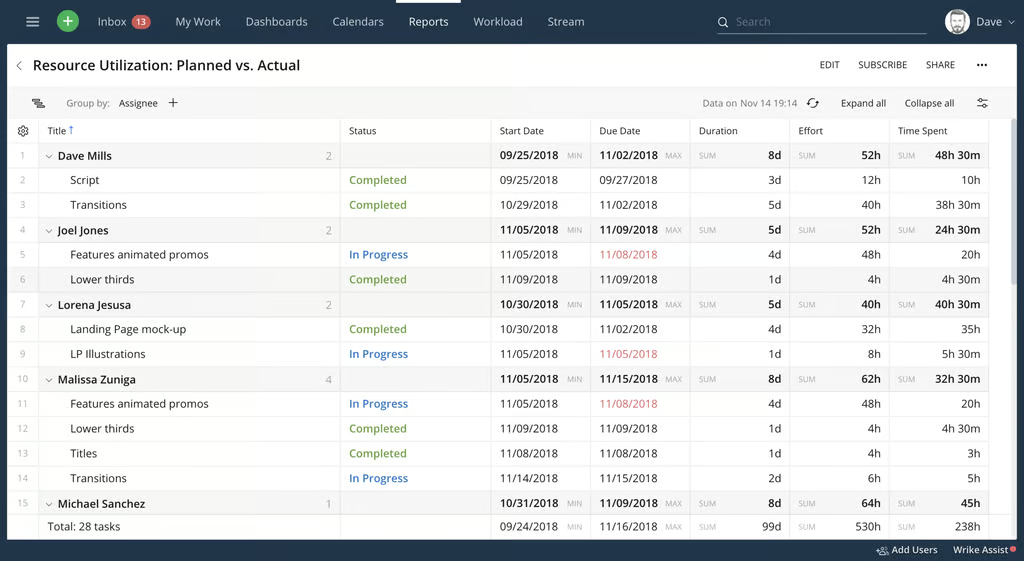
Wrike offers resource utilization reporting that helps project managers compare planned effort against actual work across teams. (Source: Wrike)

Wrike combines capacity planning, workload management, and time tracking in the same platform. In my experience, it delivers much of the resource visibility PMOs expect from Microsoft Project while remaining easier for teams to adopt.
Project Online handles capacity planning through a dedicated module tied to SharePoint, which is powerful but requires admin setup and trained users. Wrike’s workload tools live inside the same interface where tasks are managed, so there’s no context-switching to a separate PPM.
The Workload View shows each team member’s task hours and availability, so managers can spot who is over capacity and reassign work. Resource Bookings allow users to reserve a person’s time during early planning, before any tasks exist, so team managers can compare requested hours against available capacity and approve accordingly.
Compared with Microsoft Project, Wrike requires less setup to view team workloads and project demand. However, organizations that need advanced resource forecasting may still find Microsoft Project stronger in that area.
Pros
 Interactive Gantt charts with real-time dependency updates
- Blueprints standardize recurring project workflows
- Cross-tagging supports task tracking across multiple teams
Cons
 Licenses sold in seat blocks
- Initial setup can be overwhelming
- Storage limits require external file hosting at scale
Wrike pricing
 Free: Unlimited users and basic task management
- Team: $10/user/month — Adds cross-tagging, custom fields, Gantt charts, and portfolio management
- Business: $25/user/month — Adds AI elite features, request forms, templates, approvals, and resource planning
- Pinnacle: Custom pricing — Adds advanced reporting, resource and capacity planning, budgeting, and locked spaces
- Apex: Custom pricing – Adds Wrike Datahub (30M records), and bi-directional integrations with third-party solutions

2. Celoxis – Best for project reporting
- Free plan available
- Starts at $10/user/month
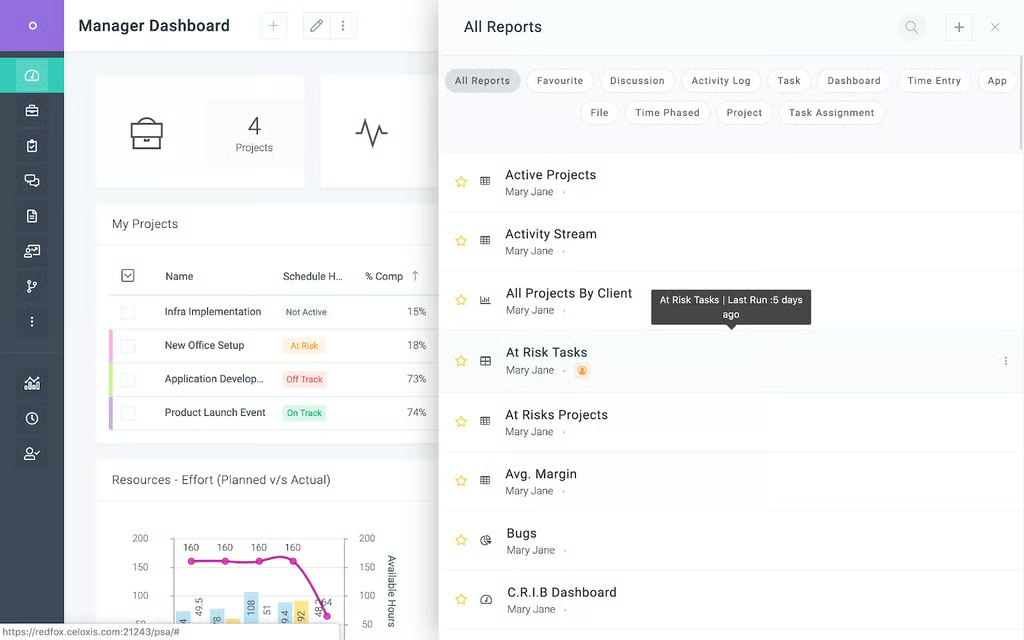
Celoxis provides portfolio dashboards and resource analytics that help PMOs track project health, risks, and capacity. (Source: Celoxis)

Celoxis is a strong choice for PMOs that need project reporting alongside financial data. Unlike Microsoft Project, which often depends on Power BI or other Microsoft services, Celoxis includes configurable reports, ad hoc reporting, KPI dashboards, and scheduled report delivery without a separate analytics add-on.
Role-based dashboards give project managers, stakeholders, and executives different views of the same project data. Custom KPIs can track earned value, cost performance index, and schedule variance.
The platform includes report builders that pull data from projects, resources, timesheets, budgets, risks, and expenses. Scheduled report delivery sends project updates directly to executives and stakeholders based on predefined schedules.
Pros
- Interactive Gantt with all four dependency types supported
- Resource allocation tracked in actual hours, not percentages
- Earned value analysis built into the platform
Cons
- Interface feels dated compared to newer PM platforms
- Pricing feels high for smaller teams
- Free trial requires a scheduled onboarding call to access
Celoxis pricing
- Core: $10/user/month — Includes advanced analytics, BI dashboards, Gantt charts, project templates, aggregated dashboards, and two read-only users.
- Essentials: $25/user/month — Adds timesheets, job roles, resource planning, work calendars, automatic RAG calculation, workspaces, custom security roles, and five free read-only users.
- Professional: $35/user/month — Adds risk tracking, intake management, costing, expense management, and 10 free read-only users.
- Business: $45/user/month — Adds billing, free client portal, advanced security, strategic portfolio management, and 15 free read-only users.
- Enterprise: Custom — Adds the ability to create your own custom apps, maximum API limits (1,800/hour), and VIP support.

3. Microsoft Planner – Best for Microsoft 365 users
- Free plan available
- Starts at $10/user/month
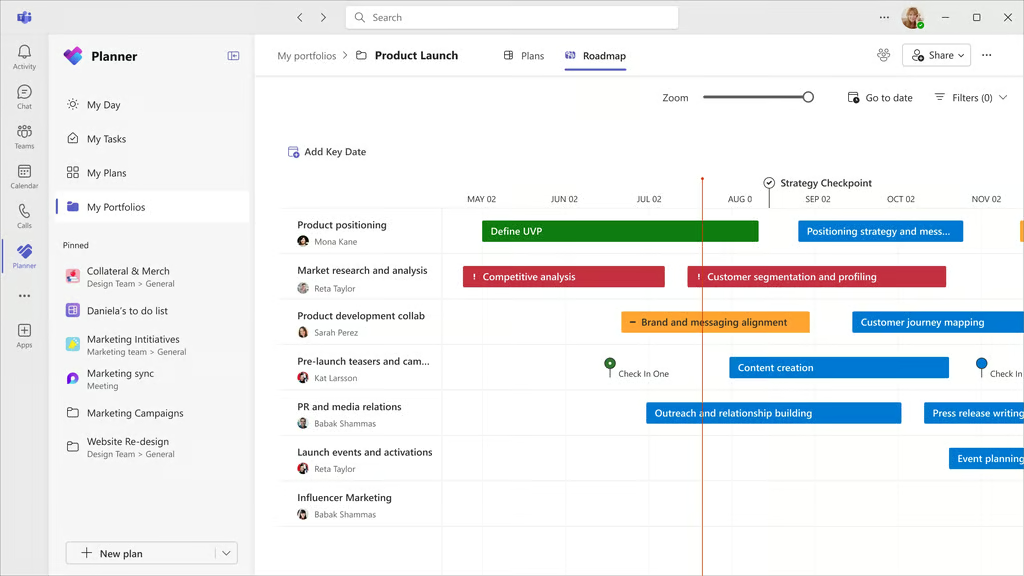
Microsoft Planner offers roadmap views that help teams visualize project timelines, milestones, and dependencies. (Source: Microsoft)

Microsoft Planner is the strongest fit for teams that already run projects inside Microsoft 365. This makes more sense now that Microsoft has added Project for the web capabilities into Planner. Tasks created in Teams meetings or flagged in Outlook can appear in Planner, which reduces the need to re-enter activities in a separate project management app.
The version included with eligible Microsoft 365 plans supports task assignments, due dates, file attachments, boards, calendars, and progress charts. Premium plans add Timeline view, task dependencies, sprint planning, backlogs, workload tracking, custom fields, and task history.
Microsoft also moved features such as goals, roadmaps, dependencies, workload views, and sprints into Planner. Project still offers stronger resource management and cost tracking, but Planner covers the needs of most Microsoft 365 teams and integrates natively with Teams, Outlook, Power BI, and Power Automate.
Pros
- Fast setup for teams already on Microsoft 365
- Azure Active Directory enforces role-based access controls
- Native integration with Teams, Outlook, and SharePoint
Cons
- No native Gantt chart on standard Planner license
- Reporting requires Power BI as a separate add-on
- Lacks resource planning tools on lower-tier plans
Microsoft Planner pricing
- Free (Microsoft 365 inclusion): — Includes essential task management, board and list views, “My Day” and “My Tasks” personalized views, and Microsoft Teams integration.
- Planner Plan 1: $10/user/month — Adds task dependencies, project templates, custom reporting, timeline view, and agile features like backlogs and sprints.
- Planner and Project Plan 3: $30/user/month — Adds Microsoft 365 Copilot (preview), advanced dependencies, resource request capabilities, task history, and visual roadmaps.
- Planner and Project Plan 5: Previously at $55/user/month, not available for new purchases or renewal as of May 1, 2026 — Adds advanced portfolio management and enterprise resource management and allocation.

4. monday work management – Best for flexible workflows
- Free plan available
- Starts at $9/user/month
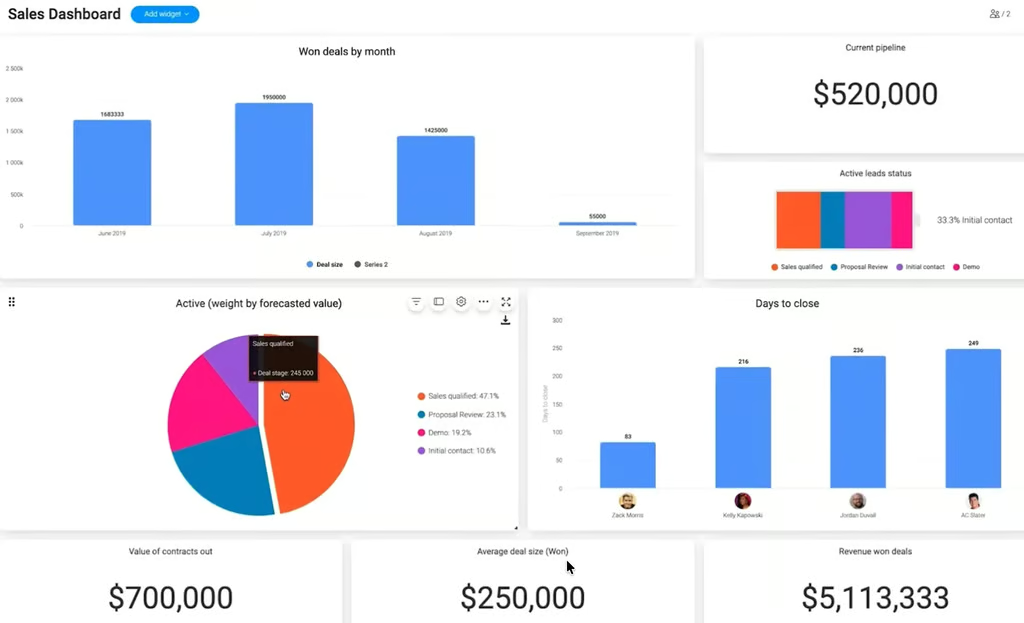
monday.com provides customizable dashboards that help project managers monitor KPIs, pipeline performance, and team progress in real time. (Source: monday.com)

Compared with Microsoft Project or Project Online, monday gives teams more control over how work is organized. Recent reviews often point to monday.com’s customization and automation as major strengths, as it allows them to customize multiple boards to match different workflows.
Project imposes a defined schema: tasks, resources, predecessors, and baselines. It’s powerful for waterfall methodologies but rigid if your process doesn’t map neatly onto that model. With monday, you can define the schema yourself. Boards, columns, automations, and views can all be tailored to suit different teams, making it possible to manage everything from personal tasks to more complex processes.
Available column types include status, dates, assignees, numbers, dropdowns, and formulas. You can also set custom status labels and view the same work as a table, Kanban board, Gantt timeline, or calendar. Plus, its automation builder uses trigger-condition-action rules that support handoffs, approvals, and task routing.
Pros
- Custom dashboards with data visualization options
- Fast onboarding with intuitive drag-and-drop interface
- Workload view shows capacity across team members
Cons
- Automation actions are highly limited
- Resource planner limited to Enterprise plan
- Pricing scales steeply with seat block model
monday.com pricing
- Free plan: Up to 2 users and includes 200+ templates, Kanban view, embedded documents, and shareable forms
- Basic: $9/user/month — Adds 5GB storage, custom fields, unlimited documents, and monday AI credits
- Standard: $12/user/month – Adds Gantt view, 20GB storage, guest access, and automation & integration
- Pro: $19/user/month — Adds private boards, chart view, time tracking, and formulas
- Enterprise: Custom — Adds portfolio reporting and resource management
Learn more in our monday work management review.

5. Smartsheet – Best for portfolio management
- 30-day free trial
- Starts at $9/user/month
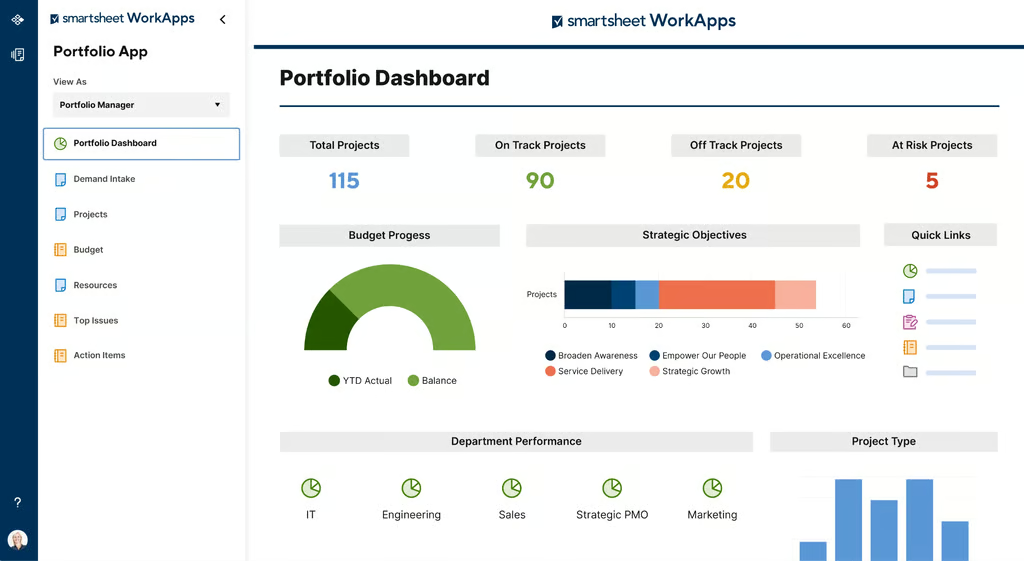
Smartsheet delivers portfolio-level reporting that enables PMOs to track project status, budgets, resources, and strategic objectives from one dashboard. (Source: Smartsheet)

Smartsheet gives PMOs a centralized way to govern projects and roll up reporting across large portfolios. I find it particularly useful for organizations that need uniform project intake, standardized execution, and portfolio-level visibility.
Much of this capability comes from the Control Center, which uses project blueprints to standardize projects at scale. New projects automatically connect to portfolio dashboards and reports, and Global Updates applies changes across multiple projects from a single location. Smartsheet’s newer Portfolios feature also provides portfolio rollups, project templates, and automated project creation for teams that need portfolio tracking without deploying the full Control Center environment.
Compared with Project Online, Smartsheet requires less infrastructure and administration for portfolio reporting. It can also aggregate data from Jira, Microsoft Project, and ServiceNow, making it useful for managing projects across multiple third-party systems.
Pros
- Data Shuttle automates imports from external databases
- Real-time dashboards with configurable widget layouts
- Control Center pushes template updates across active projects
Cons
- Sheet row limits require splitting large datasets across sheets
- Re-baselining projects requires manual workarounds
- Advanced automation logic limited to simple condition types
Smartsheet pricing
- Pro: $9/user/month — Includes unlimited users, project views, and sheets
- Business: $19/user/month — Adds free guests, timeline view, and workload tracking
- Enterprise: Custom — Adds AI formulas, work insights, and SSO
- Advanced Work Management: Custom – Adds Control Center and dynamic view
Learn more in our Smartsheet review.
How I evaluated the best Microsoft Project alternatives
To identify the best Microsoft Project alternatives, I evaluated each project management software using the following criteria.
Pricing (20%): I compared subscription costs, feature availability across plans, and the overall cost of scaling the platform across departments or large project teams. I paid close attention to whether essential capabilities such as resource management, portfolio reporting, and advanced scheduling require premium plans or add-on purchases.
General features (25%): I evaluated each platform’s core project management functionality, including Gantt charts, dependencies, resource allocation, reporting, and workflow automation. I also examined whether it can serve as a practical replacement for Microsoft Project or Project Online.
Advanced and niche features (20%): I assessed features that matter most to mature PMOs, including capacity planning, governance controls, approval workflows, custom reporting, and portfolio management. I also considered migration-related capabilities that can help organizations transition from Microsoft Project.
Support (10%): I reviewed vendor support options, onboarding resources, training materials, and customer success offerings. I placed greater value on providers that help organizations manage implementation, user adoption, and ongoing administration as project management requirements evolve.
Ease of use (10%):I evaluated how quickly project managers, stakeholders, and team members can learn and use the platform effectively. I also considered the complexity involved to set up the platform because many organizations exploring Microsoft Project alternatives are looking to reduce admin overhead and shorten the learning curve.
Expert score (15%): My expert score reflects my overall assessment after reviewing each platform’s strengths, limitations, and long-term suitability for project management teams. I considered how effectively each solution balances functionality, usability, admin effort, and scalability compared to Microsoft Project.
How to choose the best Microsoft Project alternative
Microsoft Project has long been the standard for enterprise project management, resource planning, and portfolio management. However, its complexity, steep learning curve, high licensing costs, and the upcoming retirement of Project Online have pushed many organizations to evaluate alternatives that better match their current workflows, team size, and budget.
Choosing the right alternative involves a number of factors to ensure you do not trade one set of limitations for another.
1. Resource planning
Resource planning is one of Microsoft Project’s strongest suits, so this is the first area I scrutinize when evaluating alternatives. I look for tools that support capacity planning, resource allocation across multiple projects, and workload visibility at both the individual and team level.
2. Portfolio management
I always assess how well a platform supports portfolio management across multiple projects and initiatives. When I assess alternatives, I look for portfolio dashboards that surface project status, budget tracking, and prioritization data without requiring manual aggregation.
3. Ease of use and user adoption
Microsoft Project’s interface is powerful but notoriously difficult for casual users, which often results in low adoption and inconsistent data quality across teams. I pay close attention to onboarding requirements, the learning curve for beginners, and whether the tool supports different work views such as Gantt, Kanban, and list formats.
4. Reporting and analytics
Reporting in Microsoft Project is comprehensive but typically requires extensive configuration or integration with Power BI. I recommend evaluating whether a tool includes built-in reporting on project progress, budget variance, milestone tracking, and team workload without requiring a separate analytics tool.
5. Scalability and integration support
A tool that works well for a single team may not work when scaled across departments, programs, or business units. I assess whether the platform can support growing project volumes, cross-functional workflows, and integrations with core business systems such as ERP, CRM, finance tools, and communication platforms.
FAQs
Can Microsoft Project alternatives handle portfolio and resource management?
Yes. Platforms such as Wrike, monday.com, and Smartsheet offer portfolio dashboards and resource management tools. These features help organizations monitor multiple projects, allocate resources, and track workload across teams from a central workspace.
What are the best Microsoft Project alternatives for project management?
Popular Microsoft Project alternatives include monday.com, Smartsheet, and Wrike. The best choice depends on your needs, such as task management, portfolio planning, team collaboration, resource management, or Agile project delivery.
What is the easiest Microsoft Project alternative for small teams?
monday.com is one of the easiest Microsoft Project alternatives for small teams. Its intuitive interface, customizable workflows, and drag-and-drop project views make it simple to manage tasks, timelines, and team collaboration without the steep learning curve often associated with Microsoft Project.