






















monday.com is one of my top AI work management tools for teams that want to automate routine work and customize workflows. Its interactive boards, no-code automation, and multiple project views support different types of work across departments. In this monday.com review, I’ll cover these advantages alongside tradeoffs such as seat-based pricing, including when its capabilities can justify the added cost.
monday.com review at a glance
| monday work management overview | |
|---|---|
| Best for | Teams that need customizable project boards |
| Starting price | Free plan available; paid plans start at $9/user/month (annual billing) |
| Ease of use | Visually-driven interface that’s easy to manage and customize |
| AI capabilities | AI template boards, custom agents, formula builder, meeting transcription, no-code app builders |
| Key strengths | Drag-and-drop customization, no-code automation, large library of third-party integrations, |
| Limitations | Seat block pricing can lead to unused paid seats |
My methodology
To guide my monday.com review, I designed a scoring rubric that reflects the priorities and business needs of project professionals and organizations. Here is a complete breakdown of my evaluation:
Pricing (20%): I evaluated whether monday.com offers a free-forever plan and how much value it delivers at no cost. I also compared the entry and mid-tier subscription costs, checked for annual discounts, and assessed how well each pricing tier justifies its cost based on the features unlocked at that level.
General features (25%): I examined core project management capabilities including task creation, due dates, subtasks, and dependencies. I also looked at collaboration tools such as task comments, file sharing, and team notifications, as well as the range of built-in views like Kanban boards, Gantt charts, calendars, and list layouts that help teams manage work in a way that suits their style.
Advanced features (20%): I evaluated features that go beyond basic task management, including automation, resource management, portfolio tracking, and reporting dashboards. I also assessed the depth of monday.com’s integration options with third-party tools such as CRMs, communication platforms, and file storage services, as well as its AI-powered features.
Ease of use (10%): I assessed how quickly a new user can get started on the platform without in-depth training. While checking recent monday.com reviews, I considered the intuitiveness of the interface, the quality of pre-built templates, and how smoothly users can navigate between views and features.
Customer service (10%): I reviewed the availability and quality of monday.com’s support channels, including live chat, email, and phone support. I also evaluated support hours, the depth of its knowledge base and help center, and the overall responsiveness of its customer service team.
Expert score (15%): Finally, I added a professional assessment based on my hands-on experience with the platform, taking into account its overall performance, value for money, and standing among users and industry professionals.
What is monday.com?
monday.com offers a range AI-powered project management features without the cost of enterprise software. While it’s versatile enough to support different uses, this monday.com review breaks down where the platform performs well and where it falls short.
monday.com is a good fit for:
- Non-technical teams that want a visually intuitive interface without a steep learning curve or IT dependency
- Operations teams that rely on workflow automation and recurring processes.
- Small project teams looking for a highly customizable workspace
- Project managers who need workload management and resource planning capabilities
monday.com is less suited for:
- Organizations that require advanced portfolio management and forecasting capabilities.
- Project management offices (PMOs) managing highly complex project dependencies across large programs.
- Teams seeking traditional project scheduling tools with robust critical path analysis.
In case you’re new to monday, here’s a quick intro: What is monday.com?
Pricing
monday.com’s paid plans start at $9 per user, per month with annual billing. The platform also offers a free plan for individuals and small teams, with access to core project management features. As you move up the plans, you’ll get more tools for automation, reporting, time tracking, and resource management.
The Basic plan has limited project management features, so most teams will get more value from Standard. Pro is suited to agencies or client-facing teams that need time tracking and more automation. Enterprise is designed for larger organizations that require additional security and governance controls.
| Plan | Monthly price (annual billing) | Best for | Key features |
|---|---|---|---|
| Free | $0 | Individuals and small teams | Up to 2 users, basic project views, task management |
| Basic | $9/user | Small teams getting started | Unlimited items, 5GB storage, customer support |
| Standard | $12/user | Growing teams | Timeline and Gantt views, automation, guest access |
| Pro | $19/user | Teams that need more control | Time tracking, workload management, advanced reporting |
| Enterprise | Custom pricing | Large organizations | Enterprise security, governance controls, premium support |
monday.com offers several plans, but the right tier depends on how your team manages projects and which capabilities justify an upgrade. This monday.com review breaks down which plan provides the most value and when its limits may push you to the next tier.
Free: Best for individuals and two-person teams
The Free plan is most ideal for individuals or pairs that need a place to organize tasks before paying for project management software. You can create up to three boards and use Kanban alongside basic task tracking, but the two-user limit leaves little room for team growth. I recommend signing up for the free plan if you are testing monday.com for personal use or a very small project before deciding which paid features you need.
Basic: Best for straightforward task tracking
Basic removes several Free plan restrictions, including the two-user limit, and gives you unlimited items with 5GB of file storage. The main limitation is that it still leaves out capabilities that become important once projects involve schedules or repeatable processes, such as automations and Gantt charts. At only a few dollars less per user than Standard, Basic makes the most sense when your team primarily needs shared boards for assigning and tracking work.
Standard: Best for small teams managing recurring workflows
Standard is where monday.com is more practical for teams that want to manage more than task lists. Automations can handle repetitive actions such as status changes and notifications, while Gantt and Timeline views help project managers track task dates and dependencies across the project schedule. This plan is likely to offer the best balance for small teams that can use these capabilities regularly but do not yet need workload management or time tracking.
Pro: Best for teams managing capacity and billable work
Pro becomes easier to justify when managers need to understand how work is distributed across the team. Workload management helps identify who has room for another assignment, while time tracking gives agencies and service teams a way to compare hours spent against planned work. The higher price may be worthwhile when those capabilities replace separate time-tracking software or help prevent a small team from taking on more work than it can reasonably handle.
Enterprise: Best for organizations that need stricter account controls
Enterprise is aimed at organizations where managing access and account policies becomes as important as managing projects. It adds enterprise security and governance capabilities that smaller teams are less likely to require. Since monday.com uses custom pricing for this tier, organizations should evaluate which Enterprise controls they need before requesting a quote.
Plan limits in real scenarios
monday.com’s features and seat requirements can affect the total cost, especially for teams that are between pricing tiers or only need specific features. Here are a few common scenarios to show how the plan limits may apply.
| A 5-person team getting started: | A growing team with 12 users: | A team with fluctuating headcount: |
|---|---|---|
| You’ll need at least five paid seats, which meets the three-seat minimum. Standard is often the better starting point because Basic lacks key project management features. | At this stage, Pro can be worth the added cost if you need time tracking, workload management, or more automation credits. | If your team size falls between billed increments, you may end up paying for unused seats. For example, a seven-person team may need to purchase 10 seats. This can reduce cost flexibility if you frequently add or remove team members. |
Ease of use
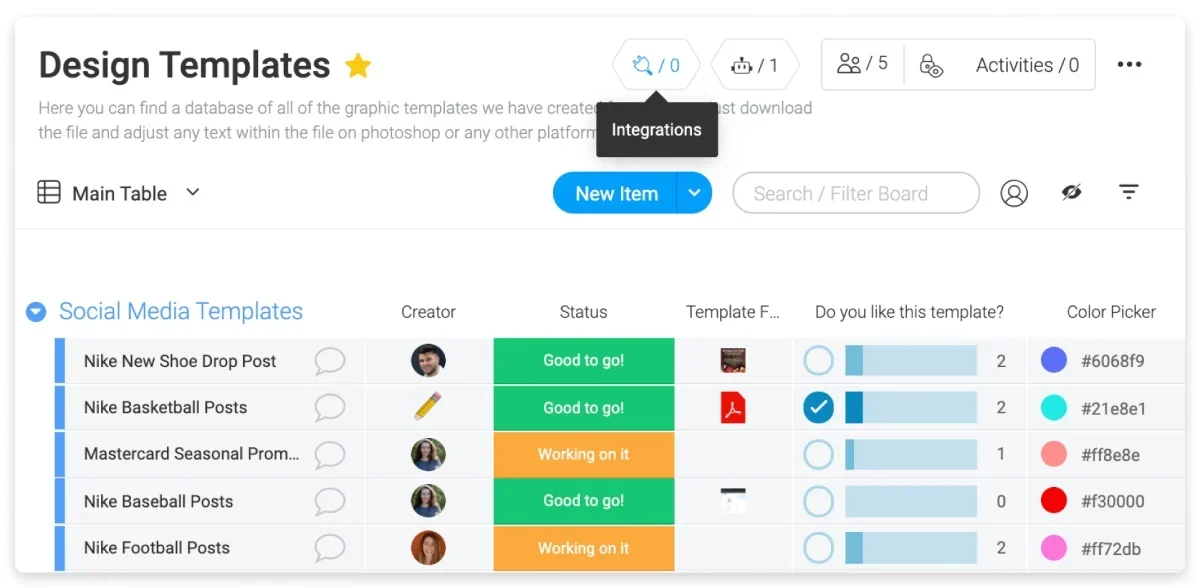
monday.com is one of the most intuitive project management tools I’ve tested, and recent customer reviews highlight its ease of use. During the initial setup, I can choose from pre-built templates that closely match my workflow. Otherwise, if I want to import existing data, monday.com makes it easy to turn it into a working board in just a few clicks.
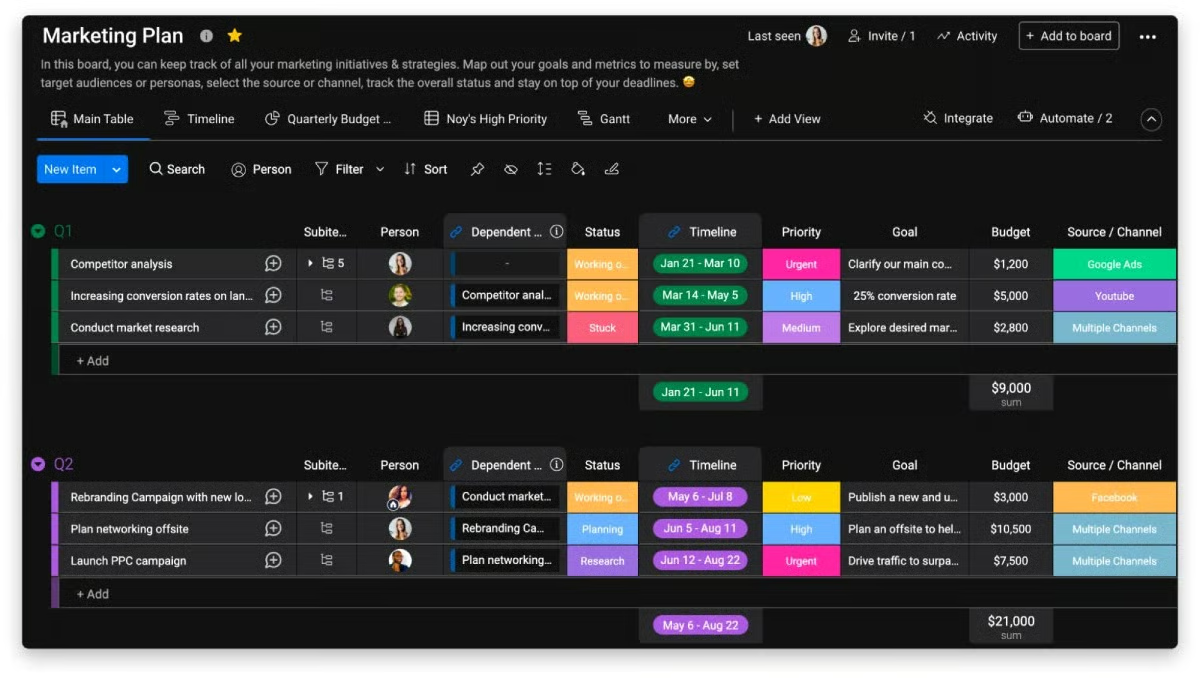
It’s also worth noting that monday.com was the first project management tool I used, and I remember the board setup being easy to pick up. My favorite tool was the drag-and-drop functionality, which lets me move tasks across rows and columns. The grid-style interface also remains user-friendly as projects grow more complex. And since my team tracks large volumes of project data, color-coded columns lets me scan statuses at a glance.
monday.com features
monday.com covers the standard features for task tracking, team collaboration, reporting, workflow automation. In most monday.com reviews, users reported that its biggest strength is its ability to adapt to different workflows without overwhelming users.
What separates it from other tools is the ability to configure its features without technical skills. Most teams can build a working board in a day, and the platform scales reasonably well as team size grows. However, specialized needs such as advanced scheduling or development workflows may require a plan upgrade or third-party tool.
Premade templates
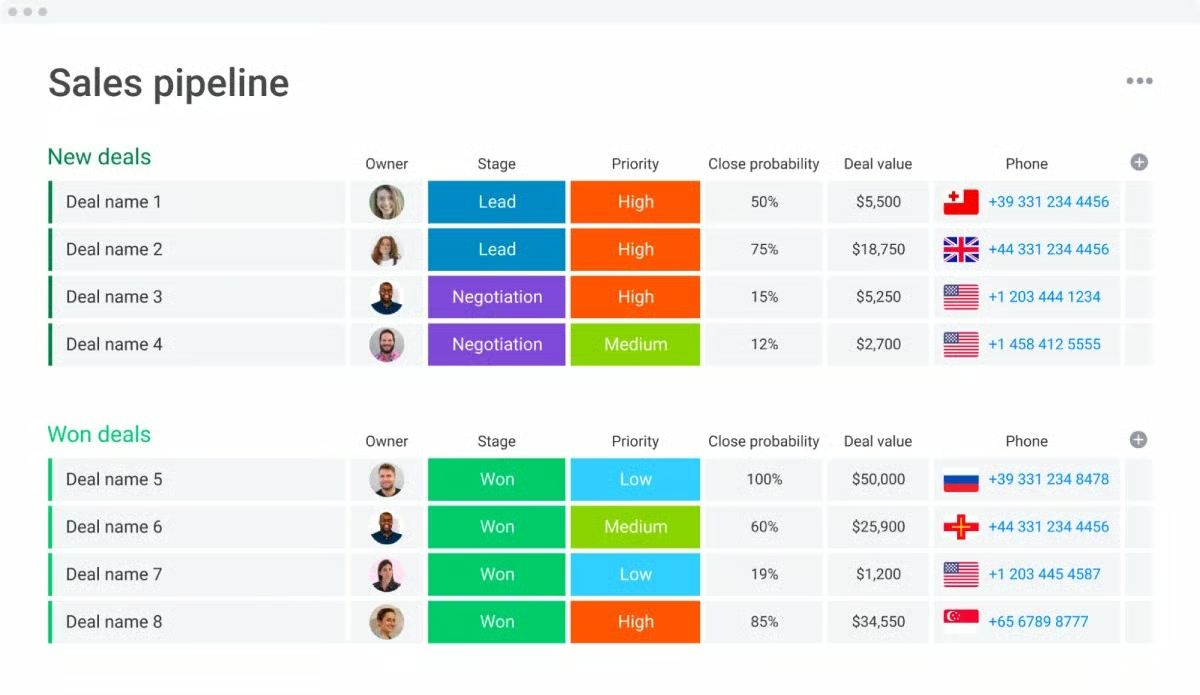
monday.com offers over 200 templates for different industries such as, sales, HR, marketing, and operations. Each template comes pre-configured with columns, views, and statuses, so you don’t have to start from scratch. Templates are also customizable, so you can adjust column types, add automations, or swap between Kanban or Gantt chart views.
Customizable options
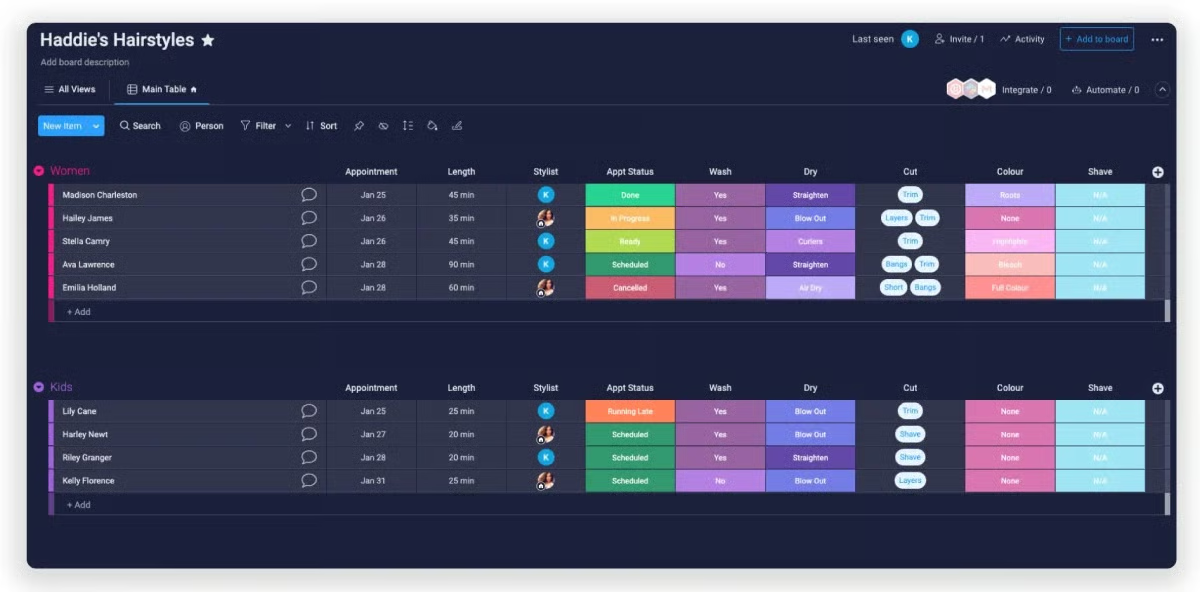
Boards in monday.com are built around columns, and there are more than 30 column types to choose from, including text, numbers, date, dropdown, dependency, and formula fields. You can also switch between six project views including Gantt, Kanban, Calendar, and Workload, without losing your underlying data.
Within the dashboard, users can customize the column tags, status color, and platform theme. But fair warning, the number of options can be overwhelming. I suggest using monday’s defaults until your team is more familiar with the workflow.
Collaboration
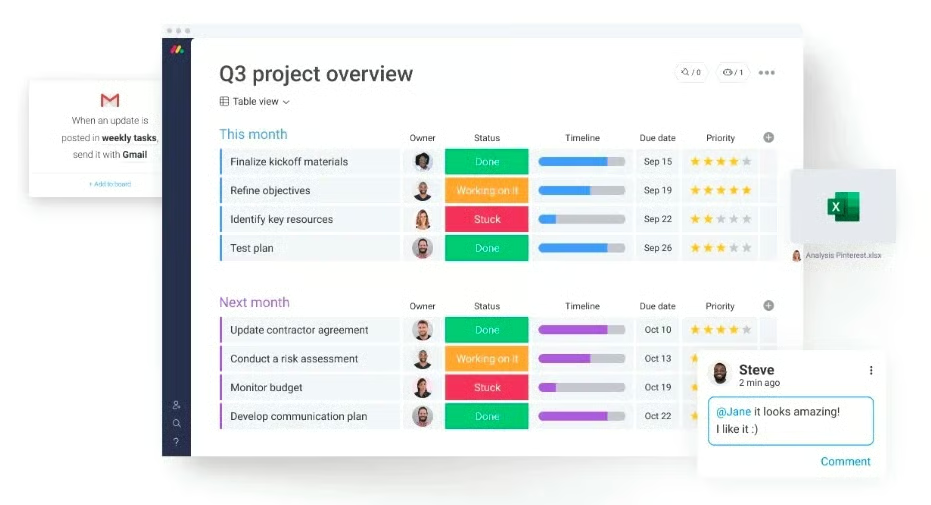
monday.com offers numerous ways to foster collaboration and in-app communication. For example, project managers can assign tasks to specific users, track task progress, leave comments, and tag users within tasks.
No-code automation
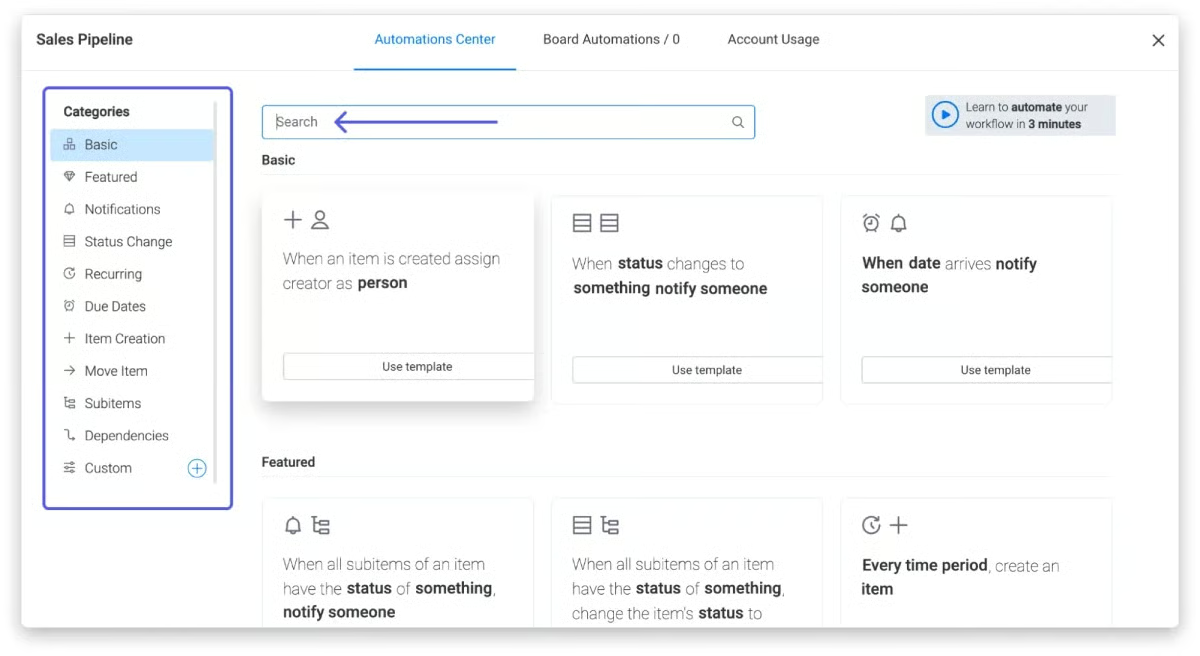
monday.com’s automation builder lets you set up trigger-based workflows without coding. For instance, you can automatically assign tasks when a status changes, enable deadline alerts, or move items to another board after meeting specific conditions. The Standard plan includes 250 automation actions per month, with 25,000 actions available on Pro and 250,000 actions on Enterprise.
The platform offers a comprehensive database of automation templates for different use cases. For experienced users, the fill-in-the-blank setup allows users to create their own automation based on task movement.
Integrations
monday.com connects with over 200 third-party tools, including Slack, Google Workspace, Microsoft Teams, Zoom, Salesforce, and GitHub. While native integrations handle most common use cases, an open API is available for custom connections. Automation and integration actions share a monthly credit limit on Standard, which is worth factoring in if your team relies heavily on both.
Additionally, monday apps marketplace allows users to add ready-made apps that expand the capabilities of monday.com.
Dashboards
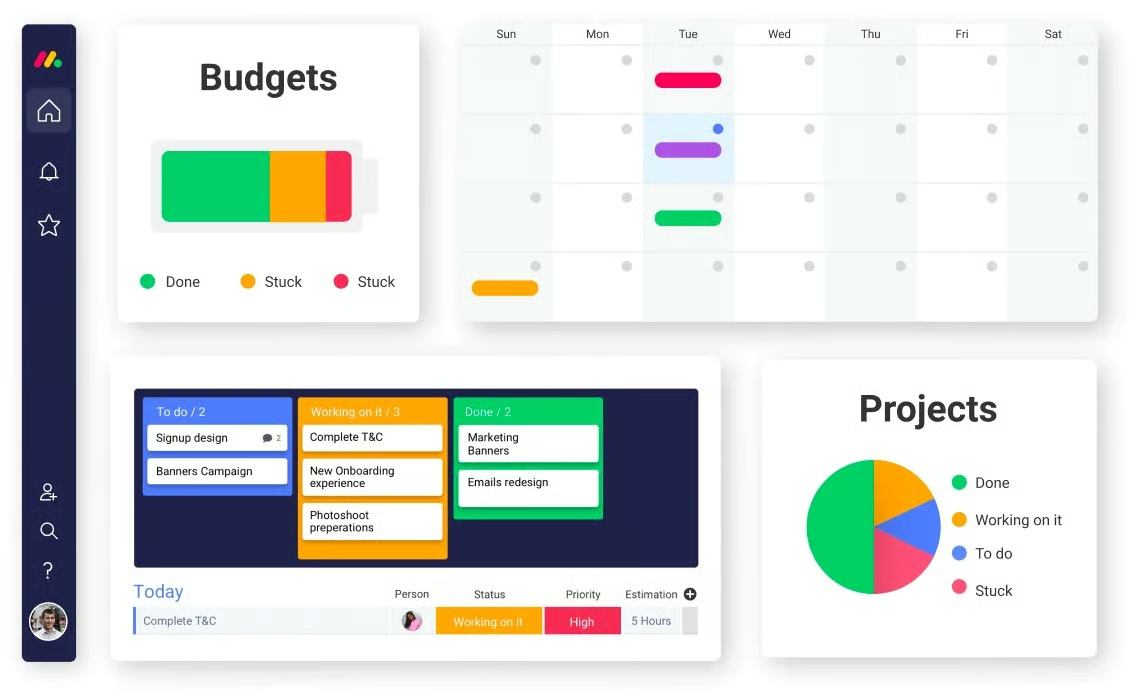
Dashboards pull data from across multiple boards into a single reporting view, giving team leads and managers a consolidated look at project progress, workload distribution, and key metrics. Widgets include charts, battery indicators, timeline views, and number summaries. The number of boards you can connect to a dashboard depends on your plan tier.
By using dashboards, users can view status overviews, calendars, chart insights, resource management metrics, tasks across boards, and time tracking in one place. This is especially useful to larger teams who may be managing numerous projects and team members.
Security features
monday.com’s security features are modeled after industry best practices in data security, specifically such as ISO 27001, ISO 27018, and OWASP Top 10. While its systems are hosted via multiple availability zones at Amazon Web Services (AWS), some of monday.com’s in-app security features include:
- Firewalls for enforcing IP whitelisting and access through permitted ports only to network resources
- A web application firewall (WAF) for content-based dynamic attack blocking
- DDoS mitigation and rate limiting
- NIDS sensors for early attack detection
- Advanced routing configuration
- Comprehensive logging of network traffic, both internal and edge
- Traffic is encrypted using TLS 1.3 with a modern cipher suite, supporting TLS 1.2 at minimum
- User data is encrypted at rest across our infrastructure using AES-256 or better
- Credentials are hashed and salted using a modern hash function
- Available HIPPA-compliant plan (Enterprise plan only)
Customer support
monday project management offers users a variety of support options for onboarding and troubleshooting issues, including:
- Self-guided knowledge base
- Video tutorials
- Solutions
- Community form
- 24/7 live chat
- Learning academy
While getting acquainted with monday.com, the self-guided knowledge base stuck out to me because it walks you through each step of the process with related screenshots. They also have a YouTube channel and training courses where you can explore educational content and new feature releases.
monday.com alternatives
If monday.com’s pricing or feature set does not match your needs, alternatives like ClickUp, Wrike, and Jira cater to more specialized requirements. ClickUp provides more functionality for the price, Wrike offers more detailed resource and capacity planning, while Jira focuses on Agile software development.
| Best For | Why choose it over monday.com | Starting price | |
|---|---|---|---|
| Wrike | Workload and resource planning | Better suited to teams that need detailed workload visibility, capacity planning, and enterprise-level reporting. | $10/user/month |
| ClickUp | Teams seeking maximum functionality at a lower cost | Gives teams a wider set of AI-powered work management and collaboration tools, including Docs and Chat, within one platform. | Free plan; paid plans from $7/user/month |
| Jira | Agile software development teams | Provides extensive support for sprint planning, backlog management, and issue tracking for Agile development teams. | Free plan; paid plans from $9.05/user/month |
FAQs
Is monday.com worth it?
For most mid-sized teams, yes. monday.com’s combination of visual project tracking, no-code automation, and broad integrations justifies the per-seat cost at the Standard tier and above. Smaller teams or solo users will find better value in ClickUp or Trello, both of which offer more generous free plans.
How does monday.com compare to Asana?
monday.com handles cross-functional projects and automated workflows better, while Asana tends to suit teams that need strict task hierarchies and goal tracking. Asana’s free plan is also more generous than monday.com, supporting up to 10 users
What are the pros and cons of monday.com?
Pros include an intuitive interface, flexible board customization, strong automation capabilities, and 200+ integrations. Cons include the three-seat minimum, time tracking limited to Pro and above, cost that scales quickly with team size, and weaker depth for software development workflows compared to Jira.