






















Two years ago, I switched to ClickUp because managing my projects required more than visual boards, and I needed a platform I could customize for complex workflows. The learning curve was not easy, and it took our team several weeks to get comfortable with the platform, but its flexibility worked eventually for our cross-functional projects. In this ClickUp review, I’ll share what I’ve learned from years of using it, including how its growing AI features support our workflow.
| ClickUp review at a glance | |
|---|---|
| My rating | 4.54 out of 5 |
| Best for | Teams that want a highly customizable AI-powered project management platform |
| Free plan | Free Forever plan with unlimited tasks and members |
| Monthly starting fee | $7/user/mo when billed annually |
| Key features | Task management, team chat, Gantt charts, Docs, dashboards, automations, time tracking, workload management, Chat |
| AI | Task prioritization, data analysis, workspace search, research, translation, task breakdown |
Why you should trust Project-management.com
As a tech analyst for project management software, I have personally tested nearly 20 platforms over the past five years, and several have become part of my workflow. I have written dozens of buyer’s guides covering a wide range of use cases and company sizes, which gave me a broader understanding of what project teams need from these tools.
Marianne Sison
Senior Staff Writer for Project Management

How I evaluated ClickUp
I evaluated ClickUp using a weighted rubric covering pricing, core project management features, advanced capabilities, usability, and support. The final score also reflects my personal experience with the platform and recent customer feedback.
Pricing (20%): I looked at free access, entry-level pricing, and how much project functionality is included before teams need to upgrade. I also considered total cost of ownership, including paid add-ons and whether higher tiers are required for key capabilities.
General features (25%): I evaluated the core features I expect from project management software, including task management, project scheduling, collaboration, project views, and workflow customization. I gave more weight to whether these features could support project execution across different team setups.
Advanced and niche features (20%): I scored ClickUp on more niche capabilities such as scheduling controls, resource planning, intake workflows, portfolio reporting, and AI-assisted work management. I focused on how far the platform goes beyond basic task tracking and whether those capabilities function within actual project workflows.
Ease of use (10%): I assessed onboarding, migration options, usability, and the effort required to configure the platform. My evaluation also accounted for ClickUp’s learning curve and the amount of setup needed before teams can use its customization options.
Support (10%): I reviewed the availability of support channels, educational resources, and community help, along with security and data governance controls. I also checked whether assistance and documentation are accessible across plans or reserved for higher tiers.
Expert score (15%): My expert score combines feature coverage with value for money and third-party user feedback. I also considered how easily I could verify ClickUp’s capabilities through current official documentation, then weighed those findings against my own experience using the platform.
Who should use ClickUp?
ClickUp is a good choice for teams that manage different types of projects and need to customize statuses, fields, views, and task setups for each workflow. I can adjust views, fields, and statuses to match different processes, although the number of features can take time to learn. Thus, teams with straightforward task-tracking needs may not fully utilize the platform.
ClickUp works well for:
- Project teams managing several workflows: ClickUp supports tasks, dependencies, milestones, recurring work, and multiple project views within the same workspace.
- Teams that want configurable project workflows: Custom statuses, fields, task types, and over 15 project views let teams adapt ClickUp to different project types.
- Real-time collaboration: Docs, Whiteboards, Chat, Forms, and task comments provide several ways to coordinate project work in real-time.
- Teams managing multiple projects: Dashboards, portfolios, workload views, and reporting tools help project managers look beyond individual task lists.
- Teams that want built-in time tracking: Native time tracking is available on the Unlimited plan rather than requiring a third-party integration.
ClickUp is less suitable for:
- Teams that only need simple task tracking: Trello or Todoist may require less setup for personal use and basic project needs.
- Development workflows: Jira may provide more purpose-built Agile and issue-tracking capabilities for software teams.
- Teams that prioritize immediate adoption: ClickUp offers several ways to customize workflows, but it takes time to learn how to configure the platform. monday.com is relatively easier to learn when a team only needs conventional project management software.
ClickUp pros & cons
Pros
 Free plan includes trial credits for advanced features
- Rich feature set across tasks, views, dashboards, Docs, and time tracking
- Highly configurable workspace
- Dashboards can combine project, workload, time, and sprint data
- Unlimited members on the Free Forever plan
Cons
 Customizing the workspace takes significant time
- The number of features increases the learning curve for new users
- Full access to AI features requires a separate subscription
- Free plan has relatively limited file storage
ClickUp pricing
ClickUp is relatively affordable for the number of features it includes, especially at the entry-level tier. At $7 per user, it costs less than competitors like monday.com and Asana. Even at this lower price point, it covers core project management needs, including Gantt charts, native time tracking, portfolios, and resource management.
The jump to Business is fairly modest at $12 per user, but its value depends on how much a team relies on reporting and cross-project visibility. It adds timesheets, sprint reporting, and portfolio workload management, so I recommend it for teams managing several projects or needing comprehensive reporting.
| Plan | Monthly fee(billed annually) | Best for | Inclusions |
|---|---|---|---|
| Free Forever | $0 | Individuals and teams testing ClickUp | Unlimited tasks and members, Docs, Kanban boards, sprint management, Calendar view |
| Unlimited | $7/user/month | Small and growing teams | Unlimited Gantt charts, integrations and storage, time tracking, portfolios, resource management |
| Business | $12/user/month | Complex reporting and administration | Advanced dashboard cards, portfolio workload management, sprint reporting, SSO |
| Enterprise | Custom | Large organizations | SAML SSO, SCIM, audit logs, custom roles, enterprise API and governance controls |
| Brain AI (add-on) | $9/user/mo | Teams that want basic AI assistance | AI writing, summaries, workspace search, task assistance, and related AI features |
| Everything AI (add-on) | $28/user/mo | Teams that want broader AI access | Unlimited usage for AI fields, Super Agents, image generation, AI Assign & Prioritize |
Unlimited rises to $10 per user and Business to $19 with monthly billing, so annual plans offer better value for teams that expect to use ClickUp long-term. ClickUp also requires everyone within the same Workspace to use the same paid plan, which can increase costs if only part of the team needs higher-tier features.
ClickUp is gradually moving toward plans that bundle AI credits instead of offering AI as a separate add-on. Credits are pooled monthly and increase by tier, while heavier use may require a higher plan or additional capacity. The base subscription is competitively priced, but heavy AI users should factor that usage into the total cost.
Project management
ClickUp organizes project work through Spaces, Folders, Lists, tasks, and subtasks, and each level has its own statuses, fields, and views. This hierarchical system is ideal for managing several project types because recurring tasks and larger initiatives are located within the same workspace while following different workflows.
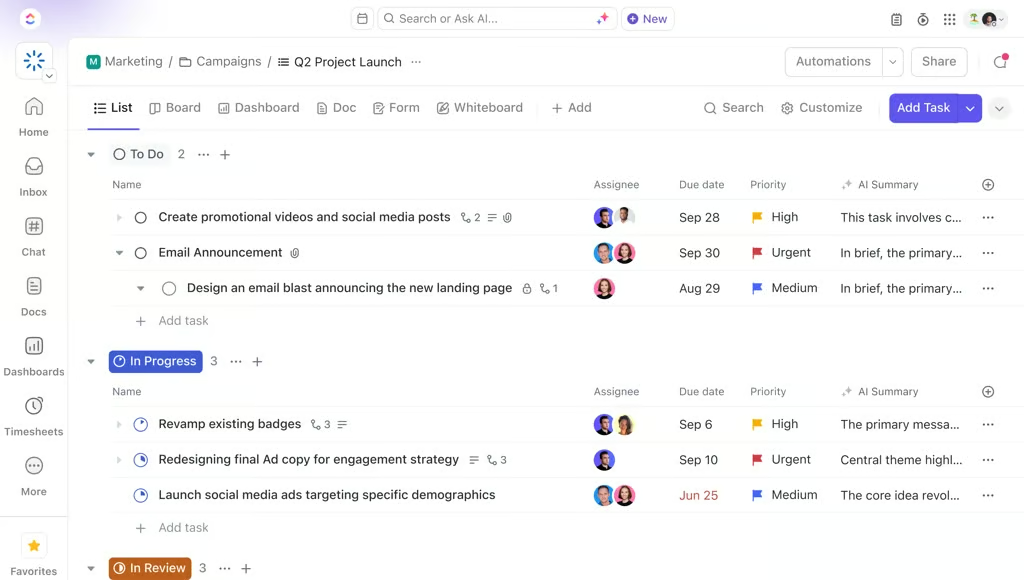
When it comes to task management, ClickUp combines task tracking with dependencies, milestones, recurring schedules, priorities, and custom fields. For projects with several handoffs, dependencies show which tasks are blocked by previous work, while milestones mark major delivery points. Custom fields add project-specific information such as effort, client, approval stage, or risk level directly to the task.
I use ClickUp’s views for different project management needs: List view to scan assignments and deadlines, Board view to monitor status changes, and Gantt chart to review sequencing and dependencies. Beyond the built-in views, I prefer to view my tasks in saved filters, which let me access my assignments across the company workspace from one view.
Team collaboration
ClickUp centralizes most project communication inside tasks through comments, @mentions, assigned comments, Clips, and Inbox notifications. Beyond task assignees, my teammates often use assigned comments to direct specific requests to teammates and attach follow-ups to the task.
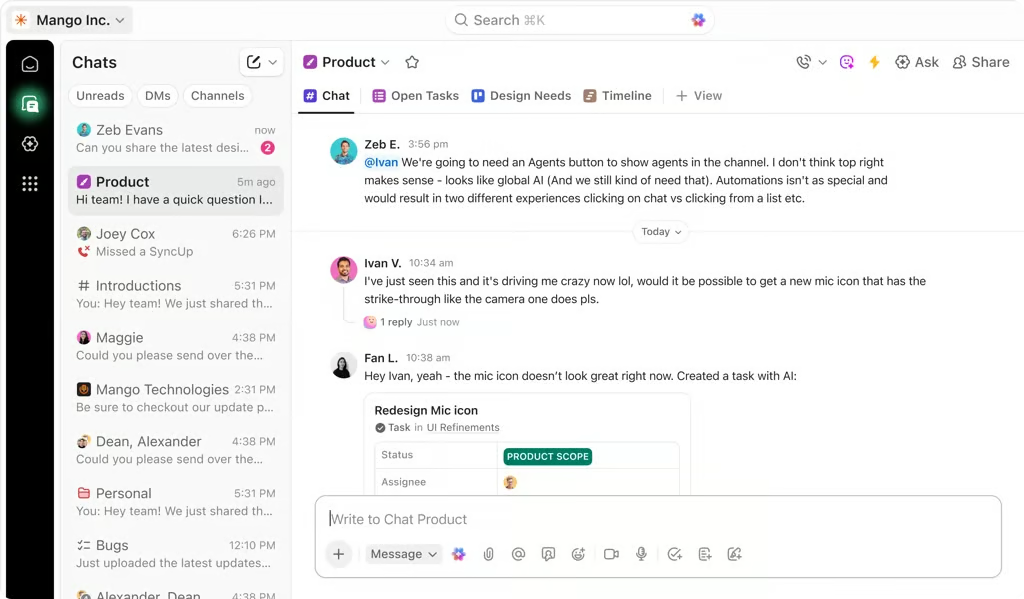
For companies that manage a large volume of project files, Docs provides a shared space for briefs, notes, and reference materials, with real-time editing, comments, and the option to turn text into tasks. Chat handles direct messaging inside ClickUp, while Clips record walkthroughs or demos.
My team uses ClickUp alongside productivity tools such as Slack and Google Meet, with each platform serving a different part of our workflow. We use those tools for general conversations and meetings, while ClickUp stores discussions within the relevant tasks or projects.
AI & automation
As an AI-powered project tool, ClickUp’s features are a must-have for handling routine work and managing large volumes of project data. I use them frequently to search task histories or apply bulk actions to selected tasks.
Using workspace context, Brain² pulls information from tasks, Docs, and connected work data. From there, it processes the extracted information to generate answers, project plans, reports, and task summaries. It can also search connected apps such as Google Drive, GitHub, and Salesforce, which helps when project data is spread across several systems.
A separate monthly AI plan unlocks project scoping, meeting transcription, data analysis, and reusable Skills for predefined workflows. It also connects with AI models like OpenAI, Claude, and Gemini while retaining ClickUp context.
For more complex work, Super Agents carry out multi-step workflows across projects, tasks, and connected systems. They can handle recurring work such as preparing status updates, checking project changes, or carrying out a sequence of actions across several tasks.
Reporting & dashboards
ClickUp Dashboards provides our team with a centralized platform for monitoring deliverables and employee productivity. Cards display task data, workload, time tracking, calculations, and sprint metrics. I can filter dashboards by assignee, status, date, or custom fields, then open charts to examine the underlying data. Some cards also let me edit task fields, reassign work, or close tasks from the dashboard.
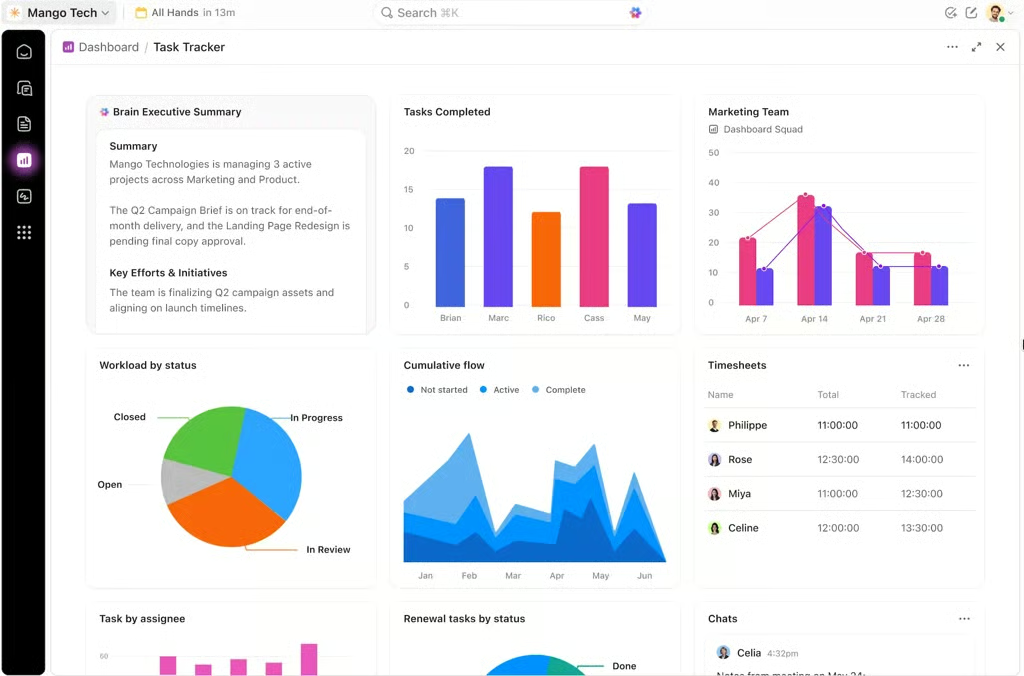
The accuracy of these reports relies on keeping project data up to date. Inconsistent statuses or missing time entries affect the reliability of dashboard data, while access to more advanced dashboard features depends on the plan.
For recurring reports, scheduled reports and PDF exports make it easier for us to share dashboard data with stakeholders. Templates also save setup time when creating dashboards for common uses such as sprint tracking or workload monitoring.
Resource & workload management
Another reason I use ClickUp is its ability to compare assignments against team capacity through Workload view and time estimates. I use Workload view to compare team members’ scheduled assignments and spot when one person has a noticeably heavier workload than others.
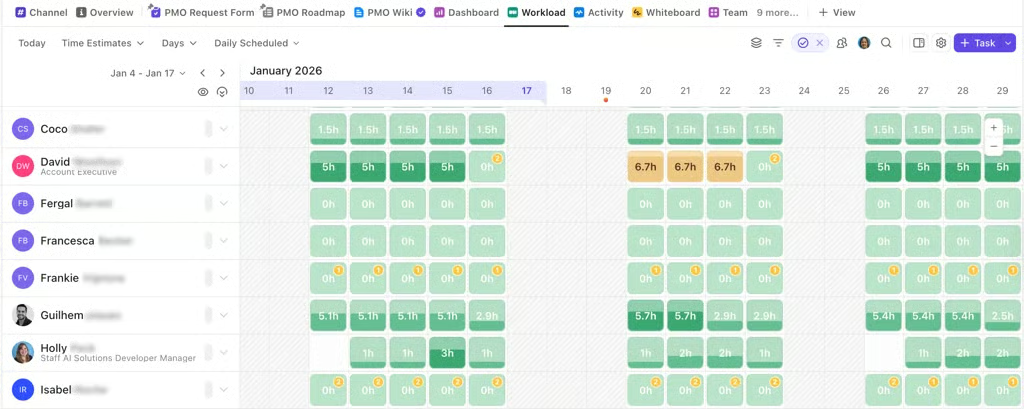
Native time tracking adds context through timers, manual entries, estimates, timesheets, and billable hours. Teams Hub brings capacity and workload data into a wider team view. For resource planning, these tools cover many project needs, although advanced forecasting or financial resource planning may still require dedicated software.
Customization & usability
ClickUp’s customization allows different departments to use the platform for different types of workflows. Within my team, I can add custom fields, create workflow-specific statuses, switch between views, and save templates for recurring processes.
Different task types also help separate work such as requests, deliverables, or bugs inside the same workspace. Automations respond to status changes, assignments, or other conditions, which helps standardize how routine actions are triggered.
The tradeoff is setup time. ClickUp spreads configuration across tasks, views, fields, and workspace hierarchy, so the platform can feel overwhelming at first. I find it much easier to use once teams agree on how Spaces, Folders, Lists, statuses, and custom fields should be used, because inconsistent setups become harder to manage as more projects are added.
For buyers, ease of use will depend on how much customization they actually need. A basic List or Board workflow can stay fairly simple, while a heavily customized workspace requires more configuration and ongoing maintenance.
ClickUp alternatives
This ClickUp review highlights how the platform addresses a range of project management needs, although some teams may prefer an alternative that better matches their workflow or priorities. ClickUp alternatives such as monday.com, Wrike, and Jira may be worth considering if your team has complex requirements for Agile work, resource planning, or reporting.
| ClickUp alternative | Best for | Monthly starting price | Main tradeoff |
|---|---|---|---|
| monday.com | Teams that prioritize visual project management | $9/user/mo | Some project management capabilities require higher tiers, and paid plans start at three seats |
| Wrike | Teams managing client work or more advanced resource planning | $10/user/mo | Higher pricing for advanced capabilities |
| Jira | Software development and Agile teams | $9.05/user/mo | Developer-focused tools and jargon complicate setup for general business teams. |
monday.com: I would consider monday.com when visual boards and quicker onboarding take priority over ClickUp’s wider range of configuration options. Its work management plans start at $9 per seat per month annually, although paid accounts require at least three seats.
Wrike: Wrike is for busy teams focusing on resource planning, client work, or enterprise reporting. Monthly plans start at $10 per user, while Business jumps to $25. Advanced resource and capacity planning is locked within higher-tier offerings.
Jira: I strongly recommend Jira to software development teams that need dedicated Agile project management tools. It uses a more native approach to managing backlogs, sprints, issues, and development workflows compared to ClickUp’s broader work management model.
Final verdict: Is ClickUp worth it?
Overall, ClickUp is competitively priced for the range of project management capabilities included in its paid plans. Teams that rely on Gantt charts, time tracking, dashboards, or workload management can handle more of their project work in one platform, while teams focused mainly on basic task tracking may end up paying for features they rarely use.
ClickUp also lets teams configure fields, statuses, views, and workflows based on different project types, but this requires more setup and maintenance as the team scales. Startups or solo users with simple workflows may prefer a more streamlined platform, while buyers with more complex processes should weigh how much configuration they are prepared to manage.
Is ClickUp good for project management?
Yes. ClickUp covers standard project needs such as tasks, dependencies, milestones, Gantt charts, time tracking, dashboards, and workload management. I would recommend it most for teams that need configurable workflows and several ways to monitor project progress.
Is ClickUp difficult to learn?
ClickUp can take time to learn because it provides several views, fields, and workflow options. Basic task management is fairly accessible, but configuring an entire workspace requires more planning than simpler project management platforms.
Is ClickUp free?
Yes. ClickUp’s Free Forever plan supports unlimited tasks and unlimited members. It also includes collaborative Docs, Kanban boards, Calendar view, sprint management, and 60MB of storage.
What is ClickUp best used for?
I would use ClickUp for managing projects that require more than a basic task list. Its combination of task management, scheduling, reporting, documentation, collaboration, time tracking, and resource tools works well for teams managing several workflows from one platform.
What are the main disadvantages of ClickUp?
The main drawback is complexity. The number of settings and customization options takes time to learn, while some reporting and resource management features are limited to higher-priced plans.
Does ClickUp include AI?
ClickUp offers AI through ClickUp Brain and related AI capabilities, including task assistance, summaries, contextual search, AI Cards, and agents. ClickUp is also testing newer subscription packages that bundle AI credits into certain plans, so pricing and availability can vary by workspace.