






















As a current ClickUp user, I’ve found that its biggest advantage is how much project work it can manage in one platform, from customized workflows to team communication and AI-assisted tasks. However, the sheer number of features can require more setup and time to learn, especially for teams that prefer a simpler platform. In this article, I’ll break down the pros and cons of ClickUp for project management to help you determine whether it meets your needs.
ClickUp pros & cons at a glance
Pros | Cons |
|---|---|
| Extensive workflow customization | Steeper learning curve |
| Replaces several standalone work tools | Workspace setup can become time-consuming |
| Multiple ways to manage the same project data | Performance issues remain a recurring complaint |
| Chat connects conversations to project work | Customization can create unnecessary complexity |
| AI has direct access to workspace context | Full AI access requires a separate subscription |
| Free plan provides access to a large portion of the ClickUp ecosystem | AI access has several usage models |
Pros of ClickUp
ClickUp’s main advantages come from the amount of functionality it brings into a single workspace. Beyond managing tasks, teams can customize workflows, collaborate in Chat, use AI to access project context, and choose different views for managing the same work. Here’s a closer look at the ClickUp pros that stand out for project management.
1. Extensive workflow customization
ClickUp accommodates different ways of managing projects instead of requiring every team to follow the same workflow. Teams can create custom task types for work such as bugs, client requests, or campaigns, then define their own statuses and custom fields.
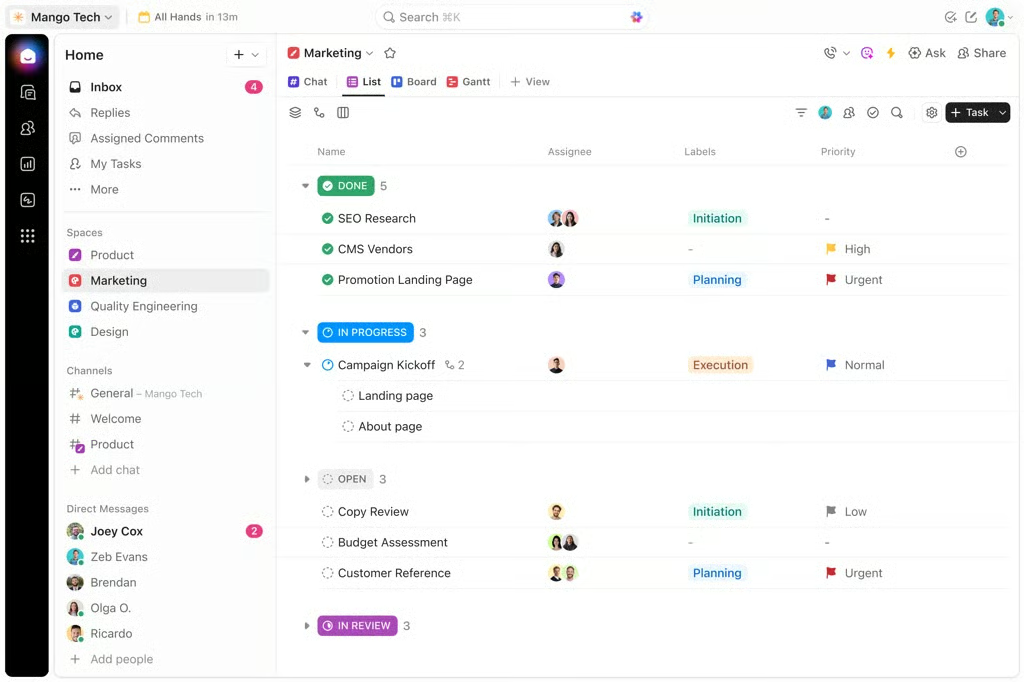
These settings also work with automations, which means a status or field change can automatically trigger the next action. This level of customization is useful for organizations that want multiple departments to manage work in ClickUp while maintaining team-specific processes.
2. Replaces several standalone work tools
ClickUp brings project management together with Docs, Whiteboards, Chat, dashboards, and time tracking. For example, teams can turn content from a Doc into tasks or use a Whiteboard to map ideas before converting them into individual tasks. Having these tools in the same workspace can reduce the need to move project information between separate apps for task management, documentation, and collaboration.
3. Multiple ways to manage the same project data
ClickUp offers more than 15 project views, allowing teams to examine the same work from different perspectives. A project manager might use a Gantt chart to check dependencies and scheduling, while team members use Board view to track work through each status.
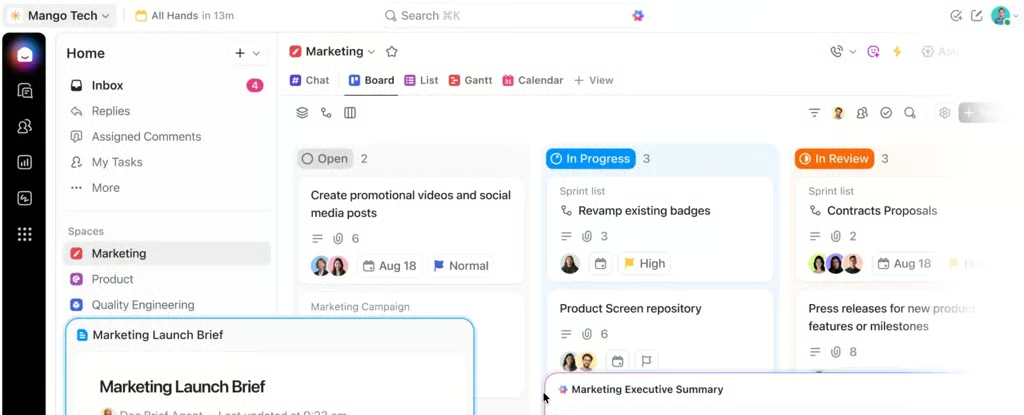
Workload view provides another perspective on assignments and available capacity. Since these views use the same task data, an update in one view is reflected across the workspace instead of requiring teams to maintain separate project plans.
4. Chat connects conversations to project work
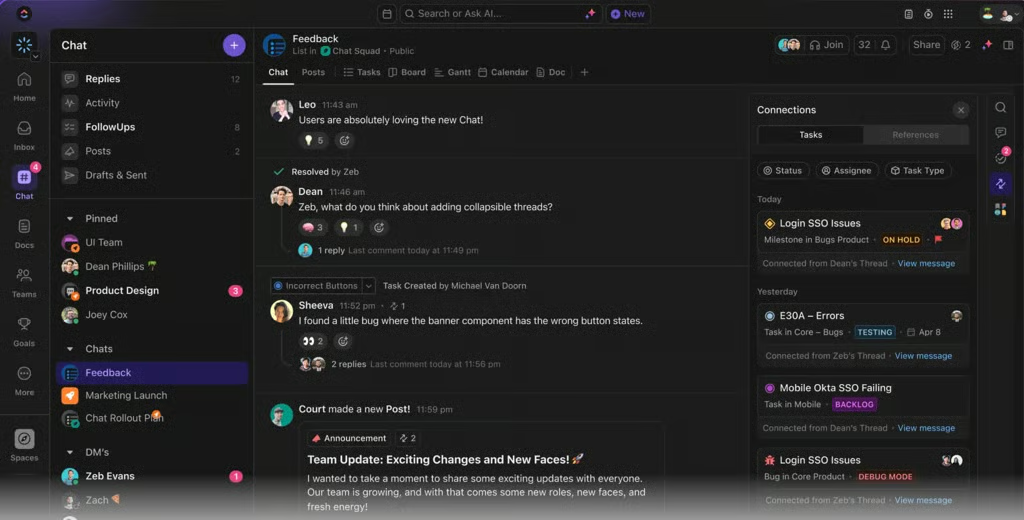
As a real-time collaboration tool, ClickUp Chat lets you convert a quick conversation into an action item. Project managers can move it into the team’s workflow from Chat instead of recreating the details elsewhere.
5. AI has direct access to workspace context
ClickUp Brain can reference information already stored across tasks, Docs, Chat, and wikis when responding to requests. This allows project managers to ask questions about current work rather than supplying the project background in every prompt.
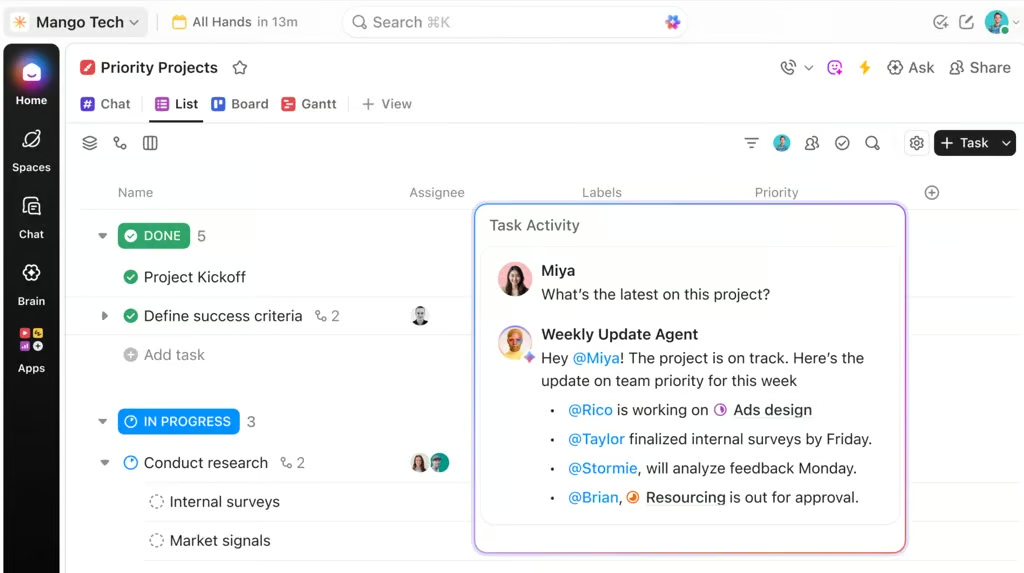
For example, Brain can summarize project activity or answer questions based on information within a selected project location. Teams that regularly update their project information in ClickUp can therefore use AI to retrieve and interpret existing workspace information.
6. Free plan provides access to a large portion of the ClickUp ecosystem
ClickUp’s Free Forever plan offers users access to unlimited tasks, unlimited free plan members, collaborative Docs, Kanban boards, Sprint Management, and Calendar view. Teams can also try features such as custom fields and Gantt charts within usage limits.
This makes the free plan ideal for evaluating how ClickUp handles different types of project work. Instead of jumping straight to a paid plan, teams can use the free version to see how ClickUp handles their workflow before deciding whether higher usage limits and additional features justify the cost.
Cons of ClickUp
ClickUp offers extensive functionality, but its flexibility can also require more time and resources. Before adopting the platform, consider the learning curve, setup requirements, and additional costs that come with AI access and more complex workflows.
1. Steeper learning curve
ClickUp can feel overwhelming at first because many features, settings, and customization options are available from the start. Recent G2 feedback continues to identify the learning curve as a common drawback, particularly for new users who need time to understand the interface and decide which features they actually need.
Teams moving from a free project management tool may need additional onboarding before everyone can use the platform consistently.
2. Workspace setup can become time-consuming
Getting started involves more than creating projects and adding tasks, especially when ClickUp will support several teams. Administrators need to decide how work should be organized across Spaces, Folders, Subfolders, and Lists, with additional setup around statuses and views.
ClickUp itself notes that teams may need time to determine which views work for them, while recent users report spending considerable time configuring workspaces and training colleagues.
3. Performance issues remain a recurring complaint
Slow loading continues to appear in ClickUp user feedback. As of August 2026, G2 records more than 1,100 mentions of slow loading among reported drawbacks, with some reviewers citing lag in List and Gantt views or when working with larger projects and heavier dashboards.
This is worth considering for project managers who regularly navigate large workspaces, since delays can become more noticeable when they need to move quickly between schedules and project data.
4. Customization can create unnecessary complexity
ClickUp offers considerable freedom to customize how teams organize and manage work, but it is easy to add more configuration than a project actually requires. Different statuses, Custom Fields, views, and automations can accumulate as teams create their own processes.
Over time, this can leave administrators with more settings to maintain and make it harder for employees to follow a consistent way of using ClickUp. Recent user feedback specifically points to workspace organization as an important factor in managing the platform.
5. Full AI access requires a separate subscription
ClickUp provides some AI access for free, but regular use of its broader AI capabilities requires an additional subscription. Brain AI costs $9 per user per month with annual billing, while Everything AI costs $28 per user per month.
Since paid ClickUp Workspaces require all members to upgrade together, organizations should account for potential increases in AI costs as the number of users grows.
6. AI access has several usage models
ClickUp’s AI pricing can take some time to understand because access depends on the AI plan as well as usage credits. Brain AI includes 1,500 monthly Super Credits per user, while Everything AI includes 5,000. Credits apply to capabilities such as Super Agents and AI Fields, with additional credits available for purchase.
Teams considering ClickUp primarily for AI should estimate which capabilities employees will use regularly to get a clearer picture of ongoing costs.
Who is ClickUp best for?
ClickUp is best suited to teams that want one highly configurable workspace for project execution and team collaboration.
- Cross-functional teams: ClickUp can support different departmental workflows through custom task types, statuses, fields, and views while keeping work in one workspace.
- Teams consolidating multiple work apps: Native Docs, Chat, Whiteboards, time tracking, and project management can reduce dependence on separate tools for common workflows.
- Project managers handling different types of work: More than 15 views let you manage schedules in Gantt, monitor workflow stages on Boards, or review team capacity through Workload view.
- Teams that need extensive customization: ClickUp works well when projects require custom fields, automations, task types, or processes that differ across departments.
- Teams interested in context-aware AI: ClickUp Brain can reference tasks, Docs, conversations, and other workspace information when answering questions or assisting with project work.
When to consider a ClickUp alternative
Consider another project management platform if your priorities favor quick adoption or simpler administration over ClickUp’s extensive customization options.
- You want minimal setup: ClickUp’s hierarchy and customization options require more decisions about how to configure projects, workflows, and views.
- Your team prefers a simpler interface: Smaller teams that need straightforward task management may find ClickUp’s range of features more than they need.
- You have limited time for onboarding: ClickUp itself acknowledges a steeper learning curve than simpler alternatives. Before adopting the platform, new users must invest time in onboarding.
- You manage very large, data-heavy workspaces: ClickUp reports that performance can lag in very large views or workspaces with heavy custom field usage.
- You want predictable AI costs: ClickUp’s AI offering includes different plans and usage-based capabilities, so organizations with extensive AI requirements may need to account for costs beyond their core project management subscription.
Best ClickUp alternatives
If using ClickUp for project management feels too complex or requires more setup than your team wants, these alternatives address different project priorities.
| Provider | Best for | Starting price (billed annually) | Key features | Why consider it over ClickUp |
|---|---|---|---|---|
| monday.com | Visual project tracking | $9 per seat/month | Customizable boards, dashboards, automations, workload management | Offers a more visual approach to configuring and tracking workflows, which reduces the initial learning curve |
| Wrike | Resource management | $10 per user/month | Interactive Gantt charts, dashboards, resource management, AI Essentials | When resource planning and capacity management are higher priorities |
| Smartsheet | Spreadsheet-style project management | $9 per member/month | Grid and Gantt views, forms, reports, portfolio management | Provides a familiar spreadsheet-style interface for teams accustomed to rows and columns |
Bottom line: Is ClickUp worth it?
ClickUp is worth considering if you want a highly customizable project management platform that also covers documentation, team communication, and AI-assisted work. Its extensive feature set provides room to expand as project requirements grow, though teams should account for the learning curve and added cost of full AI access.
FAQs
Is ClickUp good for project management?
Yes. ClickUp supports task management, Gantt charts, workload planning, dashboards, time tracking, automations, and project documentation. Its customization works well for teams that manage different project types, though new users may need time to learn the platform.
What is ClickUp used for in project management?
ClickUp is used to plan projects, assign tasks, track deadlines, manage dependencies, monitor workloads, and report on progress. Teams can also connect project work with Docs, Chat, Whiteboards, and AI tools in the same workspace.
Is ClickUp free for project management?
ClickUp offers a Free Forever plan with unlimited tasks, collaborative Docs, Kanban boards, Calendar view, and limited access to features such as Gantt charts and Custom Fields. Paid plans increase usage limits and add more project management capabilities.