When it comes to software development, many agree that bug tracking and task workflow are essential in the industry. The best programs allow teams to resolve issues in the design, coding, specs, and/or features while tracking the overall project. With all that in mind, can Jira Software live up to expectations? Let’s find out. Hi Project Managers! I’m Meredith, and in this video we’re going to be reviewing Jira Software, a customizable workflow engine that allows users to track issues, bugs, tasks, and other work items through predefined workflows that users can modify to fit their requirements.
Originally developed under Atlassian, Jira was released in 2002 as a purely issue tracking solution for software developers. Over the years, various teams across industries—including non-IT teams—have come to use the software for tracking all types of issues, tasks, and work items. They do so because, like other issue and project tracking software, Jira enables teams to plan, track projects, release software, generate reports, and automate processes using a single platform.
Today, more than 100,000 organizations worldwide use Jira Software for building their custom projects. This scalable solution has robust feature sets with enterprise-grade security for every stage of growth. And its connection to the Atlassian Marketplace allows developers to create plugins that extend the features of the software. So overall, it sounds like an amazing tool. But what exactly are the pros and cons? Don’t worry. I’ve got the answers.
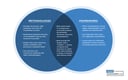
Let’s begin with the advantages. The major one being that this tool can be utilized for all types of teams. Agile teams can enjoy the efficiency of time tracking and real-time project reporting, Software Dev teams can collaborate with stakeholders instantaneously, Project Management teams can customize unique workflows and tasks, the list goes on. So there shouldn’t be concern when it comes to work compatibility. And if you’re worried about cross collaboration, there’s this great feature called Jira roadmaps.
Together, teams can better plan when they have the visibility and context to make the right decisions while staying aligned with the company’s bigger goals. Roadmaps allow users to roll up work from team level to company-wide initiatives. It also lets users track progress and dependencies with consideration of team capacity. Along with that, Jira provides ready-to-use dashboards and reports that offer up-to-date work information so teams get timely insights to deliver successful products.
And, it allows dev teams to build, test, and release software faster. This allows users to visualize and measure progress from start to finish of the whole application lifecycle across built-in and third-party tools. And lastly, if Jira’s current tool set isn’t enough, then users can easily extend the capability of Jira with thousands of available apps and integrations. Quick and deep integrations enable designers, developers, and other users to be more productive without having to switch from one application to another.
Unfortunately, where there are pros, there are also cons. Here’s a few of the disadvantages that I noted when using Jira Software. Let’s start with the set up phase. First-time users of Jira Software can experience a steep learning curve. The multiple options for various configurations can be overwhelming for simple projects. Especially for teams who are looking for something that “just works” right out of the box. There’s also a communication blocker.
Users get email notifications while tracking issues or projects. Typically, that’s a positive. However, there is no quick way to send messages directly from Jira, which forces users to have to send info through other means. That can be inconvenient depending on your company's current tools. There are integrations available with other communication and chat software that can solve this problem, but this inability to communicate from within the Jira environment may be a dealbreaker for some.
Along with that, the suite of possible Jira products can be overwhelming. Jira products include Jira Software for dev teams, Jira Work Management for business teams, Jira Service Management for service management, Opsgenie, Statuspage, Confluence, and Bitbucket, among others. That’s a lot to keep up with, and some users may find it confusing and costly to build a complete suite of solutions. And finally, as a project management tool, it lacks features to manage costs or assess risks, which are features often needed in a complete project management experience.
Jira is a top choice for many teams and users, but even with its advantages, it might not be the most suitable solution for every team and situation. To know if Jira is right for you, then my best advice is to go and try it for yourself. If you want to test out Jira Software, there’s a link to Jira’s free plan in the description below. The free plan supports up to 10 users, includes 2 Gigabytes of storage, and provides access to some basic versions of Jira’s main features.
And if you have any experience with Jira Software yourself, be sure to leave a comment for your fellow project managers. Plus if you want to look into alternatives, then go visit Project-DASH-Management-DOT-Com to read up on the latest articles covering other PM tools like Wrike and Monday.com. And finally, if you found this video helpful, be sure to click the like icon and hit the subscribe button if you want to keep up with all things project management. Thanks for watching!