























Key takeaways
Project failures happen more often than I expected when I first started managing projects. External factors play a role at times, but most come from internal decisions that teams could have handled differently. Unclear goals create confusion, and poor planning leads to misalignment that grows into scope creep or miscommunication.
In this article, I share insights from years of managing projects to break down eight common causes of failure and how to fix them.
What is a project failure?
A project failure happens when results fall short of the goals established in the project plan. This can include missing deadlines, exceeding the approved budget, or delivering outputs that do not meet stakeholder expectations. According to the Project Management Institute (PMI), organizations worldwide lose an average of 5.2% of their investment due to poor project performance, highlighting how even small inefficiencies can result in significant financial setbacks.
From a management perspective, a project is considered failed when it cannot meet agreed standards for cost, schedule, or quality, which are clear signs that planning, execution, or oversight broke down along the way.
What are the common causes of project failure?
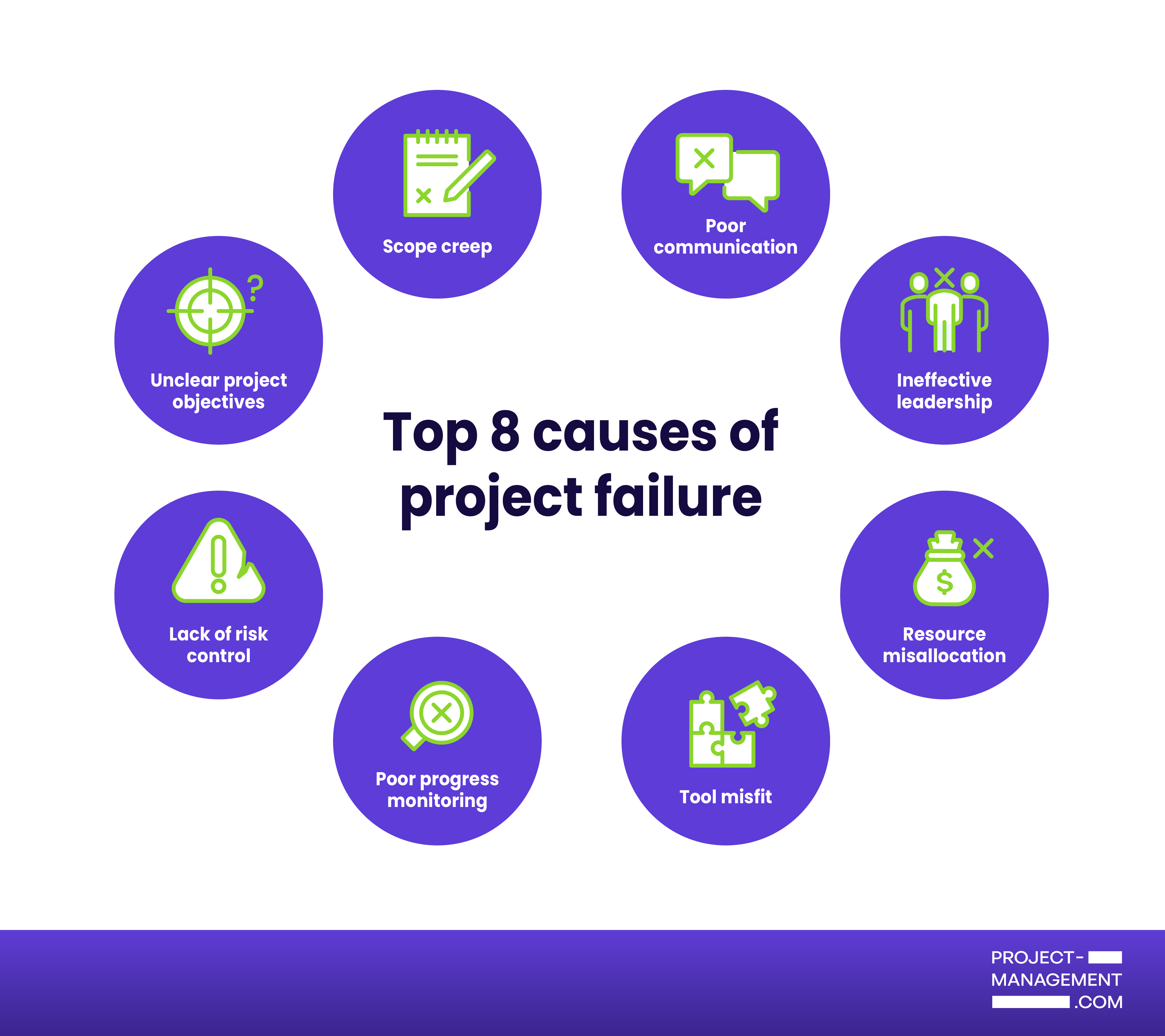
Projects often fail due to weak direction, poor communication, limited risk awareness, or unclear scope. These issues appear across industries, which means they can be identified and corrected early. Below are the most common causes of project failure and how to address them.
1. Unclear project objectives
Picture this: A retail company launches a new ordering platform without defining specific objectives. Some stakeholders expect a customer loyalty feature, while others push for faster checkout processing The lack of shared understanding leads to duplicated development work and conflicting designs. Marketing prepares campaigns for features that never make it into production, and the project stalls under competing expectations.
This is what happens when project objectives are vague or undefined. Without a clear purpose, teams struggle to prioritize tasks or measure progress. Confusion spreads across departments, causing duplication of effort or conflicting priorities. Deadlines are missed and team motivation drops because no one is working toward the same outcome.
How to fix it:
Begin the project with a comprehensive charter that outlines objectives, scope, stakeholders, and key performance indicators (KPIs). Before launching, discuss it with decision-makers to clear any misunderstandings. Using the SMART goal framework translates high-level expectations into measurable outcomes, while maintaining team communication ensures everyone shares the same definition of success criteria.
2. Scope creep
Picture this: A manufacturing company initiates a project to upgrade its inventory management system. Halfway through development, executives request new analytics dashboards and supplier integrations without adjusting the timeline or budget. The team tries to absorb the changes, which led to rework and delays. What started as a three-month project extends into six months.
Scope creep occurs when small additions or requests are introduced into a project without proper evaluation or approval. Each added request puts strain on existing resources by increasing workload, extending timelines, and driving up costs.
How to fix it:
Set up a formal change control process before the project begins. Review every request for its impact on time and cost so stakeholders understand the trade-offs. Every request should be documented, and once approved, updates must be reflected in the project baseline for traceability.
3. Poor communication
Picture this: A construction firm managing a large housing project has contractors, engineers, and architects tracking updates across separate systems. The design team modifies blueprints, but the field engineers never receive the revised plans. This gap leads to rework, wasted materials, and conflicting progress reports, which affected client confidence.
Projects often fail when information is not shared effectively across teams and stakeholders. When updates are unclear or incomplete, teams lose track of responsibilities and progress. Important details are missed, which results in duplicated work, delays, and misaligned expectations. Over time, miscommunication erodes trust and slows down decision-making across the board.
How to fix it:
Centralize communication in a project management platform so updates are easy to track. Research from Project.co shows that 76% of teams that rely on project management tools for communication report better internal efficiency, which highlights the value of regular updates. Regular check-ins, whether daily or weekly, also help reinforce accountability and keep everyone working toward the same priorities.
READ MORE: Top Project Management Software by Experts
4. Ineffective leadership
Picture this: An IT firm assigns a technically skilled manager with limited leadership experience to lead a data migration project. The manager avoids tough conversations about scope and hesitates to challenge unrealistic deadlines. As a result, team members lose focus and performed poorly as priorities shift. The project ends without meeting any of its intended objectives.
Weak leadership creates confusion and erodes accountability. When project leaders fail to provide clear direction, conflicts go unresolved and risks are handled are inconsistently. Leaders who struggle to communicate expectations also have a harder time maintaining stakeholder confidence, which weakens the project’s credibility from the outside as well.
How to fix it:
Encourage open communication between teams and leadership to surface feedback and resolve issues. Investing in leadership development through training and mentorship programs also gives managers the skills to handle high-stakes projects with greater confidence and consistency.
5. Resource misallocation
Picture this: A healthcare company launches new patient management software, but poor scheduling led developers to work overtime on interface customization while testing and training teams sit idle. When the product goes live, users encounter critical bugs, and support requests flood in. The uneven use of resources exposes the lack of coordination.
Projects fail when workload or financial resources are unevenly distributed. Overloaded team members burn out, while underutilized staff lose engagement. Budget resources may concentrate on less critical tasks, leaving core deliverables underfunded. The result is inefficiency, low morale, and delayed project completion.
How to fix it:
Use dedicated resource management tools to monitor team workload, then review capacity reports regularly to identify potential bottlenecks. Weekly discussions around workload distribution also help keep teams productive without pushing them past their limits.
6. Tool misfit
Picture this: A marketing agency adopts an enterprise-level project management system to handle small creative projects. The steep learning curve discourages team members to use the tool and quietly reverts to spreadsheets. This resulted to inconsistent reporting data and project leads loses visibility into active campaigns.
Choosing the wrong tools creates work inefficiency and data gaps. When a platform does not match the team’s workflow, it slows progress rather than supporting it. Even the lack of integration across existing systems pushes teams toward workarounds, which causes frustration and tool fatigue over time.
How to fix it:
Select tools based on the project’s size and your team’s technical comfort level. Conduct pilot testing with a small group before rolling out any platform to confirm that it fits daily workflows and user needs. Once implemented, ensure the tool connects with existing systems and set aside time for training sessions.
7. Poor progress monitoring
Picture this: An energy company implements a renewable power initiative without establishing reporting checkpoints. Progress reports arrive at irregular intervals, and cost overruns go unnoticed until the project is nearly complete. Stakeholders are blindsided by the final expenses, reducing their trust in the organization.
Projects fail when progress tracking is inconsistent or overlooked. Teams that rely on delayed or sporadic updates tend to discover critical issues, such as resource shortages or quality defects, only after they have already caused significant delays. Poor monitoring also limits a project manager’s ability to make informed decisions and reduces team accountability, since there’s no consistent record to measure individual or team performance.
How to fix it:
Establish a monitoring framework with measurable performance metrics tied to each milestone. Use dashboards and progress reviews to assess trends and identify potential risks. When issues occur, document them in detail, identify the root cause, and take corrective actions right away.
8. Lack of risk control
Picture this: A software development company starts a government compliance project without a proper risk assessment. Midway through, new data privacy regulations are enacted and require major redesigns. The team scrambles to meet new requirements, resulting in overtime expenses and strained client relationship.
When risks are ignored or underestimated, teams end up reacting to problems instead of preventing them. Unplanned changes, such as regulatory updates or supplier delays, can disrupt timelines and increase expenses.
How to fix it:
Maintain a risk register to document potential issues and track mitigation efforts. Review it regularly in every status meeting to ensure transparency and shared accountability across the team. Each risk should have an assigned owner so someone can monitor warning signs and escalate concerns before they affect the project scope and resources.
Which tools can you use to avoid the risk of project failure?
The right project management tools help you spot issues early and maintain control over scope, timelines, and resources. Here are the top platforms with their use cases and key features that can be useful in reducing the risk of project failure.
Project management tool
Best for
Key features
Free plan
Monthly starting price
Preventing scope confusion during early planning
- Workflow automation
- Time tracking
- Kanban boards
✅
$9 per user
How to maximize opportunities from failed projects
Projects that do not meet their objectives still hold significant learning value. Explore these strategies to help your team leverage a project’s shortcomings as a chance for development and improvement.
Embrace accountability
Accountability starts with examining what went wrong within your control rather than looking for someone to blame. This mindset shifts focus from fault-finding to learning. Review the project’s decisions and identify gaps between plans and execution. Acknowledge what could have been handled differently and document those lessons. By owning mistakes, you develop credibility and show your team that responsibility leads to better outcomes.
Extend forgiveness and foster collaboration
A failed project often exposes tension among team members, but holding grudges prevents progress. Forgiveness allows the team to rebuild trust and return to productive collaboration. When leaders replace blame with understanding, they create space for honest dialogue about what went wrong and how to fix it. Teams that recover through cooperation become more unified and adaptive, ready to perform more effectively on future initiatives.
Maintain perspective without personalizing failure
It is easy to let a failed project affect confidence, but setbacks are part of professional growth. Instead of seeing failure as personal, treat it as data that informs your next strategy. Reflect on internal choices and external factors that contributed to the outcome. Keeping a balanced view helps you stay composed and solution-oriented, which shows your team learning outweighs disappointment.
Initiate actions for improvement
Lessons from failure only matter when they lead to actual change. Use what you learned to improve project templates, communication procedures, or risk management processes. Identify the weak points that contributed to failure and address them through revised workflows or accountability structures. When teams treat each project as an opportunity to refine their methods, mistakes become a foundation for measurable progress.
FAQs
Project failure happens when outcomes do not meet agreed objectives for scope, cost, or schedule. It often stems from unclear goals or ineffective execution. Common project failure examples show how poor planning and weak communication reduce performance and stakeholder confidence.
The five main causes include unclear objectives, scope creep, poor communication, weak leadership, and lack of risk control. Each factor disrupts alignment and resource efficiency, leading to delays or unmet deliverables that damage stakeholder trust.
A project is considered failed when it does not deliver expected results, overshoots its budget, or misses critical deadlines. Failure also applies when outputs meet technical goals but fail to achieve strategic or business value for the organization.