



















As project managers, our goal is to eliminate roadblocks, not to become them. The traditional weekly status meeting can be seen as the ultimate exercise in project friction. It requires the project team (and everyone else in the meeting) to stop working to talk about work. In addition, these meetings typically focus on looking backward at what has already been done rather than strategizing about what comes next.
The good news? The modern project management tech stack can be built to render the “status sync” virtually obsolete (see what I did there??). I have found that if you can leverage the right features within your existing software, you can shift your team from a synchronous reporting culture to an asynchronous execution culture.
Here are five PM software features that I have used to replace weekly status meetings in my projects.
1. Real-time project dashboards
What it replaces: The “project health” overview
In a typical status meeting, the PM spends the first five to ten minutes outlining the overall health of the project. We outline the budget burned, milestones met, and timeline trajectory. Real-time dashboards can eliminate this entirely. By configuring a central dashboard, you create a single source of truth that is always up to date.
Stakeholders and team members can check widget-based visual summaries of task completion rates, resource allocation, and overdue items anytime. Instead of waiting for a Tuesday meeting to find out a phase is lagging, the dashboard reflects the delay the second a task misses its deadline. When leaders have self-serve access to high-level metrics, you rarely need to host a meeting just to read numbers off of slides.
In addition, leaders can build their own customized dashboards to see what matters to them. Everything is on the dashboard and updated in real time, so nobody has to rely on templated slides with stale data to stay up to date.
Related: Maximizing Dashboards for Project Managers
2. Visual workflows (a.k.a., Kanban boards)
What it replaces: The “what are you working on?” round-robin
One of the most agonizing parts of any update meeting is the inevitable round-table where every team member justifies their existence by listing what they just wrapped up and what they are working on next. It’s an inefficient way of providing updates and usually cues the rest of the room to start checking email or responding to chats.
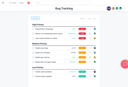
Visual workflows—particularly Kanban boards—solve this instantly. When your team commits to moving task cards through columns (e.g., Backlog, In Progress, In Review, Done), status is communicated by a card’s location.
Most platforms will also let you add color-coding or another visual indicator of who’s working on each task. Anyone wondering what a developer or designer is tackling right now only needs to look at the “In Progress” column. It provides transparency and accountability without requiring a single spoken word.
Related: 6 Best Visual Project Management Tools
3. Automated handoffs
What it replaces: The “tag, you’re it” alignment meeting
Cross-functional handoffs are notorious for falling through the cracks, which is why PMs often schedule syncs just to ensure Team A has officially passed the baton to Team B.
Modern PM tools feature automation engines that handle this with ease. For example, you can set up a rule like this:
- Trigger: Developer marks their code task as complete
- Action 1: Identify two code reviewers with capacity for a new assignment
- Action 2: Assign review tasks to the people identified in Action 1
- Action 3: Notify the reviewers of their new assignment
- Action 4: Update the scheduled tasks with assignments and status updates
Friction-reducing, system-driven handoffs like this ensure momentum isn’t stalled while manual processes confirm that a task is complete and new work has been assigned. The software enforces the process, freeing your team to focus on the actual deliverables.
I will add that automations should be handled with care because too much automation can create missed notifications or missed steps. You need to evaluate your processes and determine your level of comfort with workflow automation, but it does work when exercised properly.
Related: Process Map Templates You Can Customize for Any Workflow
4. In-task collaboration and @-mentions
What it replaces: The “let me give you some background” roadblock discussion
When a team member hits a snag, they usually wait for the next status meeting to bring it up, requiring them to spend five minutes explaining the context to the whole room before solutioning can even begin.
In-task communication features, like nested comment threads, file attachments, and @-mentions directly inside a task card, anchor the conversation to where the work lives. If there’s a roadblock, the assignee can @-mention the appropriate person directly inside the task. The tagged person sees the history, the attached assets, and the specific issue all in one place.
Issues are resolved asynchronously, bypassing the need to clutter a calendar invite. This can help avoid additional emails, chat messages, and other forms of communication that lack context and require typing of specific details in multiple places.
If you can collaborate in the PM tool, where the work already lives, you create active communication where the work lives, as opposed to passive communication that requires additional information and steps to find the work.
Related: 10 Best Team Collaboration Software Tools
5. Dynamic Gantt charts and dependency tracking
What it replaces: The “how does this delay affect the big picture?” panic sync
Projects rarely go exactly according to plan. When a critical path item is delayed, the immediate instinct is to call a meeting to understand what else is impacted.
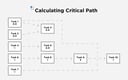
Dynamic Gantt charts and automated dependency tracking do this math for you. By linking tasks together, a delay is no longer a mystery—if Task A is pushed back by three days, the PM software can automatically shift dependent Tasks B and C forward by three days and recalculate the final delivery date instantly. As potential risks come up, you can give leaders accurate forecasts with visuals instead of just tossing out hypotheticals.
You do not need a meeting to figure out the ripple effect when something changes. The system maps it out visually, allowing you to proactively manage stakeholder expectations.
Related: What is a Dependency Structure Matrix in Project Management?
How to evolve your meetings
Reducing or even eliminating the status meeting doesn’t mean you stop interacting with your team and information; it means you elevate the purpose of your time together and change how you consume information. Updates shift from a push system to a pull system, allowing everyone access at any time instead of a designated time and date on the calendar.
When you offload routine reporting to your PM software’s dashboards, automated handoffs, and visual workflows, you free up not only your calendar, but everyone else’s calendar as well. These strategies can transform your meetings from backward-looking status checks to forward-looking strategy sessions, creative brainstorms, and complex problem-solving.
Your PM software is already tracking the status. Let it do its job, so you and your team have more time for high-value collaboration.