




















KEY TAKEAWAYS
Getting a project off the ground is hard enough, but writing a convincing proposal has its own challenges. To help you get straight to writing, I handpicked five project proposal examples across different formats and put together a downloadable template you can use for your next pitch.
1. Standard project proposal template
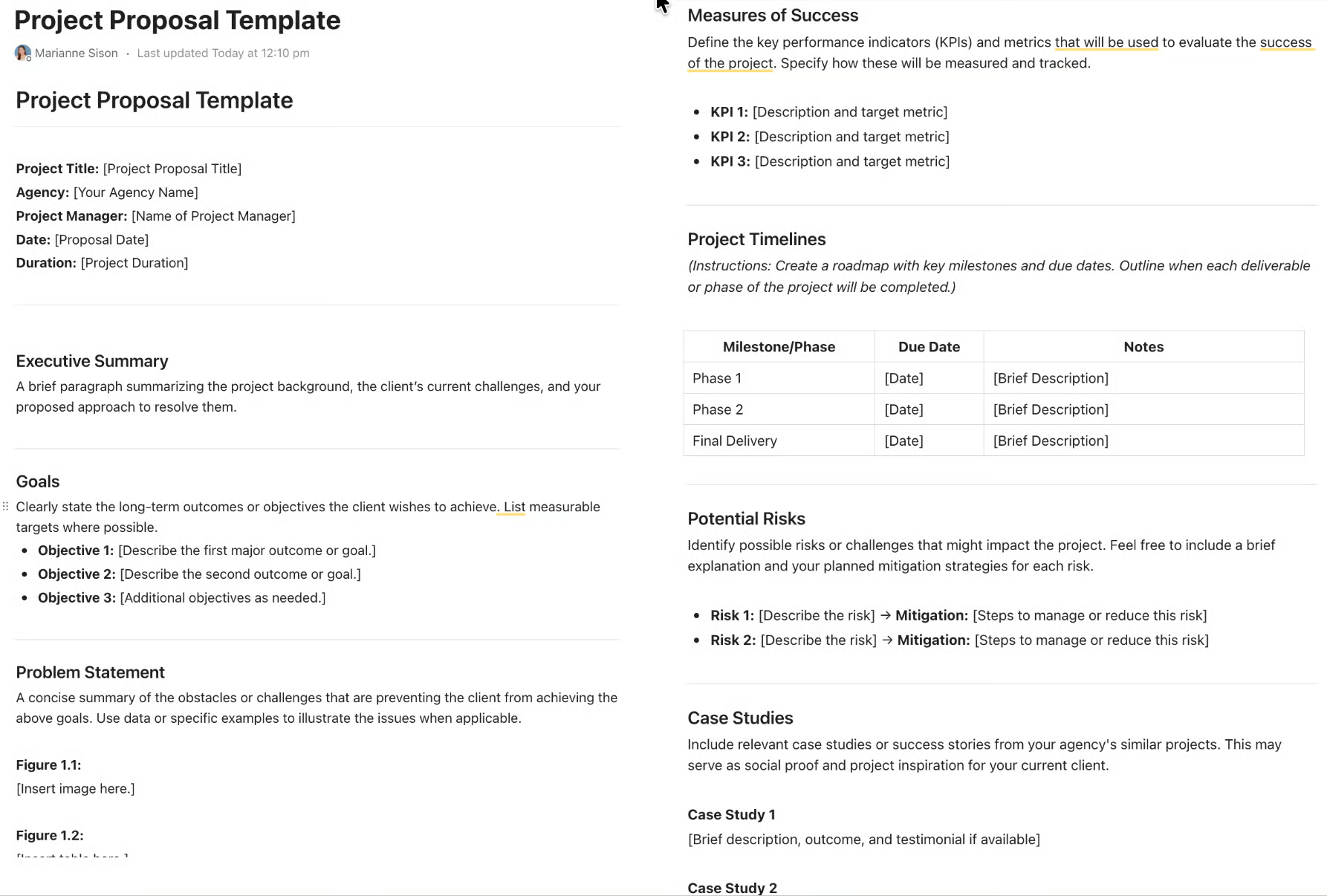
Why I like ClickUp’s template
ClickUp Docs goes back to basics with a traditional document layout that includes a summary, goals, KPIs, timelines, risks, and case studies. Compared to visual boards or spreadsheet formats, it’s more comprehensive because it actually explains the business problem and the proposed approach before getting into milestones and performance indicators.
What stands out is how metrics are placed directly beside objectives, and a timeline table shows exactly when each goal is expected to be delivered. Everything you need to evaluate the proposal is on the same page, so nothing gets lost between sections.
If you’re writing something for an executive review, putting together a client approval, or working on an initiative that needs both a solid justification and a way to track performance, this format handles all of that without needing multiple documents.
2. Worksheet-style project proposal template
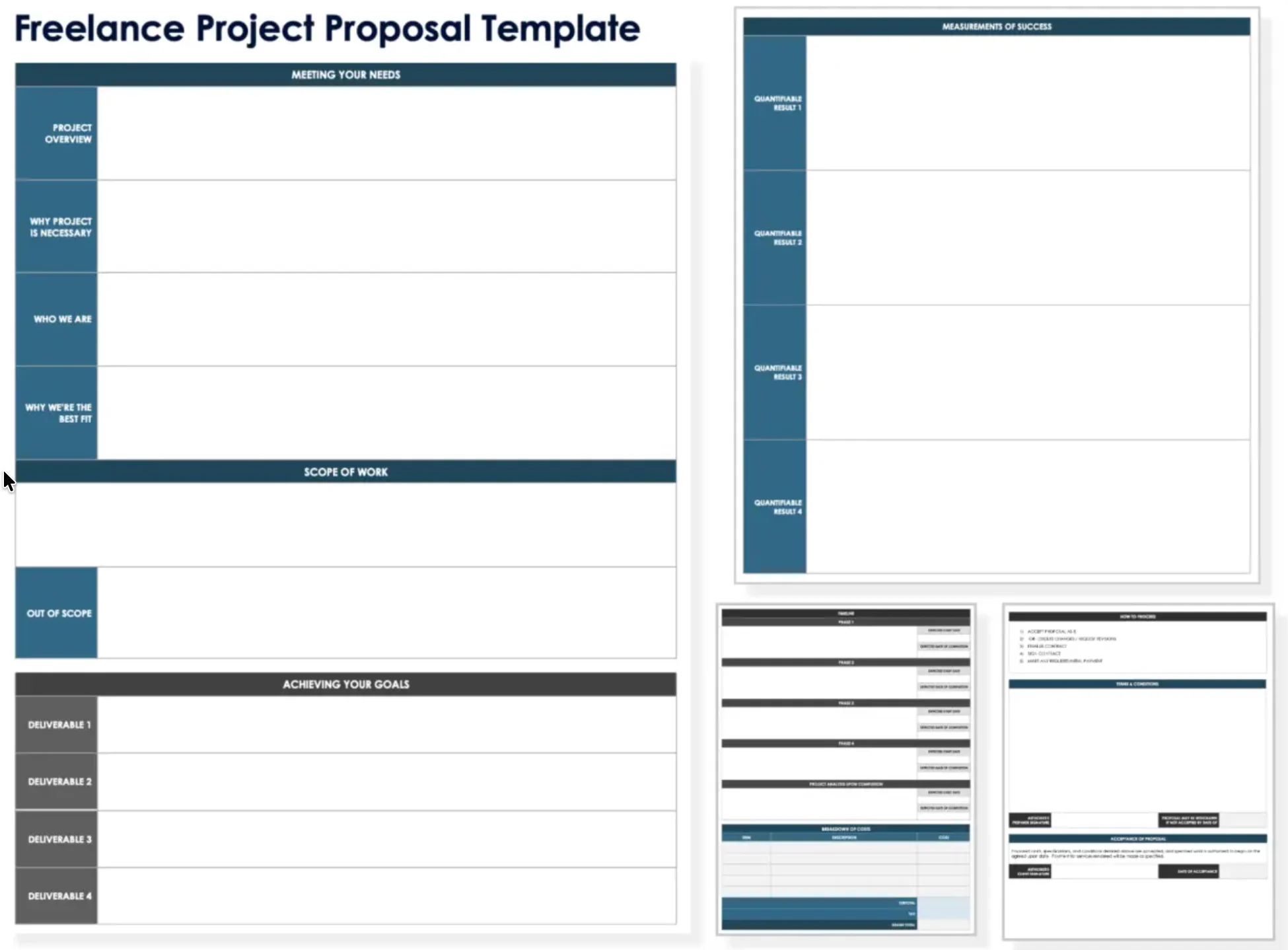
Why I like Smartsheet’s template
Smartsheet’s template takes a worksheet approach by using separate cells for the project overview, justification, team credentials, scope of work, out-of-scope items, deliverables, and quantified results. It feels more like filling out a form than writing a document, which is actually a good thing here.
What makes it useful is that it forces you to spell out the project scope, right alongside your outcome targets. This reduces the back-and-forth during approval because expectations are laid out before anyone has a chance to assume something different.
If you’re doing freelance work, responding to a vendor bid, or locking in a fixed-scope contract where scope creep is a real concern, this template gives you a solid format to work from.
3. Canvas board project proposal template
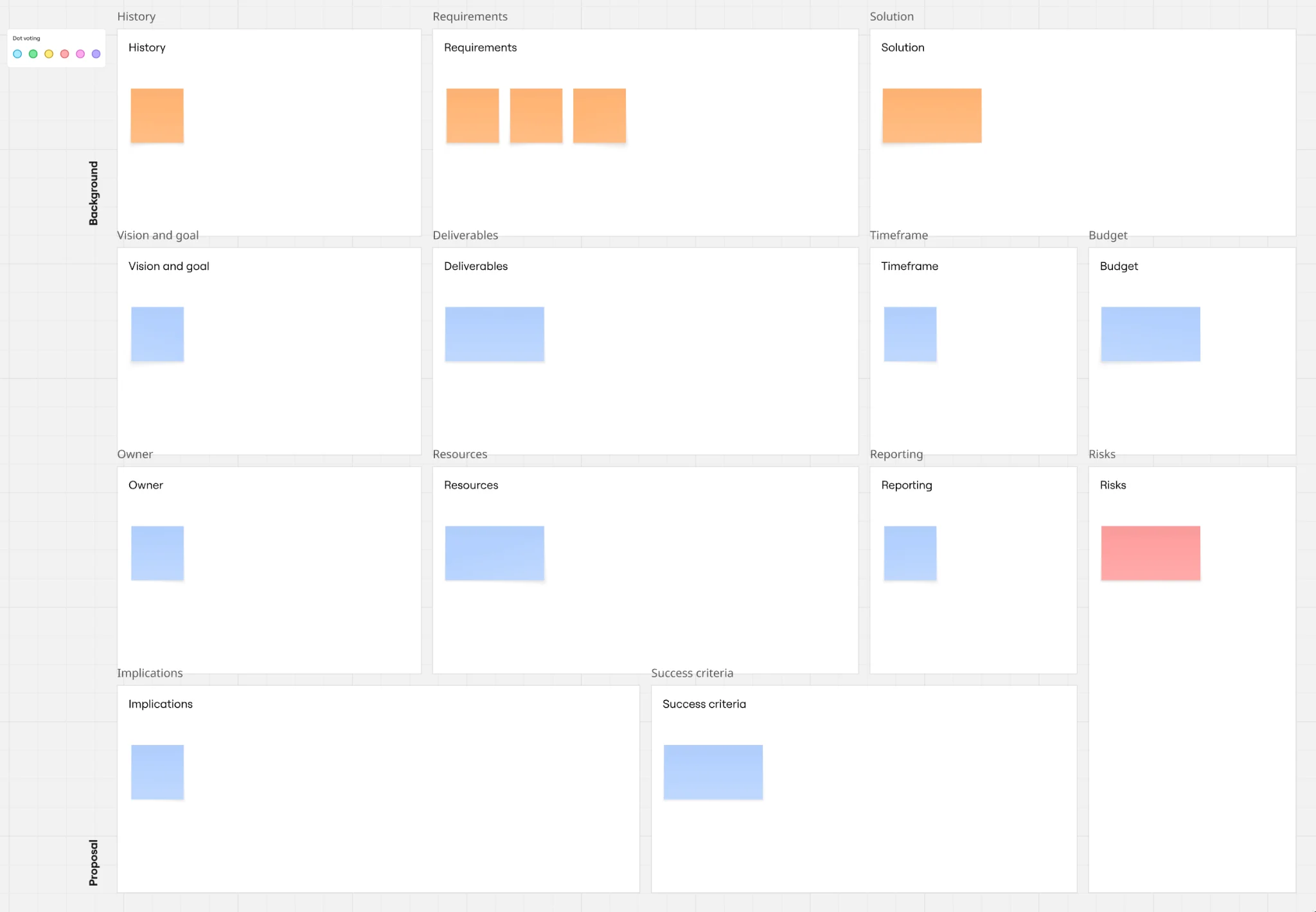
Why I like Miro’s template
Miro is a visual workspace, so it makes sense that its project proposal templates throw out the document format entirely. You get a canvas with separate boxes for history, requirements, solution, risks, budget, and success criteria, all arranged spatially so you can see everything at once rather than scrolling through pages.
The template’s side-by-side layout is great for discussion because you can jump around, make connections, and update things on the fly without reformatting a document every time something changes.
If you’re running a discovery workshop, doing early-stage planning, or just trying to get a team aligned before anything is set in stone, this one fits really naturally into that kind of working session.
4. Grid-style project proposal template
Why I like monday’s template
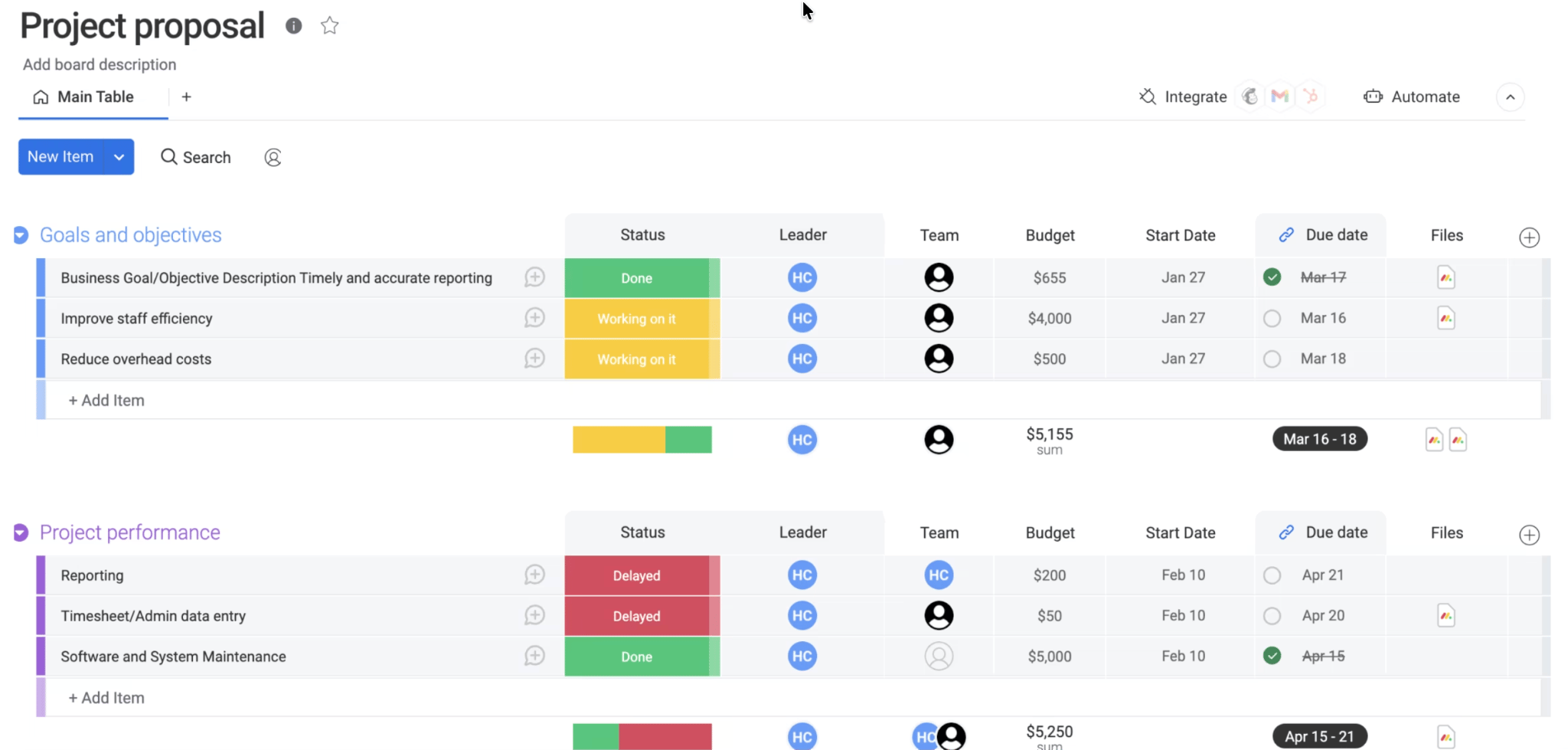
monday.com is known for its intuitive grid-style boards, making it easy to organize and track proposal details at a glance. Instead of a traditional document, you get a live project board where objectives and performance items are arranged in rows, with columns for status, owner, budget, start date, and due date.
It’s a different take on proposals because the whole thing is built around project data. Instead of trying to sell anyone on anything, it outlines what will be done, who owns it, and when it’s due. What I like most is how goals connect directly to owners and timelines, so accountability is baked in before the project even kicks off.
If your project is already approved and you just need everyone aligned on who’s doing what, or if you’re doing internal planning where tracking matters more than making a case for the work, this one’s a really solid pick.
5. Branded project proposal template
Why I like Notion’s template
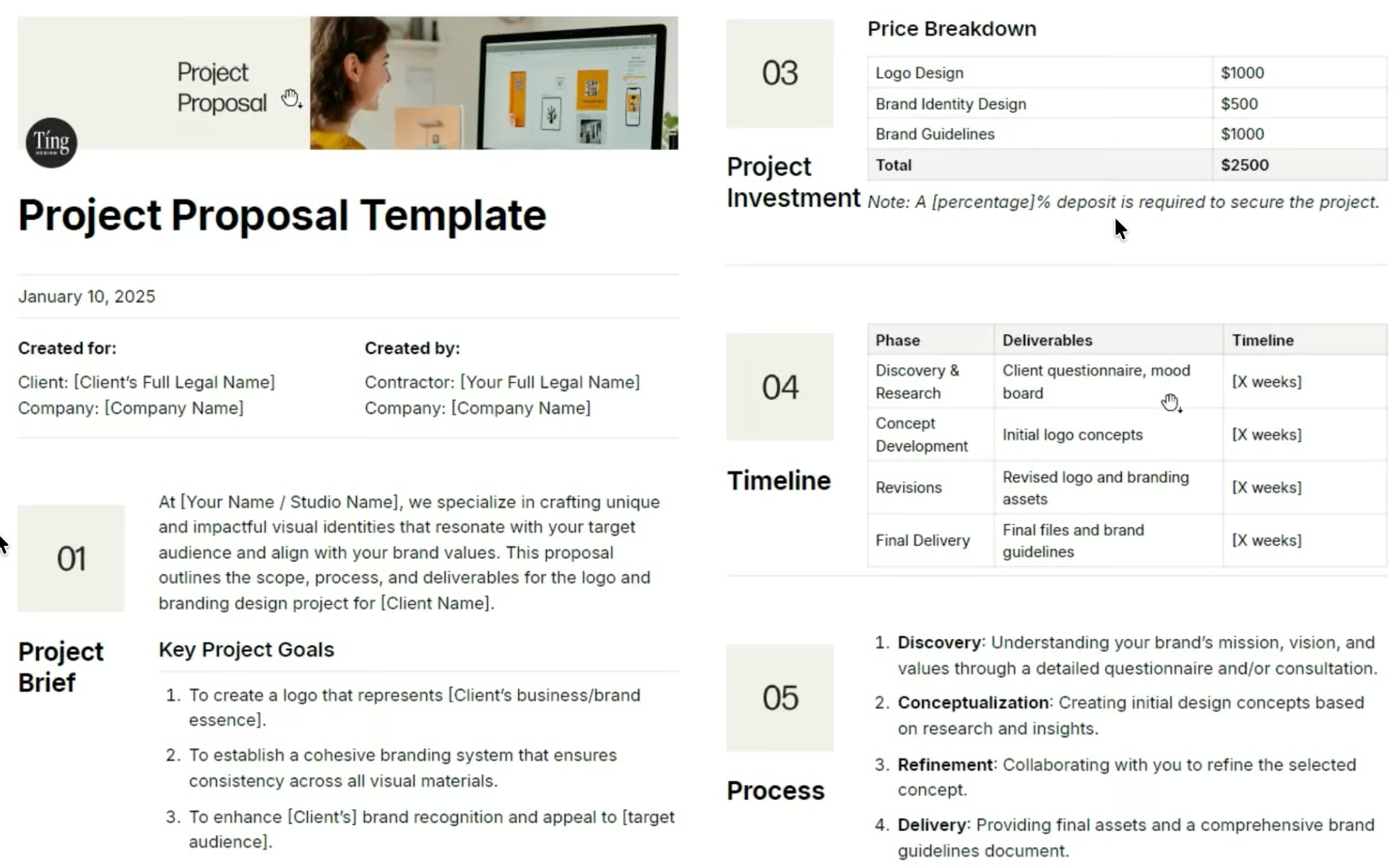
Notion offers a large library of community-made templates, which allows users to choose layouts for different use cases. The template above is made for designers, and it reads like something you’d actually send to a client: it includes an image header, a spot for your logo, and colored blocks that give it a branded feel.
The layout flows from context to scope and then to investment, which mirrors how decision-makers evaluate a service engagement. I also like the cost breakdown and timeline table, which is exactly what marketing clients prioritize when looking at creative deliverables.If you’re pitching an agency project, putting together a consulting proposal, or quoting a fixed-fee job where how it looks matters just as much as what it says, this format is worth stealing.
Best practices for using project proposal templates
Before you start filling in your project proposal template, keep these tips in mind to give your proposal the best shot at getting approved.
- Customize it to fit your audience. A template is just a starting point, so adjust the language, sections, and level of detail based on who’s reading it. An internal stakeholder may care about timelines and resource allocation, while an external client will focus more on outcomes and ROI.
- Fill in every section, even the uncomfortable ones. It’s tempting to skip things like risk assessment or out-of-scope items, but those sections exist for a reason. Leaving them blank can lead to scope creep, misaligned expectations, or surprise costs later on.
- Keep the language jargon-free. Not everyone reading your proposal will have the same technical background as you, so write like you’re explaining it to someone outside your team. If a section is hard to follow, it’s less likely to get approved.
- Use real numbers wherever possible. Vague estimates like “a few weeks” or “a moderate budget” make it harder for decision-makers to say yes. Specific timelines, costs, and measurable goals (e.g., “6 weeks,” “$25,000,” or “increase conversion by 15%”) show that you’ve done the planning.
- Treat it as a living document during the pre-project phase. Your proposal will probably go through a few rounds of feedback before it gets the green light, so don’t treat the first draft as final. Build in time to revise and refine it based on stakeholder input.
Free download project proposal template
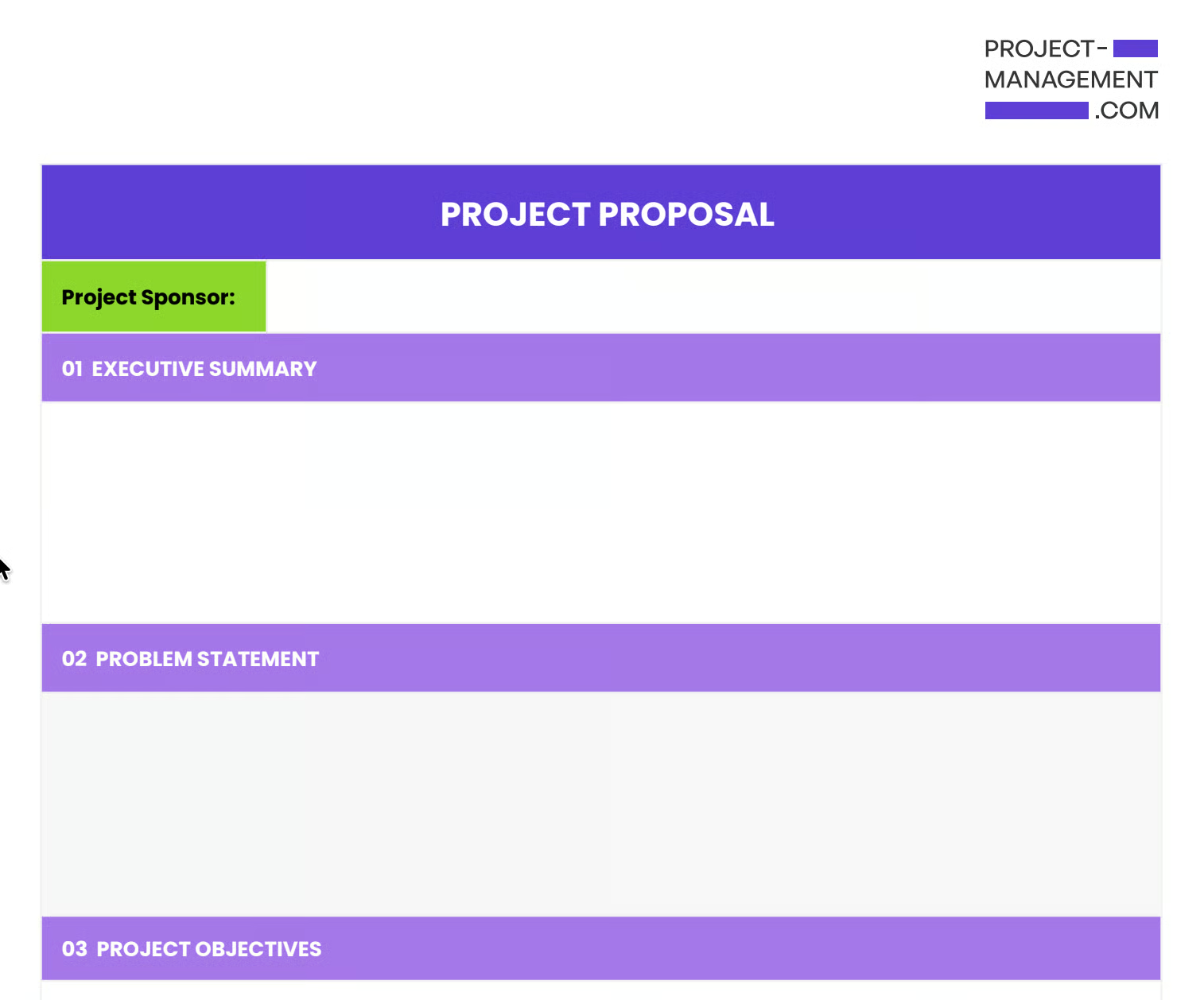
To save you time, here’s a free project proposal template you can customize for any project or pitch.
FAQS
Yes, but industry-specific templates are more effective. A construction proposal includes sections for documenting permits, materials, and safety plans, while a software proposal focuses on technical specifications and agile milestones. They also help you align your template’s terminology and sections with the expectations of your specific field.
Winning project proposals are tailored for a specific audience and supported by sufficient evidence. They lead with the problem and quantify expected outcomes. Also, adding a visual timeline, a budget table, and social proof (previous project results) significantly increases approval rates.
To write a client project proposal: (1) research the client’s problem, (2) state your proposed solution, (3) outline deliverables and timeline, (4) provide a budget estimate, and (5) explain your team’s relevant experience.