SHARE
Facebook X Pinterest WhatsApp

6 Proven Project Estimation Techniques, Examples, & Best Practices

Master project estimation techniques, like parametric, analogous, and bottom-up methods, with examples and tips to help you choose the right approach.

Feb 2, 2026
project-management.com content and product recommendations are editorially independent. We may make money when you click on links to our partners. Learn More
KEY TAKEAWAYS

  • Project managers use a range of estimation techniques, such as analogous, parametric, bottom-up, three-point, expert judgment, and agile estimation, each designed for different data conditions and project maturity levels.
  • The most reliable estimates combine quantitative data with expert input, account for baseline assumptions, and recalibrate results continuously as the project progresses.
  • Accurate estimation supports better resource allocation, cost control, and stakeholder confidence, reducing financial and delivery risks across the project lifecycle.

Teams that rely on guesswork often face projects that run out of funding halfway through or require timeline extensions to stay afloat. The right project estimation technique can turn uncertainty into reliable forecasts by grounding decisions in measurable data, expert analysis, or proven formulas. 

This guide breaks down the most effective estimation examples and shows how to apply them to improve accuracy, accountability, and project outcomes.

What is project estimation?

Project estimation forecasts the time, cost, effort, and resources required to complete a project based on the defined scope and available resources. It provides a realistic view of what it will take to deliver the outcomes and allows teams to plan budgets, assign resources, and set achievable timelines. 

In the 2025 Government Contracting Industry Study by Deltek, nearly one-third of government contractors identified accurate cost estimation as one of their top pricing challenges. This matters since organizations that can estimate accurately tend to outperform peers in bidding, pricing strategy, and project delivery efficiency. 

Estimation is widely used in industries such as construction, software development, manufacturing, and marketing—fields where effort and costs must be projected before actual work begins. Project estimates are typically developed through collaboration among project managers, estimators, business analysts, and cross-functional contributors with relevant historical data and industry expertise.

Beyond simply “knowing how much it costs,” accurate estimation serves as the roadmap for the entire project lifecycle.

  • Financial integrity: Reliable estimates help organizations secure funding and maintain profit margins by minimizing cost overruns and unexpected expenditures. It ensures projects remain profitable (for agencies) or stay within budget caps (for internal departments).
  • Resource management: It prevents team burnout by predicting resource capacities and reducing scheduling conflicts and production bottlenecks.
  • Stakeholder trust: Accurate estimates set realistic expectations that you can actually meet. This improves credibility with clients, executives, and partners, which supports contract negotiation and approval.
  • Risk mitigation: The process of estimation forces you to uncover hidden risks and “unknowns” and create contingency plans.
Advertisement

Top-proven project estimation techniques (with examples)

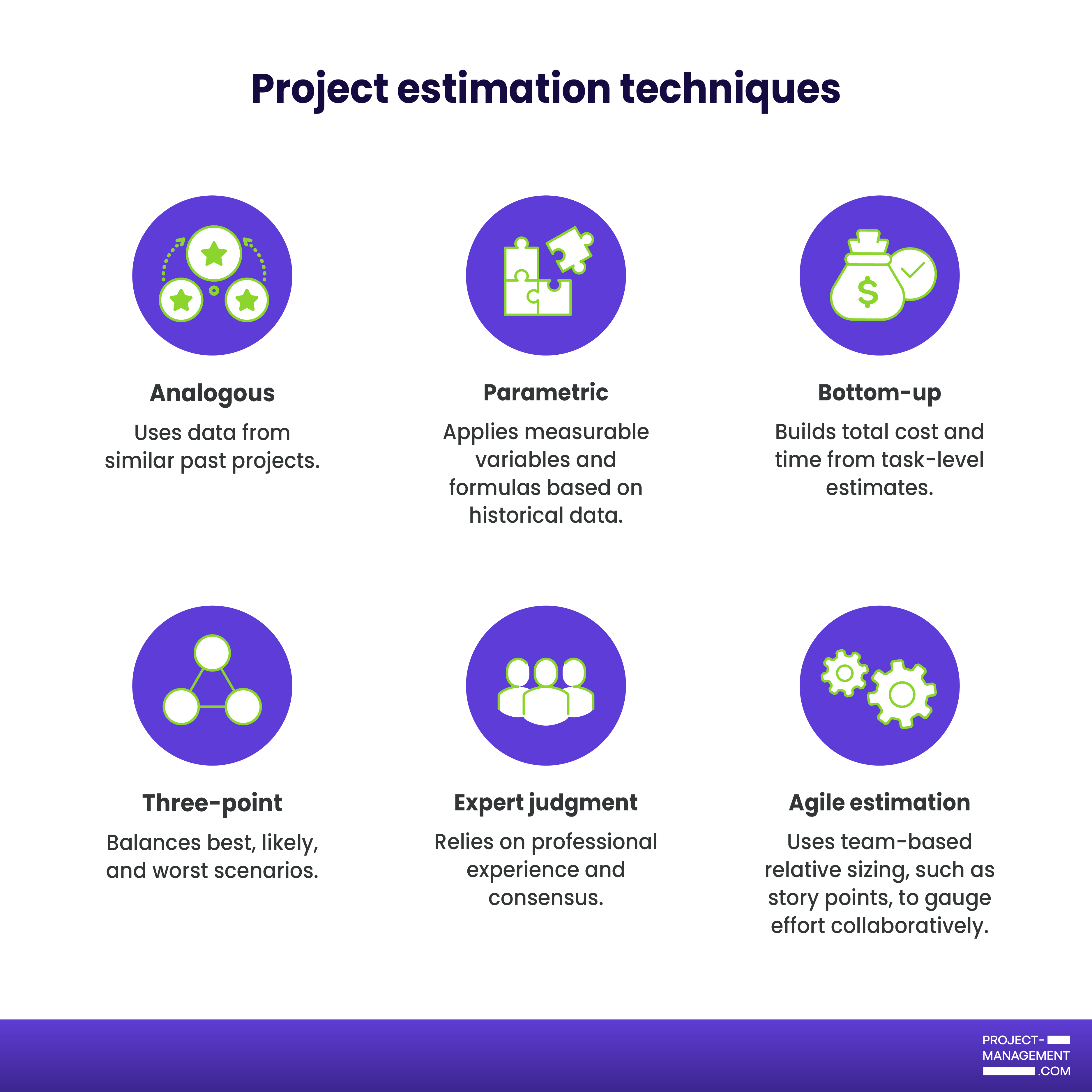
Analogous, parametric, bottom-up, and expert judgment are project estimation techniques, each suited to different levels of project uncertainty. Projects with historical data often apply parametric or bottom-up estimation for quantifiable results, while those facing limited information or higher variability rely on expert judgment to guide forecasts.

Selecting the right approach ensures estimates reflect actual project conditions rather than ideal scenarios.

1. Analogous estimation

Analogous estimation uses data from past projects to estimate the resource requirements of a new one. It assumes that similar projects share measurable characteristics, such as scale, complexity, or deliverables, allowing project managers to apply them as benchmarks. 

Use case example: A project manager at a software development firm estimates a new mobile app project by referencing a completed one with a similar scope. The previous project took six months and cost $250,000. Based on similarities in features, team size, and technology stack, the manager adjusts for minor differences, projecting a five-month schedule and a $220,000 budget.

Best for: Teams managing repeatable projects or involved in early planning stages when detailed information is limited, and decisions must be made quickly using reference data.

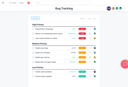
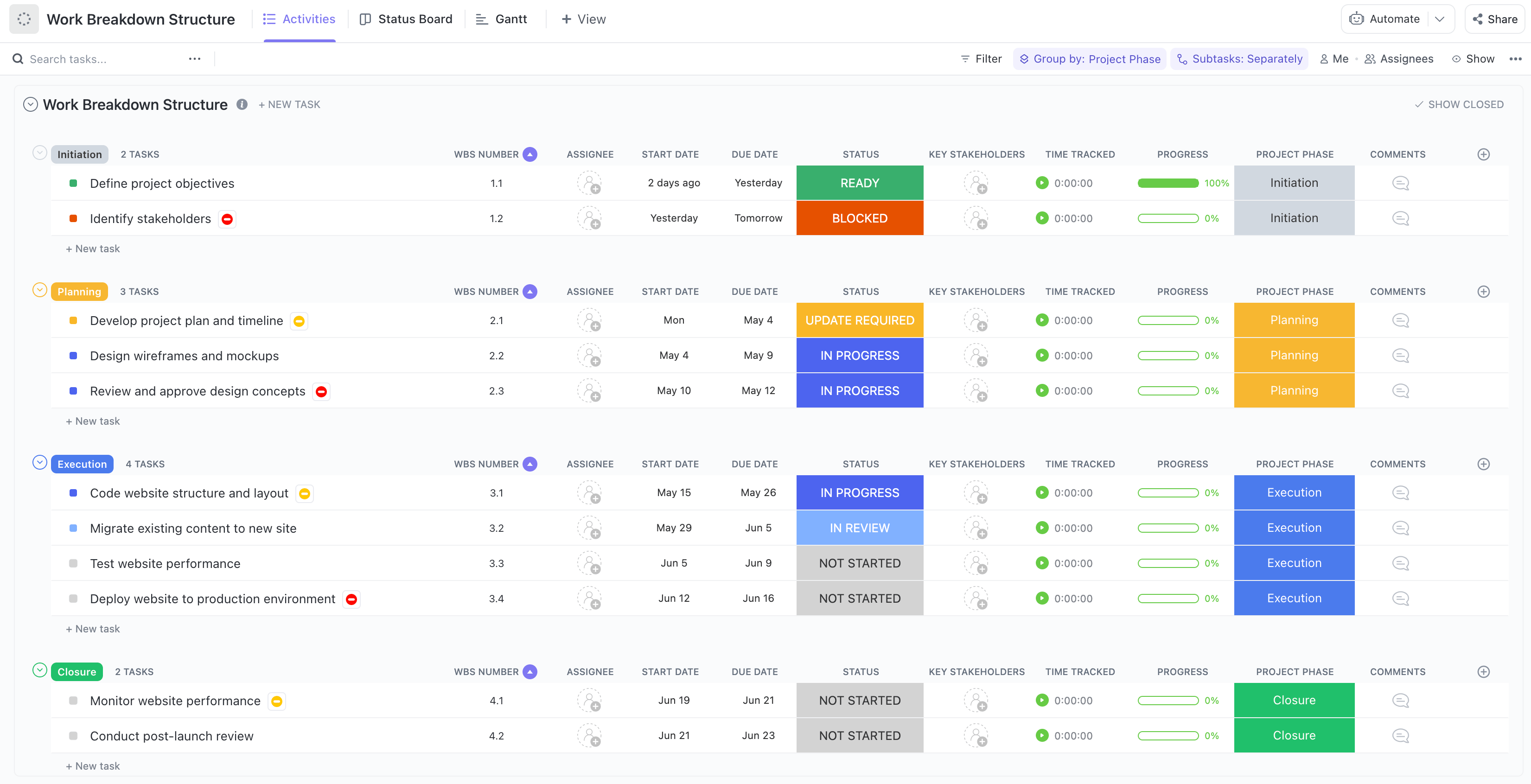
ClickUp work breakdown structure view displaying project phases with task names, due dates, and progress bars, used to compare current work with previous project data for estimating.
ClickUp’s work breakdown structure organizes project tasks and phases, ideal for performing analogous estimation using past task data for forecasting. (Source: ClickUp)

ClickUp’s work breakdown structure supports analogous estimation by providing a record of past project phases, task durations, and completion patterns. By comparing the size and timing of deliverables, project managers can identify benchmarks and use that data to forecast costs and schedules for new initiatives with similar scope and complexity.

Visit ClickUp
Advertisement

2. Parametric estimation

Parametric estimation determines project cost, effort, or duration by applying mathematical relationships between measurable variables. It uses data from previous projects to create formulas, such as cost per unit or hours per deliverable, that can be scaled to the new project’s size or complexity. This method produces consistent results when supported by verified data and performance metrics.

Use case example: A construction firm uses parametric estimation to forecast the cost of building a new office complex. Data from previous builds shows an average cost of $200 per square foot. For a 50,000-square-foot project, the total estimated cost would be $10 million, adjusted later for inflation or labor cost variations.

Best for: Projects where measurable data is available, and calculations can be based on repeatable cost or effort patterns.

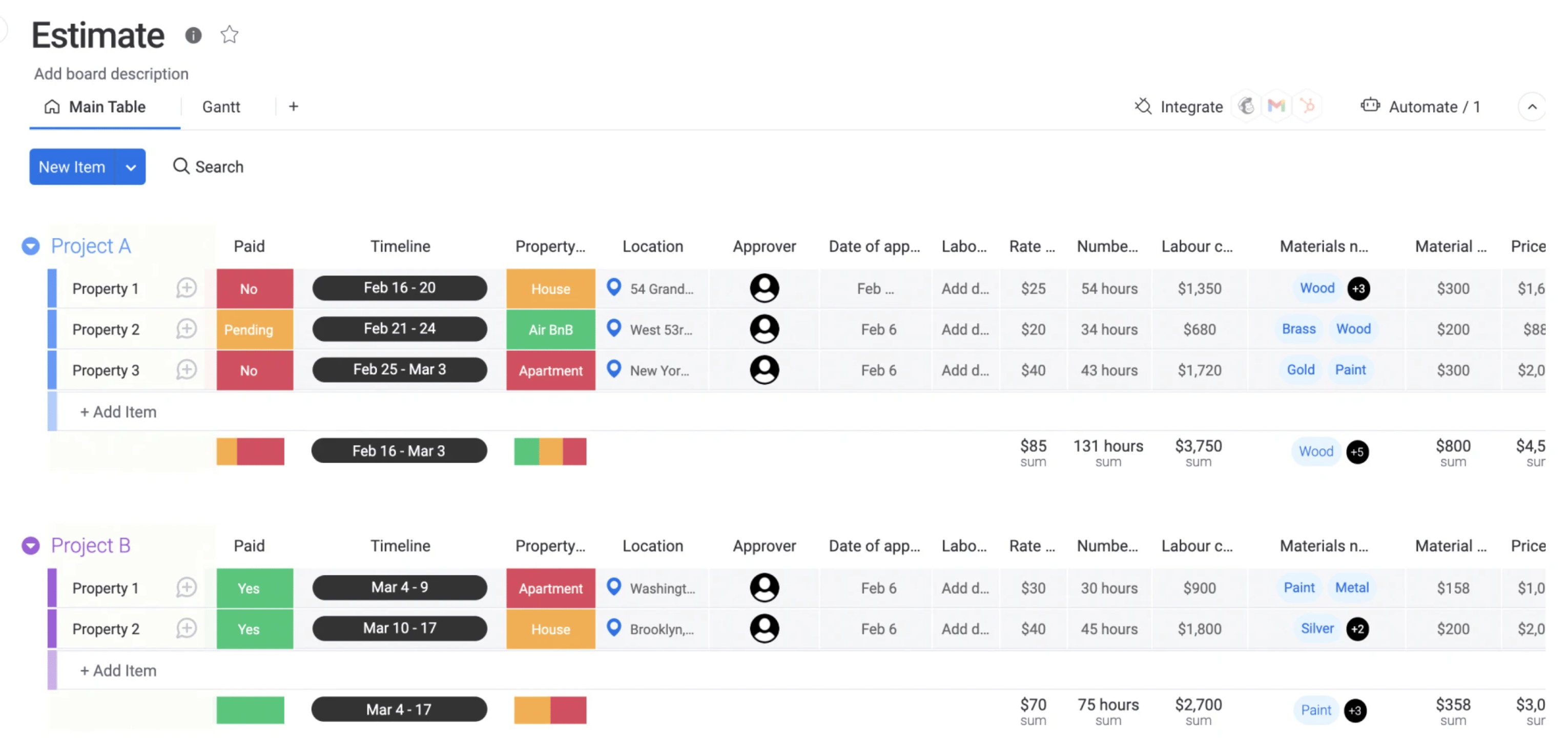
monday’s estimate board displaying project timelines, labor rates, material costs, and total estimates for various properties.
monday’s estimation board aggregates cost and labor data for multiple projects and supports parametric estimation through cost-per-hour and cost-per-unit analysis. (Source: monday)

monday work management’s estimate board helps with parametric estimation by displaying quantifiable data such as labor hours, hourly rates, and material costs for each project item. By analyzing these measurable variables across similar projects, a project manager can identify cost-per-hour or cost-per-unit patterns and apply those relationships to forecast future expenses.

Visit monday
Advertisement

3. Bottom-up estimation

Bottom-up estimation calculates total project cost or duration by estimating each individual task, then aggregating those results to form the overall cost or timeline. This approach starts with task-level inputs such as labor hours, material quantities, or equipment costs for a more grounded estimate. 

Use case example: A team of web developers creating a website estimates the time required for each development task: ten hours for design, twenty hours for coding, and five hours for testing. By adding these values, the team determines a total effort of thirty-five hours. The estimate can then be adjusted for team productivity or specific constraints before setting the final schedule and cost.

Best for: Projects with an existing scope or task breakdown, where each activity can be measured and costed individually to produce an overall estimate.

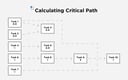
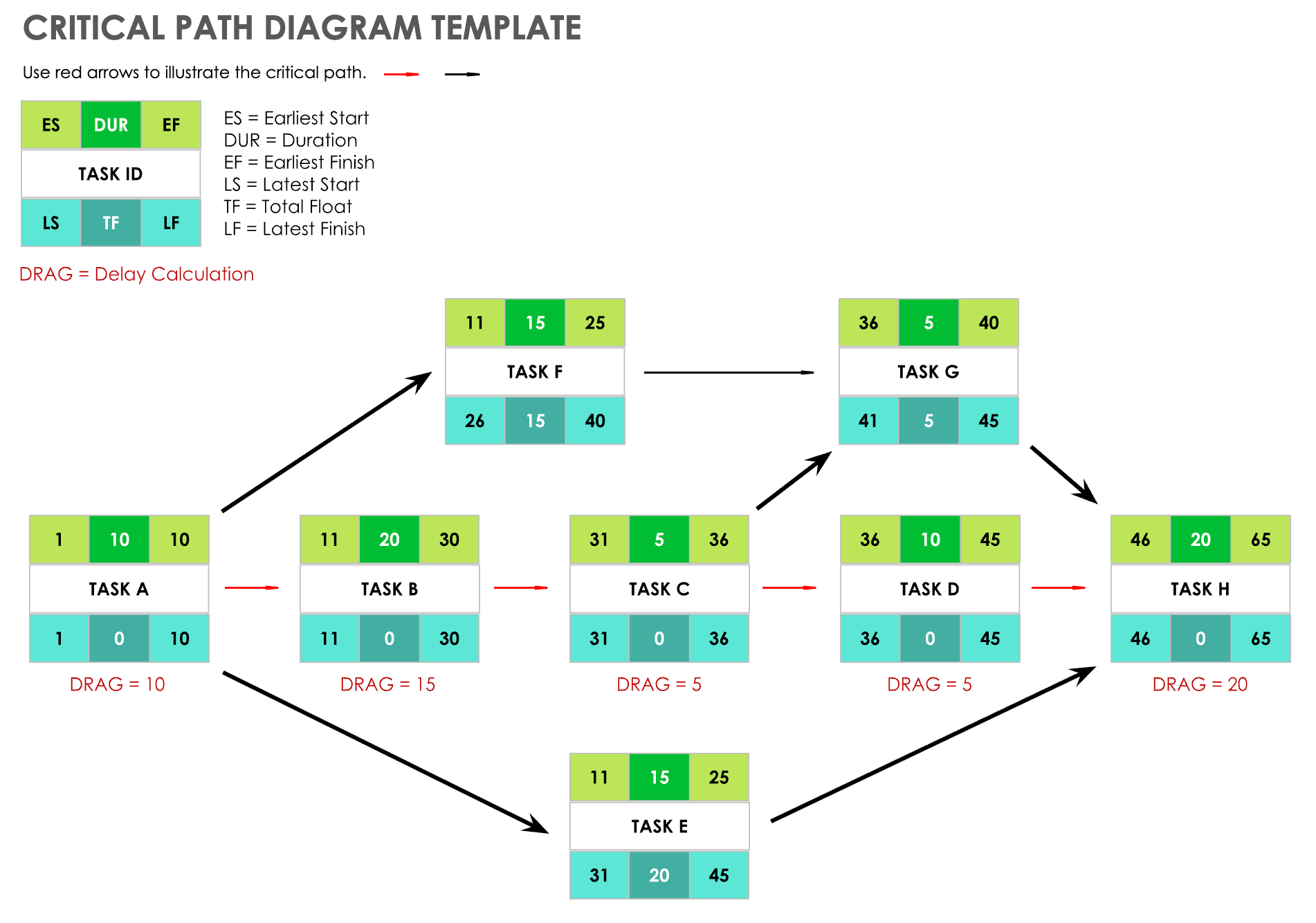
Smartsheet critical path diagram template showing connected task boxes with early and late start and finish times, used to calculate and track project timelines.
Smartsheet’s critical path diagram template helps visualize dependencies and durations and identify key tasks affecting project timelines. (Source: Smartsheet)

The critical path method (CPM) is similar to bottom-up estimation because both analyze work at the task level to calculate total timelines. The difference is that bottom-up estimation measures cost and effort, while CPM identifies task sequences that control project duration.

You can use Smartsheet’s critical path diagram template to visualize task connections, durations, and completion status, so you can link time-based dependencies with cost estimates. 

Visit Smartsheet
Advertisement

4. Three-point estimation

Three-point estimation determines the expected project duration or cost by averaging three estimates: the optimistic, most likely, and pessimistic values. Using a PERT (Program Evaluation and Review Technique) chart, it applies a weighted formula to account for uncertainty and produce a probability-based forecast:  

Three-point estimation formula

Example: A product team estimates that developing a new feature could take 10 days in the best case, 15 days under normal conditions, and 25 days if issues arise. Using the three-point estimation formula (10 + 4(15) + 25) ÷ 6 = 15.8 days, the expected duration becomes approximately 16 days, giving stakeholders a balanced view of schedule risk.

Best for: Projects where tasks carry varying degrees of risk or uncertainty, such as software development, research, or innovation projects that require risk-based forecasting rather than fixed timelines.

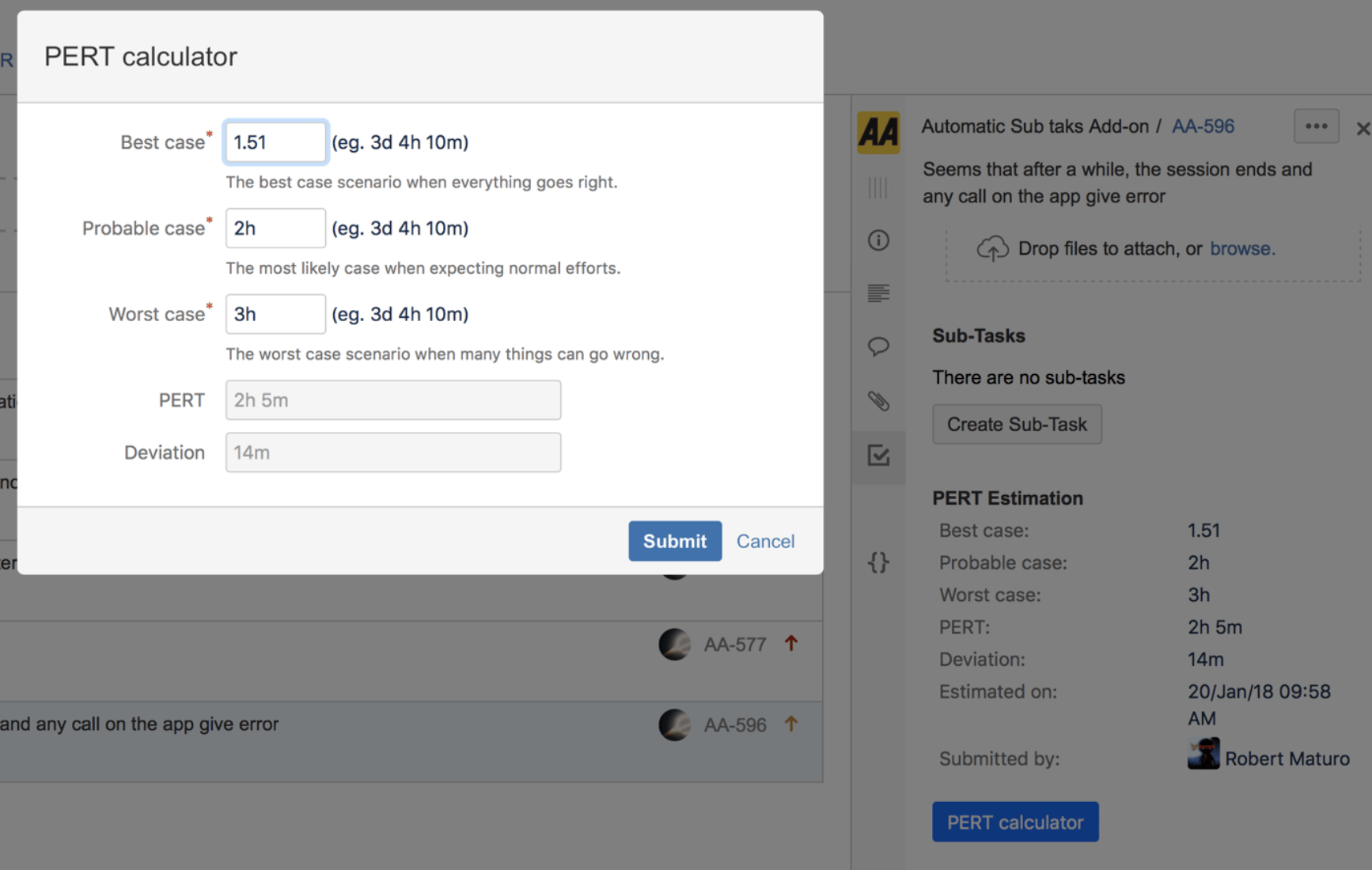
Jira PERT calculator window showing best-case, probable-case, and worst-case input fields with computed PERT and deviation values for project time estimation.
Jira’s PERT calculator applies the three-point estimation technique by averaging optimistic, most likely, and pessimistic values to calculate project durations. (Source: Jira)

Jira’s PERT calculator directly applies the three-point estimation technique by capturing the best, most likely, and worst time values for a task. This integration supports data-driven scheduling decisions within Jira, turning raw estimates into measurable forecasts that improve accuracy across sprint or project timelines.

Visit Jira
Advertisement

5. Expert judgment (Delphi method)

Expert judgment estimation relies on the experience and knowledge of professionals who have managed similar projects. It involves the use of the Delphi method, where a facilitator gathers input from multiple experts through several anonymous rounds to reach a consensus.

Use case example: A company planning to implement a new customer relationship management (CRM) system invites experienced IT project managers to provide independent estimates of required configuration time. Their estimates are collected, averaged, and shared back anonymously in multiple rounds, allowing the group to reassess their inputs until a consistent estimate emerges. 

Best for: Projects that involve unique requirements, emerging technologies, or limited historical data, where expert insight provides the most reliable source for early estimation.

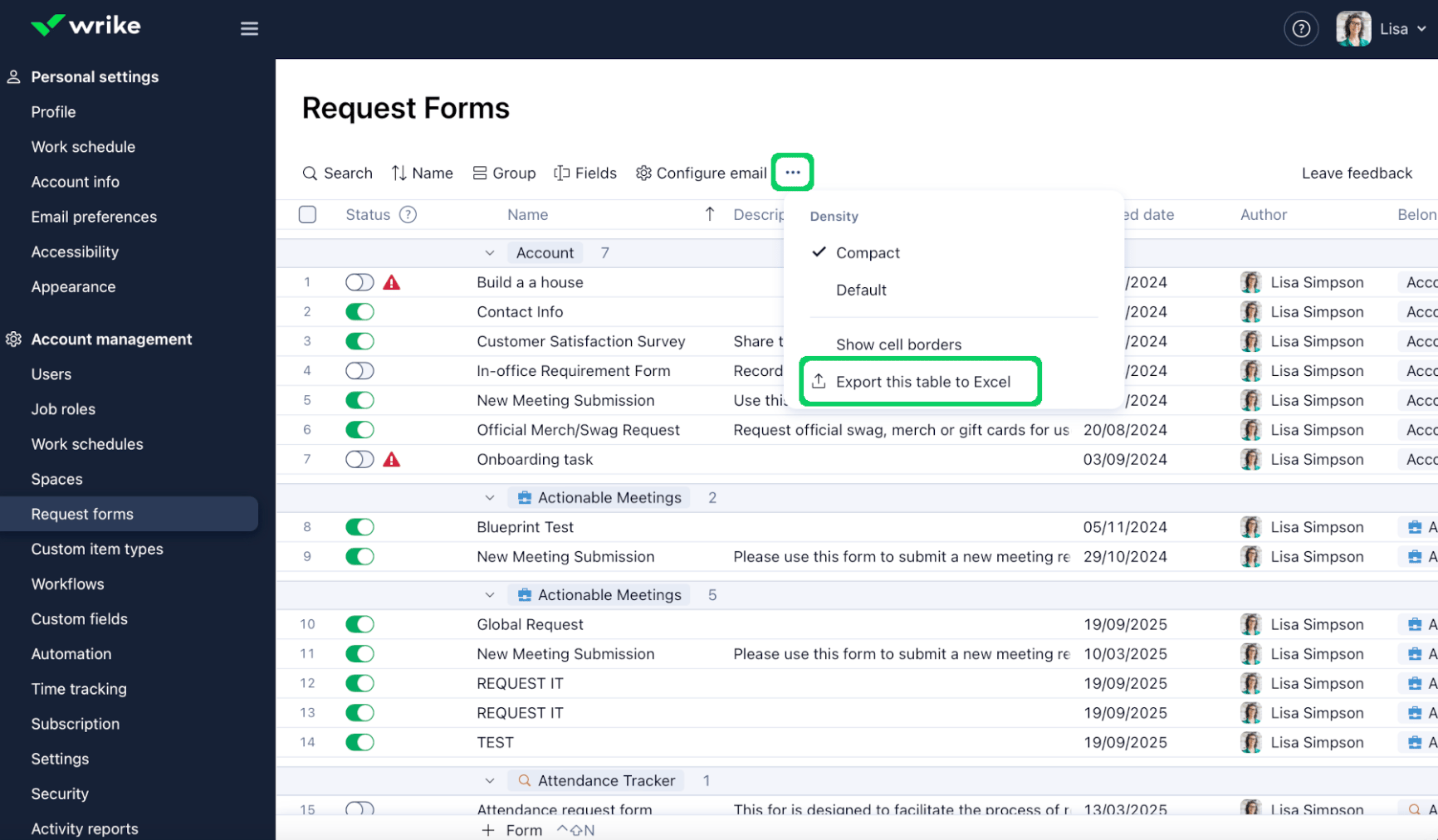
Wrike request forms dashboard showing a table of form submissions with an export-to-Excel option highlighted.
Wrike’s custom request forms allow teams to collect expert estimates and export them for group analysis. (Source: Wrike)

Wrike’s custom request forms can support the Delphi method by allowing experts to submit their estimates independently through standardized forms. Project managers can then compile and share summarized results across multiple review rounds.

Visit Wrike
Advertisement

6. Agile estimation (Planning Poker)

Agile estimation techniques evaluate effort based on the relative complexity of tasks instead of fixed durations. The Planning Poker method supports this by letting team members independently assign story points, discuss differences, and converge on a shared estimate through consensus.

Use case example: A Scrum team estimating user stories for a new e-commerce feature conducts a Planning Poker session. Each developer selects a card representing their estimate in story points. After revealing the cards, the team discusses the reasoning behind the highest and lowest values and adjusts the estimate until everyone agrees on the final number.

Best for: Agile or Scrum teams managing software development or iterative projects where collaborative estimation supports adaptive planning and continuous delivery.

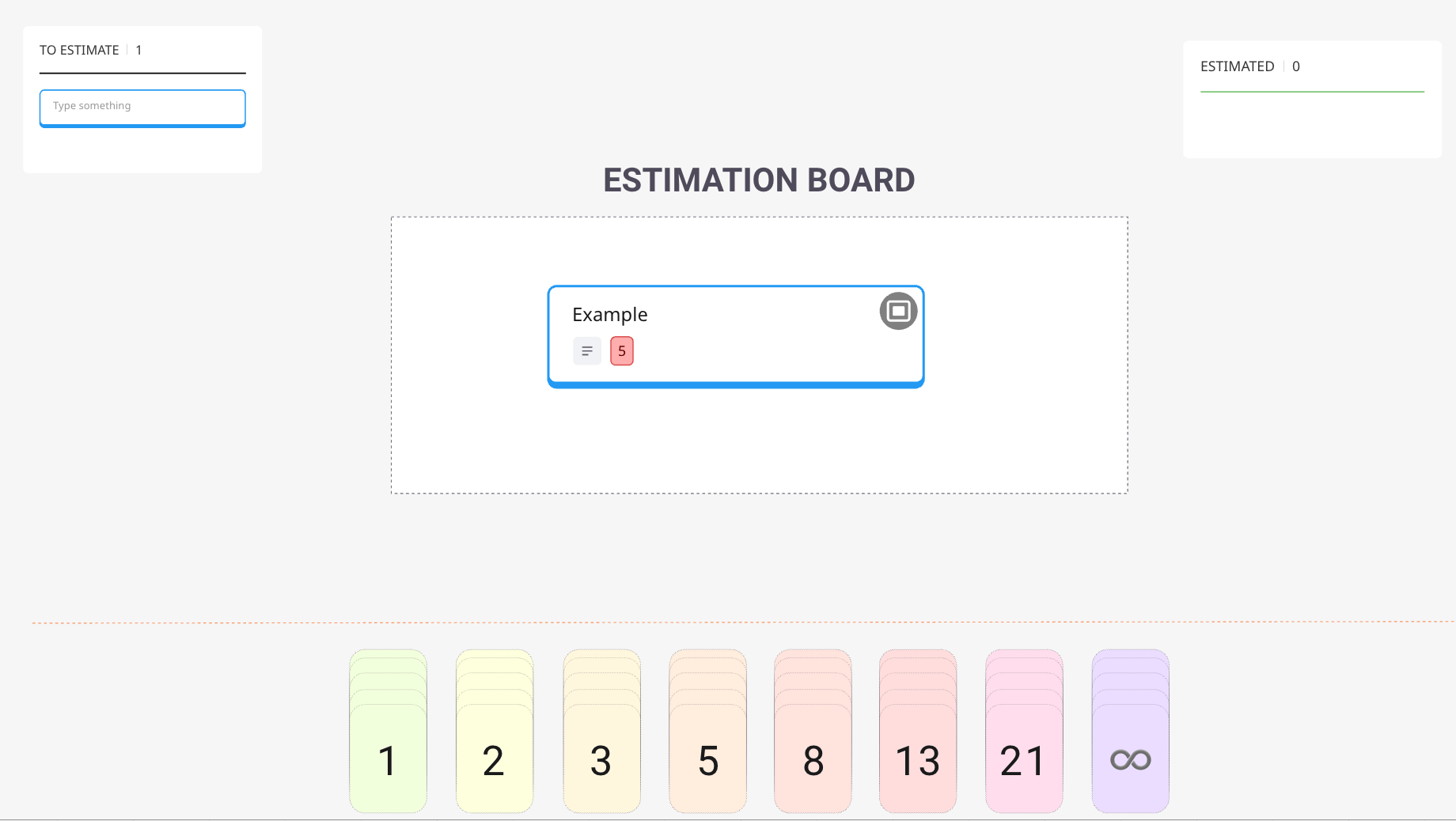
Miro estimation board interface showing numbered estimation cards and an active example task, representing how teams select and compare story point values during Planning Poker.
Miro’s estimation board enables agile teams to conduct Planning Poker sessions and facilitate open discussion and consensus-based estimates. (Source: Miro)

Miro’s estimation board supports the Planning Poker method by giving team members a shared space to select and reveal their story point estimates simultaneously. This setup encourages unbiased discussion and consensus since everyone votes independently before seeing others’ inputs, leading to more accurate and collaborative agile estimations.

Visit Miro
Advertisement

Project estimation matrix: Which technique should you use?

The “best” technique depends entirely on the information you have available, the project stage, and your methodology. Use this decision matrix as a quick-reference checklist to match your current scenario with the most effective estimation technique.

Your current project scenario (The “If”)
Recommended estimation technique (The “Then”)
Why it works
1. The “Back of the Napkin” stage:You are in project initiation. Scope is vague. You need a quick, high-level “ballpark” number (rough order of magnitude) for stakeholders today.Analogous estimation It’s fast and requires minimal detail, relying on executive judgment comparing this project to a previous, similar one.
2. The “Repetitive Task” scenario:Your project involves repeatable work with definable units (e.g., laying 10 miles of fiber optic cable, installing 500 identical desktops).Parametric estimationIt uses statistical data and algorithms for high accuracy on repetitive tasks (e.g., cost per unit x number of units).
3. The “Blueprint is Ready” stage: 
You have a fully finalized Work Breakdown Structure (WBS). You need the most accurate budget possible and have time to gather detailed data.
Bottom-up estimationIt is the most accurate method because it calculates the cost of every single task before rolling them up into a total project cost.
4. The “High Uncertainty” zone: The project is novel, risky, or involves new technology. You suspect things will go wrong and need to account for unknowns.Three-point estimation It forces you to consider best-case, worst-case, and most likely scenarios, providing a realistic weighted average rather than a single risky number.
5. The “No Data, Just Brains” situation: You have zero historical data, but access to a group of highly experienced subject matter experts (SMEs).Expert judgmentIt leverages collective human intelligence and consensus when data is unavailable.
6. The “Agile Sprint” scenario: You are running Scrum or Kanban. The team needs to collaboratively size upcoming user stories for the next two-week cycle.Agile estimationIt focuses on relative sizing (story points) rather than hours, fostering team collaboration and consensus quickly.
Advertisement

Tips for effective project estimation

A 2024 PMI study found that 46% of project professionals consider estimating and cost management as agile practices increasingly built into hybrid approaches. This shows that estimation is no longer a one-time activity but a continuous process that evolves with changing project methods and data insights.

These best practices help strengthen the estimation process and deliver projects with predictable costs.

  • Use historical data as the basis of estimates. Review actual performance records from previous projects to identify measurable benchmarks, such as cost per deliverable or average cycle time. Reliable baselines reduce reliance on assumptions and strengthen the accuracy of both top-down and parametric estimation.
  • Recognize the “cone of uncertainty.” Treat early estimates as ranges rather than fixed numbers since unknowns are higher during initial planning. Narrow the range as more details emerge, assessing accuracy through progressive elaboration and continuous data validation.
  • Break work into small, measurable tasks. Build a work breakdown structure before estimating to capture dependencies and effort at the task level. This approach helps identify which activities drive total duration and clarifies how specific inputs affect the overall budget.
  • Account for hidden time and effort. Include non-deliverable activities such as meetings, reviews, documentation, and communication overhead, typically representing around 20% of a workweek. Factoring in these tasks creates more realistic forecasts and prevents last-minute schedule compression.
  • Avoid Parkinson’s Law when setting estimates. Set achievable but time-bound targets that encourage focus and accountability rather than inflating schedules to absorb available time.
  • Document assumptions and estimation rationale. Record the basis for each estimate, including data sources, resource rates, and constraints. Maintaining this traceability helps evaluate future variances objectively and improve estimation accuracy over time.
Advertisement

The future of project estimation

Artificial intelligence is reshaping project estimation by analyzing historical performance data and generating forecasts with greater consistency and speed than traditional methods. As organizations seek to automate these complex processes, the software landscape is evolving to meet the demand for data-backed insights. 

A Capterra survey found that AI functionality is the top trigger for new project management software purchases, making it an important consideration when evaluating your tech stack. By investing in project cost estimation tools that already offer these intelligent features, you enable your estimates to evolve beyond one-time best guesses into a sustainable competitive advantage.

Advertisement

FAQs

The best approach is to break the project into smaller tasks, estimate each task using historical data or past project records, and then aggregate the results. This method exposes assumptions early and makes estimates easier to validate and adjust as scope changes.

Bottom-up estimating is generally the most accurate project management estimation technique because it calculates effort at the task level, using verified KPIs, known dependencies, and resource availability. Accuracy improves as project teams replace assumptions with actual data, validate early forecasts against real performance, and update figures based on progress throughout the project lifecycle.

Project managers commonly use analogous estimating based on past projects, parametric estimating that applies measurable rates or formulas, and bottom-up estimating that builds totals from individual task estimates. Each technique serves different levels of detail and certainty depending on project maturity.

thumbnail
Marianne Sison

Marianne De Guzman is a technology analyst with over four years of experience in evaluating cloud-based communication solutions, with a focus on VoIP and unified communications. Her analytical approach and strategic insights empower businesses to optimize their communication infrastructure.

Recommended for you...

How to Measure Project Success: Key Metrics, Tools, & Best Practices
Marianne Sison
Jan 30, 2026
5 Phases of Project Life Cycle and Why They Matter
Marianne Sison
Dec 4, 2025
What Is a Requirements Traceability Matrix (RTM)? + Free Template
Marianne Sison
Dec 4, 2025
RACI Matrix: Responsibility Assignment Matrix Guide
project-management.com Logo

project-management.com is dedicated to providing modern tools, latest news, and best practice references for every project professional and business organization. The discipline of project management has continued to receive growing interest and attention over the past decades. Especially today, the importance and relevance of the project manager for any kind of undertaking is unquestionable. However, the challenges of modern society, business relationships and latest technology are also testing their competency and ability to deliver successful projects. Since its launch in 2001, PMcom has been featuring pertinent articles, management software and productivity tool reviews, books, interviews, training sites and other e-learning resources to help people be more productive and successful in their chosen path.

Property of TechnologyAdvice. © 2026 TechnologyAdvice. All Rights Reserved

Advertiser Disclosure: Some of the products that appear on this site are from companies from which TechnologyAdvice receives compensation. This compensation may impact how and where products appear on this site including, for example, the order in which they appear. TechnologyAdvice does not include all companies or all types of products available in the marketplace.