





















KEY TAKEAWAYS
 A construction project manager oversees schedules and budgets while coordinating approvals and site activity, resolving issues as they arise to ensure work follows approved plans, safety requirements, and contract terms.
- Construction project management improves cost control and schedule tracking, while reducing rework caused by faulty materials or delayed approvals across the project lifecycle
- Construction project management software provides a centralized system for storing and tracking project information, including budgets, timelines, blueprints, and contracts.
Construction projects involve many moving parts, including multiple teams, materials, schedules, permits, and safety requirements that must all be managed at the same time. With so many elements requiring coordination, construction project management provides a framework for defining roles and applying the right tools and methods. In this guide, we cover the construction project management lifecycle, commonly used software, and the challenges project managers face while on-site.
What is construction project management?
Construction project management involves overseeing all elements of building a physical structure, including labor, materials, budgets, and schedules. The goal is to ensure the project stays within its approved scope while adhering to safety standards and regulatory requirements.
Construction projects are a textbook example of the waterfall methodology: work progresses in defined, sequential phases (design, preconstruction, procurement, construction, and closeout), where each stage depends on the completion of the one before it.
Because each phase builds on finalized decisions, early planning and a clearly defined change control process are critical. Small changes can create downstream effects on material procurement, subcontractor sequencing, labor allocation, equipment rentals, permitting, costs, and timelines.
A construction project manager plays a central role in coordinating all parties, including engineers, architects, subcontractors, and suppliers. Success depends on how well the project manager plans and controls the work in an environment where timelines, safety, and regulatory compliance carry higher risk and limited flexibility.
Construction vs. general project management: Key differences
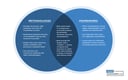
Construction project management relies on several project management principles, such as scope control, risk management, and stakeholder communication. However, unlike general project management, construction involves unique challenges, such as site-specific conditions (e.g., weather), regulatory approvals, and coordinating multiple skilled laborers working in sequence or simultaneously.
Understanding these differences is crucial for anyone entering the field or considering how project management practices apply to construction work.
| Area | Construction project management | General project management |
|---|---|---|
| Project duration | Typically, months to years with weather-dependent schedules | Can range from weeks to years with flexible timelines |
| Scheduling | Highly dependent on task sequencing and coordination | More flexible task dependencies |
| Risk profile | High exposure to physical safety risks, weather delays, site conditions, material availability, and regulations | Risk varies by industry and project type (e.g., business and operational risks) |
| Stakeholder complexity | Multiple parties, including owners, contractors, subcontractors, engineers, inspectors, and suppliers | Typically, fewer external parties |
| Change management | Changes are often costly and require formal approvals due to materials already purchased or work completed | Changes are often easier to accommodate |
| Industry-specific regulations | Heavy regulatory oversight, including permits, inspections, safety standards, and building codes | Industry-specific regulations may apply |
Key roles in construction project management
A construction project typically involves multiple roles, including a project manager, contractors, engineers, and site supervisors. Each role brings unique expertise to manage the demands and complexity of a construction environment.
- Project owner: Defines the project goals, success criteria, and funding. They approve major decisions that affect the overall direction of the project.
- General contractor: Holds the main contract with the project owner and is responsible for executing the construction work. They also manage subcontractors, local permits, material approvals, and inspections.
- Project manager: Oversees all project activities and leads the general contractor’s efforts by managing schedules and budgets. Ideally, this role is filled by someone with an engineering or architectural background so they can easily make informed decisions when design or on-site issues arise.
- Subcontractors: Handles specific project portions such as electrical or plumbing systems. They manage their own labor, equipment, and schedules to complete the assigned tasks.
- Architects and engineers: Develop the project design and technical specifications. Both roles work together to ensure the design and structure meet safety standards and building codes.
- Site supervisor: Manages on-site workers and ensures daily tasks are completed safely and efficiently. They relay on-site conditions and constraints to the project manager and ensure field teams follow approved plans and schedules.
- Safety manager: Enforces safety protocols to protect workers and comply with regulations. They conduct inspections, provide training, and investigate incidents to maintain a safe work environment.
Interested in becoming a construction project manager?
Coursera offers a wide range of construction project management courses that help you build skills in cost estimation, safety management, modeling, and scheduling. The courses are designed for different experience levels and support flexible, self-paced learning so you can progress on your own schedule.
The construction project management lifecycle
The construction project management lifecycle describes how a construction project moves from an initial idea to a completed asset. Each step focuses on making decisions that affect timelines and resources before work progresses to the next stage.
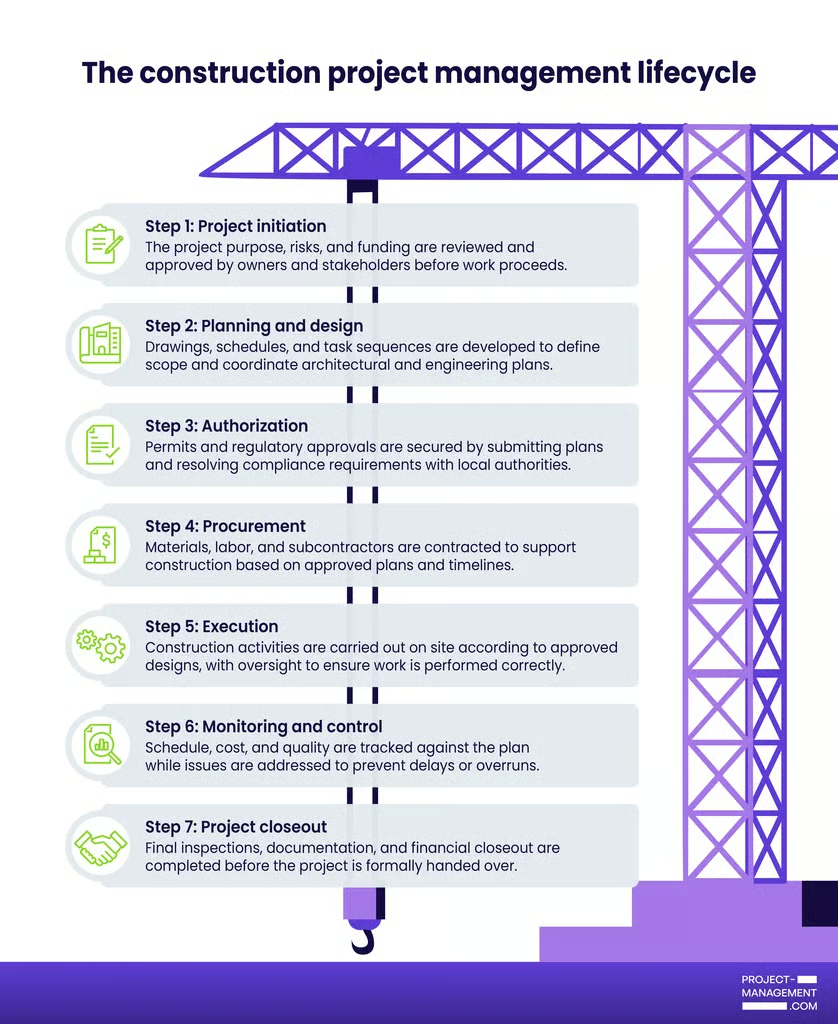
Step 1: Project initiation
This step establishes the purpose of the project and the intended use of the structure. Owners and stakeholders approve a business case that defines expected outcomes, then review site conditions and funding to determine if the project can proceed.
Step 2: Planning & design
Following approval, project goals are documented through detailed drawings and schedules to guide construction work. The project team develops a work breakdown structure to define the approved scope and organizes construction activities into sequenced tasks, while resolving coordination issues between architectural and engineering plans.
Step 3: Authorization
Before any construction work can begin, regulatory authorization must be obtained by securing permits and approvals from local authorities. Project teams submit drawings and revise plans to meet building code and zoning requirements.
Step 4: Procurement
Once project plans and permits are finalized, the next step is to secure the resources needed for the construction work. Procurement involves sourcing construction materials and arranging labor through supplier and subcontractor contracts. These agreements set expectations for delivery schedules and pricing terms, along with the required quality standards.
Step 4: Execution
At this stage, the general contractor begins the construction work on site based on the approved plans and permits. Crews carry out excavation and foundation work before structural and system installations take place. The project manager, on the other hand, oversees whether the work is done correctly.
Step 5: Monitoring & control
During this phase, the construction progress is measured against the schedule and cost baseline. The project manager reviews if the work is carried out within the approved methodology and coordinates between subcontractors. Issues related to approvals, material delivery, and site conditions are addressed to avoid delays.
Step 6: Project closeout
Project closeout confirms that the physical structure meets contract terms and regulatory standards. Final inspections, documentation handover, and financial reconciliation are completed before the project is formally accepted and closed.
Construction project management tools
Adopting construction project management software offers several competitive advantages when it comes to tracking all aspects of construction work. It helps you monitor spending and material usage while providing centralized access to documentation such as blueprints, contracts, and photos.
Below are some of our top project management software picks, including options built specifically for construction and platforms that support broader business needs.
| Project management software | Best for | Monthly pricing |
|---|---|---|
| monday | Ease of use | $9/user |
| ClickUp | Hierarchy-based structure | $7/user |
| Wrike | Resource planning | $10/user |
| Procore | Large-scale construction projects | Custom |
| Autodesk | All-in-one construction software | Custom |
monday work management
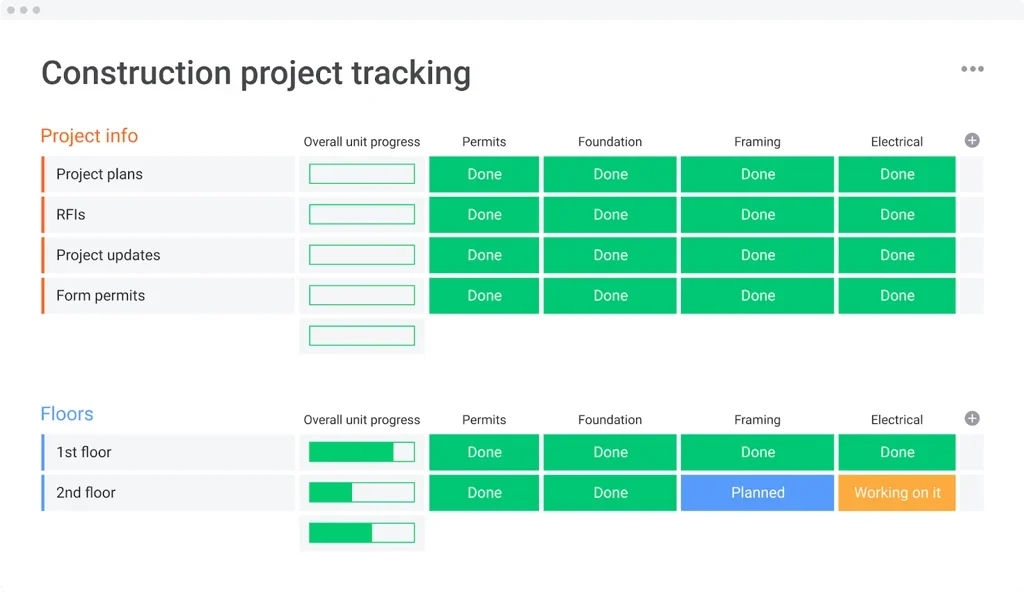
monday is increasingly being used in construction due to its flexibility and relatively low learning curve. Teams can customize boards to match construction workflows, and visual elements such as color-coded columns and drag-and-drop items make project status easy to understand at a glance.
You can customize statuses to reflect each build phase, while file attachments allow teams to upload blueprints, photos, and contracts directly to the platform. Collaboration features like tagging and task comments centralize communication and project updates, and boards give everyone access to the same assets in one place.
ClickUp
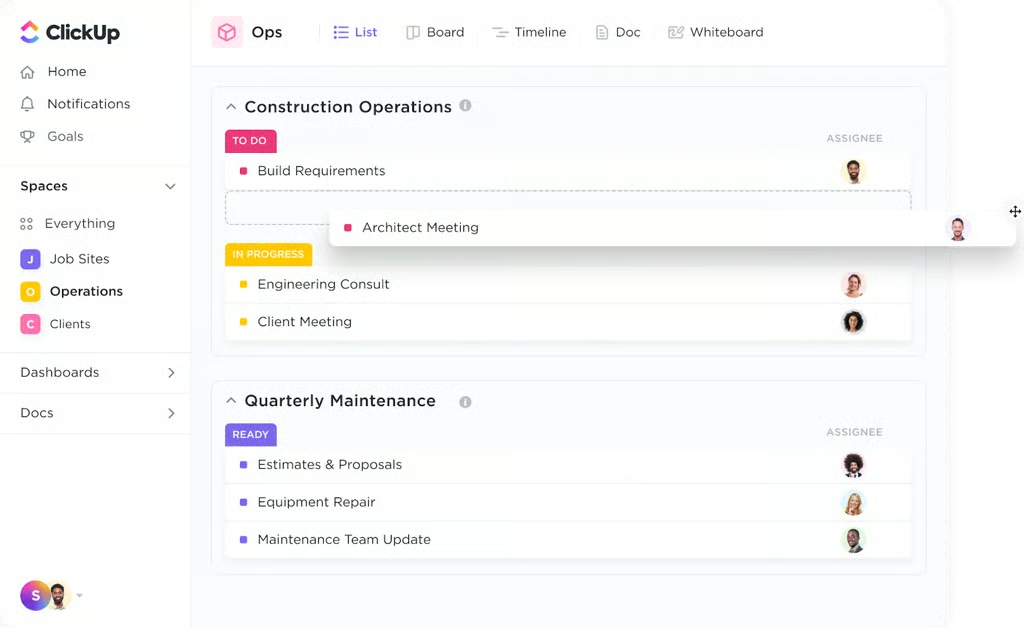
Many users prefer ClickUp’s hierarchy-based structure, which works well for organizing complex construction workflows and breaking work into sequenced subtasks. Spaces or folders separate major projects or clients, while Lists group work by design aspect, such as roofing or drainage, and custom fields are for tracking phases or subteams. ClickUp also offers purpose-built templates for construction workflows, including engineering reports, work breakdown structures, and change order forms.
Wrike
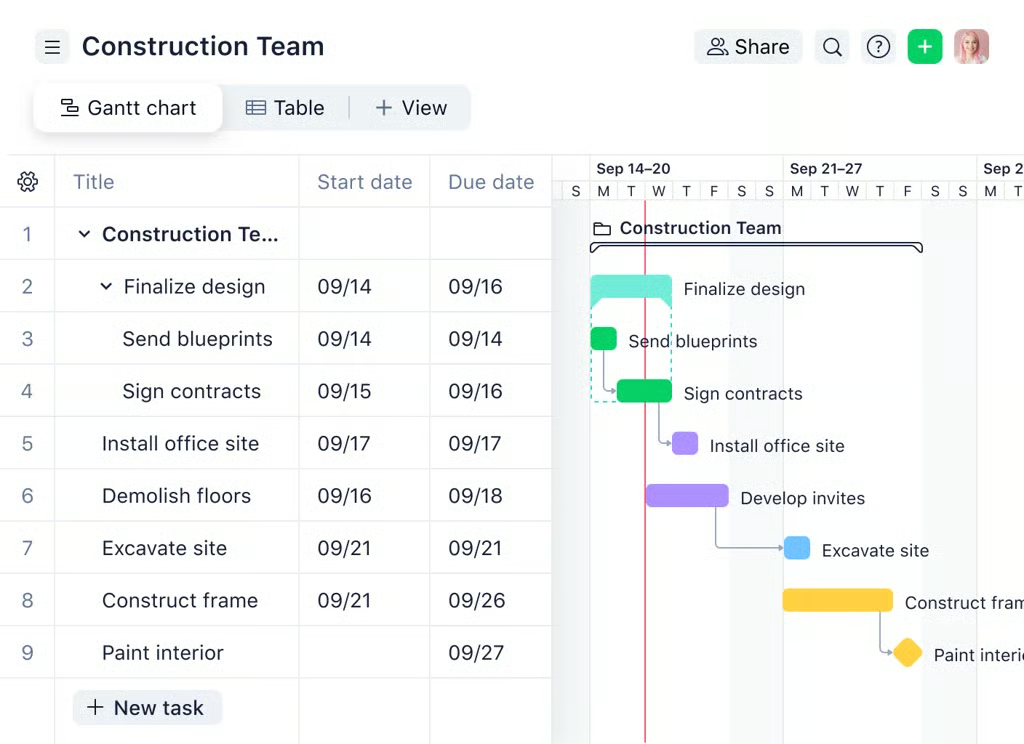
Wrike is an enterprise project management platform well-suited for construction teams managing multiple sites simultaneously. Its interactive Gantt chart gives a clear view of project timelines and lets teams adjust task dependencies using drag-and-drop controls. It also includes time tracking to log contractor hours and generate individual timesheets. Custom request forms capture client requests and convert them into assigned tasks, while resource and capacity planning tools support estimating material needs and staffing requirements.
Procore
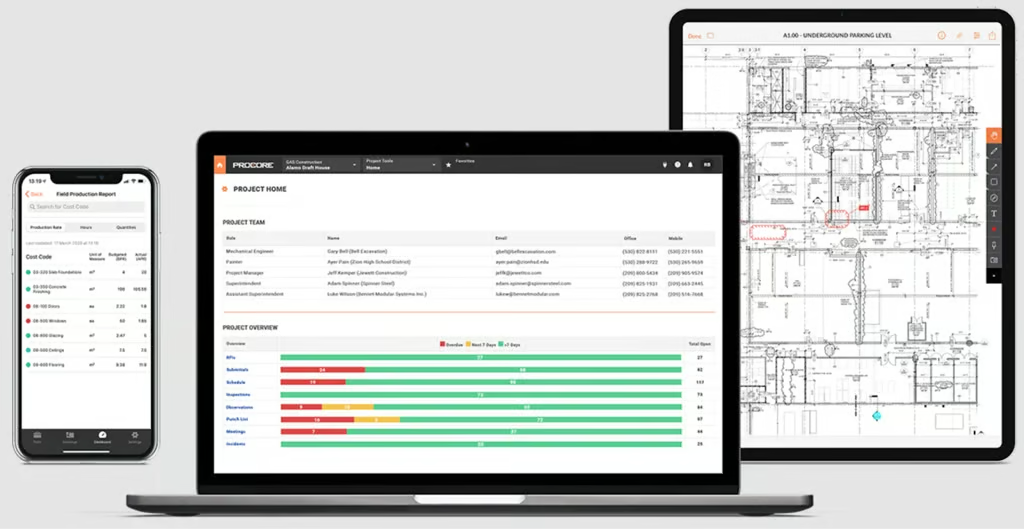
Procore is an end-to-end construction management solution that includes tools for managing costs, resources, documents, and mobile collaboration. The project overview provides a complete picture of outstanding items and lets you create items such as observations and requests for information (RFIs).
If you need to record daily updates for office reporting, the Site Diary allows you to log details such as weather conditions, working hours, site visitors, and third-party inspections throughout the project. Procore also supports drawing and revision management, ensuring everyone has access to the most current set of drawings.
Autodesk
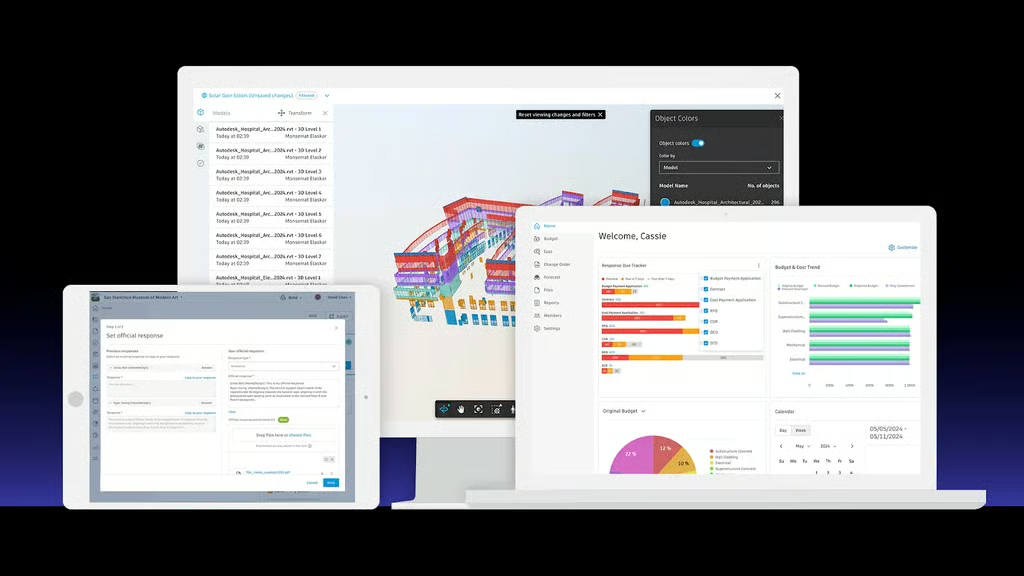
While Autodesk is best known for its 3D modeling capabilities, it also functions as a comprehensive construction management platform. Teams can link critical documents such as files, photos, issues, and assets to scheduled activities. Through its Cost integration, Autodesk connects project schedules to budgets, allowing teams to manage cash flow more accurately.
Autodesk also supports construction workflows, including creating RFIs, managing the review process, and linking RFIs to related issues, change orders, and meeting minutes. You can manage submittals within a single log, while reporting capabilities provide an overview of high-risk issues to help identify potential impacts on resources, quality, and safety before they escalate.
Common challenges in construction project management
Project management for construction projects involves numerous obstacles that can affect multiple factors if not properly managed. Recognizing these challenges and applying proven strategies helps project managers maintain control and deliver successful outcomes.
- Unclear scope and frequent change orders
Projects that start with incomplete drawings or assumptions often lead to revisions that increase costs and extend timelines. Establishing a formal change management process helps track scope changes and required approvals, allowing teams to evaluate and authorize adjustments before work continues. - Schedule delays caused by dependencies
Construction tasks follow a fixed order, so delays in one area can stop multiple activities at once. Organizing the schedule around task dependencies and reviewing it weekly helps teams spot knock-on delays early and adjust the sequence of work. - Poor coordination between the field and office teams
Miscommunication between site crews and office teams often leads to rework or late approvals. Using project management software to centralize assets, such as daily reports, RFIs, drawings, and site photos, ensures everyone has access to the same information. - Cost overruns due to incomplete tracking
Labor hours and material use often exceed estimates when they are tracked late or inconsistently. Keeping a daily track of resource usage and linking it to scheduled activities allows project managers to compare planned and actual spending accurately. - Compliance and safety risks
Construction projects must meet regulatory and safety requirements, which are easy to overlook under tight deadlines. Assigning responsibility for permits and inspections and tracking them as scheduled tasks reduces the risk of violations or stoppages.
FAQs
What is the most used software in construction?
Procore and Autodesk are among the most widely used construction platforms because they are built specifically for construction workflows. However, many teams are also shifting towards work management software such as monday and ClickUp because of their rich customization options and cheaper costs.
What does a construction project manager do?
A construction project manager plans and oversees construction work from start to completion. Their responsibilities vary depending on site needs, but they generally include managing resources and approvals while coordinating site activity with office teams to ensure design and regulatory requirements are met.
What skills are needed for construction project management?
A construction project manager needs strong communication skills because the role involves coordinating multiple stakeholders. Technical knowledge is also critical for resolving design or site issues, while estimation skills support proper budgeting and scheduling.