SHARE
Facebook X Pinterest WhatsApp

Product Development Process: A Complete Guide for 2026

Learn the product development process with step-by-step guidance, supporting tools, and examples designed for project managers and product teams in 2026.

Feb 6, 2026
project-management.com content and product recommendations are editorially independent. We may make money when you click on links to our partners. Learn More
Key takeaways
  • The product development process defines how an idea moves from initial concept to market release by connecting research, planning, execution, and delivery decisions.
  • It progresses through idea generation, validation, planning, design, development, testing, and launch, with teams revisiting earlier stages as feedback or constraints emerge.
  • Effective product development relies on early user involvement, coordinated teamwork, and tools that support planning and visibility throughout the lifecycle.

Bringing a new product to market in 2026 requires navigating a landscape defined by rapid tech shifts and increasing customer expectations. This guide explains the seven stages of the new product development process (NPD), providing the governance project managers need to minimize risk and maintain velocity. I will also examine the best practices and software tools required to execute a successful launch in 2026.

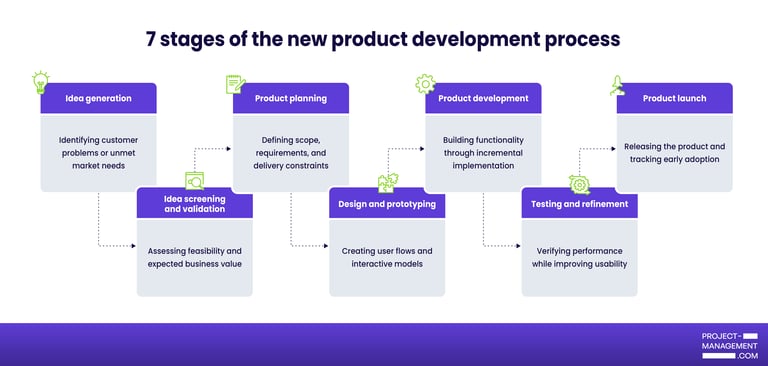
Seven-stage new product development process diagram arranged in a step-by-step flow.
The new product development process evolved from early industrial manufacturing to move ideas from concept through production while managing risk and investment.

What is the product development process?

The product development process is the sequence of activities that guides how an idea moves from an identified customer problem to a launched product or feature. It defines how teams research user needs, translate findings into requirements, and coordinate design and development work within agreed timelines and constraints. 

Each phase builds on verified inputs from the previous one, which helps teams avoid building solutions based on assumptions or incomplete information. This process connects product strategy with day-to-day execution by clarifying who is responsible for decisions, when feedback is gathered, and how changes are approved. 

Project management supports product development by managing dependencies, controlling risks, and coordinating delivery so teams meet release commitments.

Advertisement

The 7 stages of the new product development process

The new product development process took shape in the early 20th century as companies looked for a consistent way to turn ideas into finished products while managing cost and risk. Over time, it evolved into stage-based models that guide teams through review points where leaders decide whether to continue or stop development.

Today, the product development process rarely follows a linear path. Teams move back and forth between stages as testing data, AI-driven analysis, or changing market signals reveal new requirements. The following stages outline the framework required to move a product from initial concept to commercial release.

Advertisement

1. Idea generation

Idea generation begins when teams move from recognizing a recurring user challenge or performance gap to framing it as a business opportunity. This stage covers both new product ideas and improvements to existing or next-generation products, with teams evaluating which problems justify investment before design or development starts. It sets direction for later decisions by defining the product’s purpose and market relevance.

Teams use several methods to generate product ideas:

  • Competitive analysis: Comparing similar products in the market to identify differentiation points and identify unmet customer needs.
  • Customer feedback reviews: Analyzing comments and suggestions from users to reveal recurring pain points or missing features.
  • Cross-department brainstorming: Engaging sales, support, and marketing teams to capture insights from customer interactions and market observations.
  • Trend monitoring: Tracking emerging technologies and shifts in user behavior to anticipate new demands that could shape future product opportunities.

Product strategy often starts at the top: Nearly half of product teams say their strategy is primarily shaped by leadership direction or sales and support feedback. In ProductPlan’s 2024 report, 46% of respondents cited senior leadership at 31% or sales and support input at 16% as the main drivers of product strategy decisions.

Advertisement

2. Idea screening & validation

Idea screening and validation filter out concepts that lack business potential or technical feasibility (e.g., return on investment). Teams assess each idea using data-driven methods that connect customer needs, organizational capacity, and competitive positioning.

To validate ideas effectively, teams often apply the following techniques:

  • SWOT analysis: Evaluates strengths, weaknesses, opportunities, and threats to determine where a product could gain an advantage or fill a competitive gap.
  • Market research: Uses quantitative and qualitative data to confirm market size, user demand, and willingness to adopt the product.
  • Concept testing: Presents the idea to target users through surveys, interviews, or prototype demonstrations to gauge interest and gather direct feedback.
  • Financial assessment: Estimates development costs, pricing potential, and expected returns to determine if the idea justifies investment.
  • Risk evaluation: Identifies early warning signs such as regulatory barriers, supply chain constraints, or dependency on unstable systems that could delay progress.

Did you know? According to Airfocus’s 2025 report, only 30% of product teams say feedback always guides product iterations and strategy, while 52% say it influences decisions only occasionally. This gap highlights why validation is critical to ensure teams prioritize ideas grounded in market demand instead of relying on ad hoc judgment.

Advertisement

3. Product planning & specification development

This stage translates a validated idea into a product roadmap by using end-user input to guide design and implementation planning. It defines the product’s purpose, technical approach, and performance expectations, while helping teams balance customer priorities with available resources.

To create a product roadmap, several factors and specifications guide this stage:

  • Product vision and objectives: Define what the product aims to achieve, the target market it serves, and the specific problems it will solve based on customer insights.
  • Functional and technical requirements: Outline the product’s core capabilities, performance standards, and necessary integrations to confirm technical feasibility.
  • User experience guidelines: Document workflow expectations, interface requirements, and accessibility standards based on user research and feedback analysis.
  • Resource and timeline planning: Estimate staffing, development milestones, and dependencies that affect scheduling and delivery.
  • Compliance and quality standards: Identify industry regulations, testing criteria, and performance benchmarks that the product must meet before release.
  • Cost projections: Establish preliminary budgets covering design, engineering, testing, and marketing to maintain financial control throughout development.
Advertisement

4. Design & prototyping

At this stage, the product concept takes shape through design models and early prototypes. Teams translate specifications into tangible representations that show how the product works and how users interact with it, allowing early testing before full-scale production begins.

The following activities typically occur during this stage:

  • Wireframing and mockups: Create visual layouts that outline interface elements, content flow, and navigation patterns for digital products or component layouts for physical products.
  • User experience design: Define interaction flows and accessibility requirements based on target user behavior and testing data.
  • Prototype development: Build interactive or physical models that simulate core functions and design intent, allowing stakeholders to assess usability and performance.
  • Prototype testing and beta feedback: Test prototypes with a limited group of target users to identify usability issues, workflow gaps, or misunderstood features before development progresses.
  • Technical feasibility checks: Collaborate with engineering teams to confirm that design choices can be produced efficiently using available technology.
Advertisement

5. Product development

The focus now moves from concept design to full-scale production. Teams translate approved specifications into functional components and integrated systems while preserving the original design intent. 

The following activities often take place during the build phase:

  • Technical implementation: Developers, engineers, or production teams begin constructing the product according to the approved specifications and requirements.
  • System integration: Separate components are combined and tested together to verify compatibility and performance under operational conditions.
  • Version control and documentation: Teams maintain records of build iterations, configuration changes, and test results to track progress and support future maintenance.
  • Supplier and material coordination: For physical products, sourcing and manufacturing teams manage procurement schedules and component availability to prevent production delays.
Advertisement

6. Testing & refinement

This phase examines how the product performs under various conditions and identifies defects or performance gaps before release. Product dev teams use testing and feedback loops to confirm each feature meets technical requirements and user expectations.

The following activities typically occur during this stage:

  • Functional and regression testing: Verify that features work as intended and that new changes do not disrupt existing functionality.
  • Performance and reliability testing: Assess system behavior under expected and peak usage conditions to identify issues.
  • User acceptance testing (UAT): Validate workflows and feature behavior with representative users to confirm readiness for release.
  • Defect resolution and refinement: Address bugs, usability issues, and performance gaps identified during testing cycles.
Advertisement

7. Product launch

The product launch phase releases the final version to the intended market and transitions ownership from development to operations. Teams monitor marketing and sales activities to confirm launch assumptions.

The following activities typically occur during this stage:

  • Launch coordination: Coordinate marketing, sales, support, and distribution efforts to ensure availability at the planned time.
  • Release deployment: Roll out the product through appropriate channels, including phased or limited releases when needed.
  • Adoption and performance monitoring: Track early usage patterns, support tickets, and system performance to detect issues.
  • Post-launch feedback collection: Gather user input and operational data to inform near-term fixes and future product updates.
Advertisement

Tools that support the product development process

Product development requires specialized tools that facilitate a consistent flow of information from concept to launch. These platforms improve collaboration among departments, streamline approvals, and make progress tracking more efficient. 

Jira

Best for: Agile software development and issue tracking. 

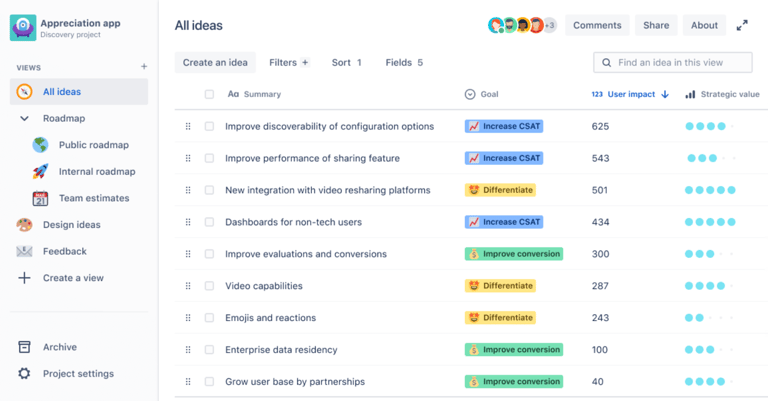
Jira is primarily a project management platform, but engineering teams often use it as a product development tool in Scrum or Kanban workflows. It connects directly with code repositories and supports advanced issue tracking that helps product managers oversee sprint progress and tie development work to specific user stories.

A Jira workspace displaying a product discovery board with ideas ranked by user impact and strategic value, along with roadmap and feedback sections for ongoing product planning.
Jira supports agile project management by helping teams organize product ideas, track user stories, and manage internal and public roadmaps in one system. (Source: Jira)
Visit Jira
Advertisement

ClickUp

Best for: All-in-one project management and process customization. 

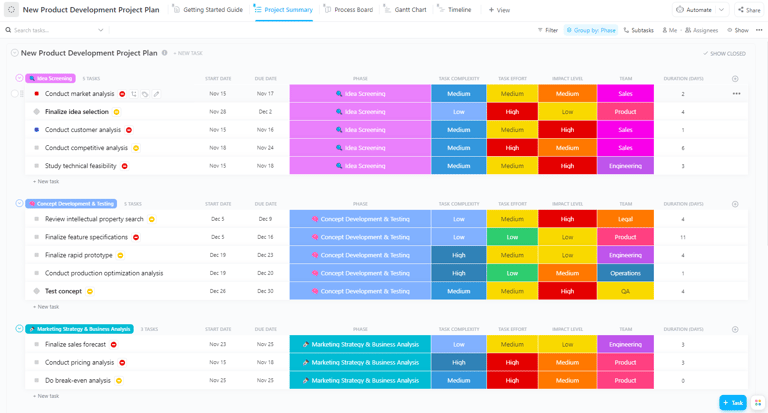
ClickUp combines document management and task management in one AI-powered workspace. It suits teams that customize workflows extensively, letting them switch between list, board, Gantt, or calendar views while working from the same project data.

A ClickUp project dashboard showing task lists grouped by project phase with start and due dates, task complexity, impact level, team assignment, and duration columns that visualize progress through the product development process.
ClickUp centralizes product planning, task execution, and documentation, allowing teams to manage the entire development lifecycle in a unified workspace. (Source: ClickUp)
Visit ClickUp

monday work management

Best for: Cross-functional collaboration and visual roadmapping. 

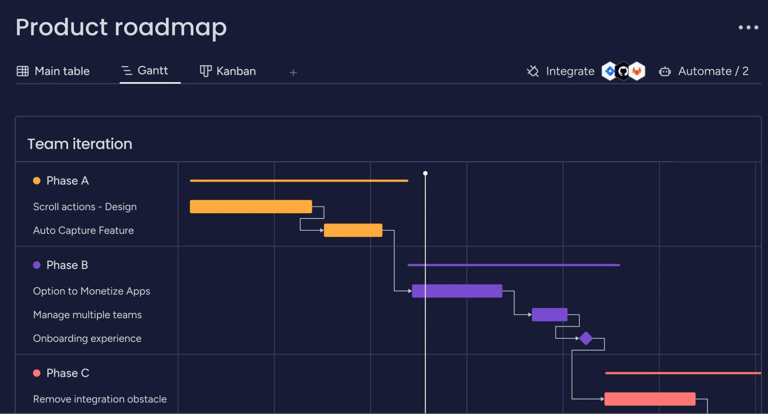
monday connects project visibility with collaboration by combining visual dashboards and automated workflows. Its grid-style interface helps teams track product roadmaps and monitor dependencies across departments. Non-technical stakeholders can easily follow progress and review deliverables without needing access to developer tools.

A monday Gantt chart titled “Product Roadmap” showing color-coded phases and task durations that illustrate progress across team iterations and feature development stages.
monday visualizes project timelines and dependencies through Gantt charts that help teams manage deliverables across product iterations. (Source: monday)
Visit monday
Advertisement

Miro

Best for: Design, prototyping, and remote brainstorming. 

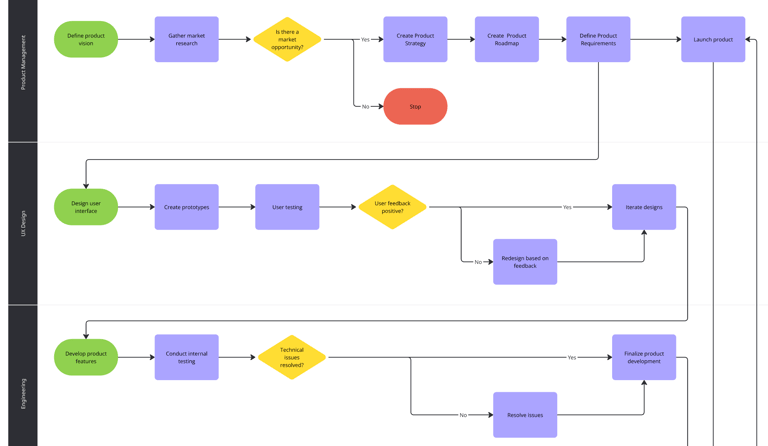
Miro offers an infinite digital canvas that facilitates the early stages of product development. Distributed teams use it to conduct brainstorming sessions, map out user journeys, and create low-fidelity wireframes before moving into formal design tools.

A Miro flowchart mapping the product development lifecycle, showing connected phases for product management, UX design, and engineering with decision points and iteration loops.
Miro enables visual collaboration for product teams through diagrams and iterative workflows that connect product management, UX design, and engineering processes. (Source: Miro)
Visit Miro

Common challenges in product development and how to avoid them

Even experienced product teams encounter development issues that can slow progress or weaken outcomes. Recognizing these challenges helps project managers apply corrective measures before they affect delivery or product quality.

1. Unclear product requirements

When requirements are incomplete or poorly defined, teams face scope creep and frequent rework. Misinterpretation between departments can also lead to functionality that fails to meet user expectations.

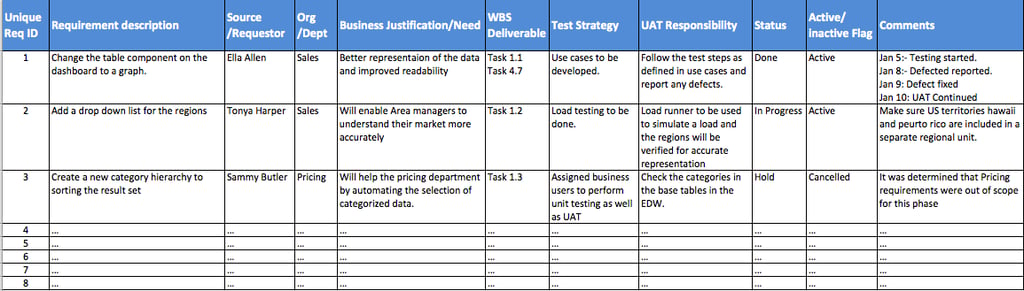
How to avoid it: Define requirements in one shared document that captures user needs, technical constraints, and acceptance criteria. Once stakeholders approve the requirements, route all changes through a formal change request process to control scope and avoid rework.

2. Poor communication

Miscommunication between design and engineering can create gaps in handoffs and lead to duplicate efforts. These disconnects often surface late in the cycle when changes become expensive to correct.

How to avoid it: Adopt collaboration tools and set communication cadences across teams. Assign ownership for updates and documentation to ensure that each group works with the correct information.

3. Inadequate testing coverage

Limited testing or skipping user validation can result in bugs or product defects that surface after launch. Products released with usability or performance issues often damage trust and require urgent fixes that consume future sprint capacity.

How to avoid it: Integrate automated and manual testing throughout the build process and include real user scenarios in test cases. Schedule test cycles early and require sign-off from quality and product teams before moving to the next stage.

4. Overlooking market validation

Some teams advance ideas based on internal assumptions rather than verified customer demand. This often produces features that lack traction or fail to solve the most pressing market problems.

How to avoid it: Conduct early market research and competitor analysis before development begins, then continue monitoring market trends throughout the process. Use pilot releases or prototype testing to confirm ongoing user demand and adjust priorities so the final product reflects current market needs.

5. Poor resource allocation

Teams that underestimate time, budget, or skill requirements can face delays and quality issues. A mismatch between workload and capacity also affects morale and increases turnover risk.

How to avoid it: Create detailed work breakdown structures and track progress against resource forecasts. Review allocations at each phase to adjust priorities and maintain productivity across teams.

Advertisement

How top companies approach product development

Product development practices vary across industries, but well-known brands provide useful case studies that illustrate how disciplined processes support tangible outcomes. These examples show how teams integrate user research, cross-team collaboration, and iterative testing to bring complex products to market.

Example 1: Apple iPhone development

Apple’s product development process begins with deep market research and concept testing to understand user needs and technology trends within mobile computing. Design teams create hardware and software specifications before engineers build prototypes that undergo extensive internal testing to improve performance and functionality. 

After prototype feedback, Apple coordinates manufacturing partners and supply chain logistics to ramp up production, followed by staged software and hardware validation to ensure consistency across millions of units before launch. Post-launch, Apple uses performance data and user feedback from its installed base to roll out incremental updates through iOS releases that extend functionality and improve security over time.

Advertisement

Example 2: Nike Flyknit technology

Nike’s development of Flyknit shoe technology started with identifying a performance gap in traditional cut-and-sew manufacturing for athletic footwear. Engineers and designers worked together to prototype knitted uppers that reduced material waste and enhanced fit by weaving yarns into a single component. 

Prototypes underwent biomechanical testing with athletes to gather performance metrics on comfort, weight, and durability. Feedback from these sessions led to refinements in materials and machine calibration, which later supported full-scale global production. Marketing campaigns then showcased the product’s engineering achievements, helping athletes and consumers understand its performance advantages.

Advertisement

Expert tips for product development best practices 

Product development works best when strategy links directly to execution and feedback throughout the entire process. Teams that emphasize collaboration and maintain transparency across functions can adapt quickly to evolving customer needs while achieving stronger project outcomes.

These expert-backed practices support process consistency and limit exposure to risks across the entire product lifecycle.

  • Define success metrics before development begins: Teams often rush into execution without identifying the benchmarks that will determine success. Establishing quantifiable performance targets and quality thresholds ensures that every phase contributes directly to business goals.
  • Involve end users throughout the process: Relying solely on internal input can distort priorities and hide actual issues. Involving actual users throughout the process exposes usability concerns and ensures the final product matches user expectations.
  • Maintain continuous communication across teams: Gaps between product, engineering, and marketing teams can lead to duplicated work or missed dependencies. Implementing shared documentation and scheduled reviews keeps teams aligned and delivery timelines steady.
  • Break development into smaller, testable iterations: Large releases make it more likely that defects or poor market fit appear late in development. Smaller delivery cycles let teams check assumptions and change direction before issues grow.
  • Document every decision and change: Untracked revisions create confusion about which requirements or designs are current. Maintaining detailed records of decisions, trade-offs, and updates ensures traceability and simplifies onboarding for new contributors.
Advertisement

The future of product development

AI now plays a role in the earliest stages of the product development process. As per the Product-Led Alliance’s 2025 report, 43% of organizations believe that AI and automation will define the next three years for product operations. 

In discovery, teams use AI in product development to synthesize large volumes of customer feedback, support tickets, and usage data into problem patterns. This helps product leaders focus on validated opportunities instead of assumptions.

Prioritization also benefits from AI-assisted analysis. Modern tools can evaluate feature ideas against factors such as customer impact and development effort, then surface trade-offs more quickly. The strongest teams treat these outputs as decision support, not decision makers. Human judgment still defines value, while AI accelerates insight and consistency across product planning discussions.

Advertisement

FAQs

The process typically includes idea generation, idea screening, product planning, design and prototyping, development, testing, and product launch. Each stage refines the concept, validates assumptions, and prepares the product for delivery to the target market.

Development timelines vary based on complexity and scope. A simple software product might take six months, while large-scale hardware or enterprise solutions can require two years or more from ideation to launch.

Product development focuses on designing, building, and delivering the product itself. Product management oversees the broader lifecycle, including strategy, market research, and pricing.

Agile works best for products that evolve through iterative releases and frequent feedback. Waterfall suits projects with fixed requirements and predictable outcomes, where each phase depends on the full completion of the previous one.

thumbnail
Marianne Sison

Marianne De Guzman is a technology analyst with over four years of experience in evaluating cloud-based communication solutions, with a focus on VoIP and unified communications. Her analytical approach and strategic insights empower businesses to optimize their communication infrastructure.

Recommended for you...

6 Proven Project Estimation Techniques, Examples, & Best Practices
Marianne Sison
Feb 2, 2026
How to Measure Project Success: Key Metrics, Tools, & Best Practices
Marianne Sison
Jan 30, 2026
5 Phases of Project Life Cycle and Why They Matter
Marianne Sison
Dec 4, 2025
What Is a Requirements Traceability Matrix (RTM)? + Free Template
Marianne Sison
Dec 4, 2025
project-management.com Logo

project-management.com is dedicated to providing modern tools, latest news, and best practice references for every project professional and business organization. The discipline of project management has continued to receive growing interest and attention over the past decades. Especially today, the importance and relevance of the project manager for any kind of undertaking is unquestionable. However, the challenges of modern society, business relationships and latest technology are also testing their competency and ability to deliver successful projects. Since its launch in 2001, PMcom has been featuring pertinent articles, management software and productivity tool reviews, books, interviews, training sites and other e-learning resources to help people be more productive and successful in their chosen path.

Property of TechnologyAdvice. © 2026 TechnologyAdvice. All Rights Reserved

Advertiser Disclosure: Some of the products that appear on this site are from companies from which TechnologyAdvice receives compensation. This compensation may impact how and where products appear on this site including, for example, the order in which they appear. TechnologyAdvice does not include all companies or all types of products available in the marketplace.