




















Key takeaways
- The project management life cycle refers to the full journey a project takes from initial concept to final delivery and review.
- The project life cycle consists of five phases: initiation, planning, execution, monitoring and controlling, and closure.
- Modern project life cycle methodologies range from traditional waterfall frameworks to Agile and hybrid approaches
For anyone stepping into the world of project management, knowing your project phases is the first thing you need to get right. Moving a project from idea to completion isn’t simply about delivering an output, it involves a sequence of steps that each demand the right actions, decisions, and people. In this article, I’ll walk you through the five phases of project management and show you exactly what happens at each stage so you can lead projects with confidence.
What is the project life cycle?
The project life cycle is the framework that guides a project from conception through completion. The PMBOK® (Project Management Body of Knowledge) Guide, which establishes the global standard for project management, defines it as a series of phases that facilitate the
delivery cadence and development approach required to produce the project deliverables.
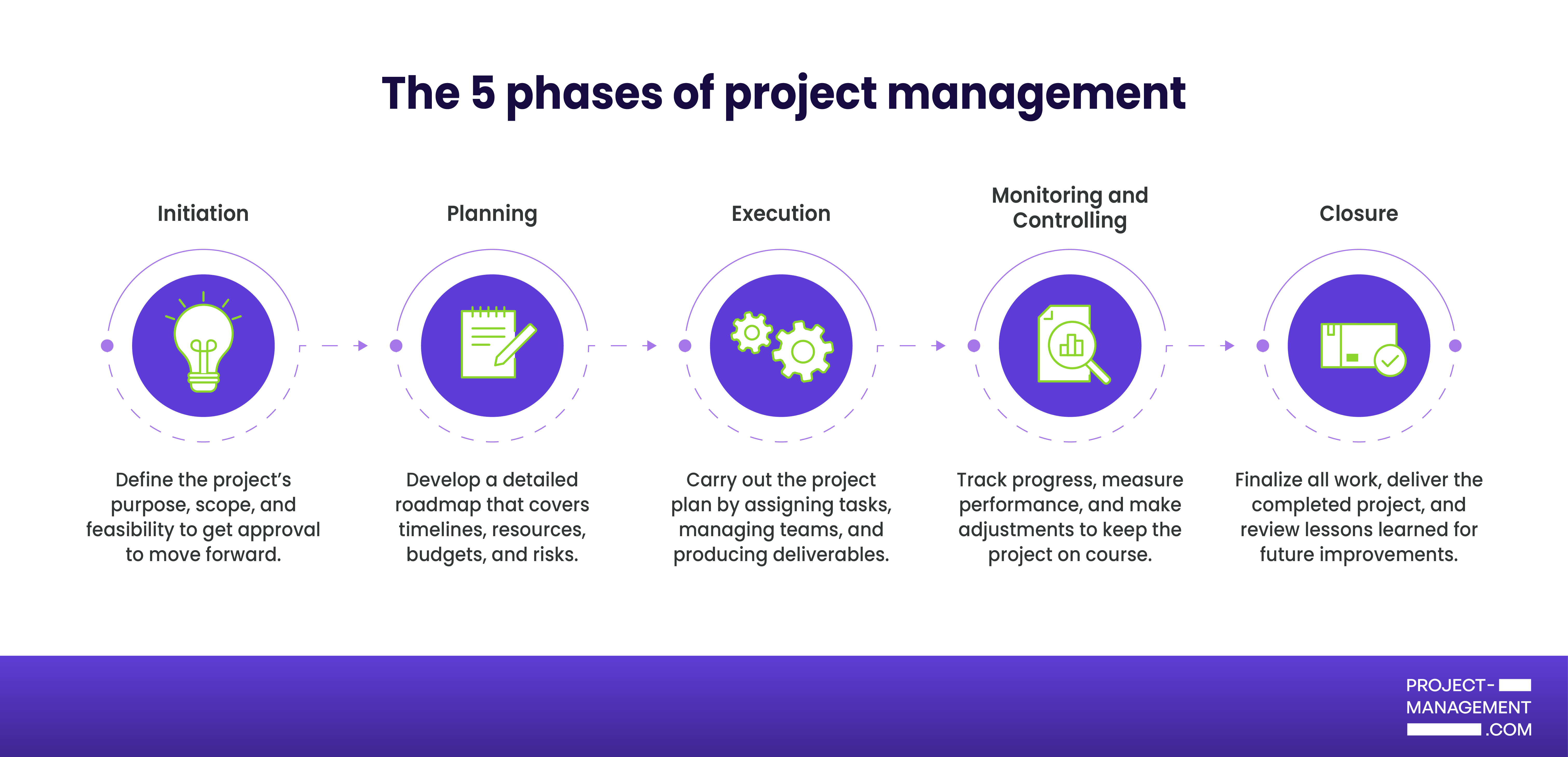
The five project phases, which the Project Management Institute (PMI) refers to as the five process groups, are initiation, planning, execution, monitoring and controlling, and closure. Practicing these phases improves organization, strengthens stakeholder alignment, and ensures projects are delivered on time and within budget.
| Phase | Overview |
| 1. Initiation | Defines the project’s purpose, scope, and stakeholders; determines if the project is feasible and worth pursuing. |
| 2. Planning | Outlines the roadmap, including timeline, resources, budget, risks, and deliverables. |
| 3. Execution | The team completes the work and produces deliverables based on the project plan. |
| 4. Monitoring & Control | Tracks progress, manages changes, and ensures the project stays on scope, time, and budget. |
| 5. Closure | Finalizes deliverables, obtains approvals, and documents lessons learned. |
Following the stages of a project life cycle ensures predictability in how projects are managed. Project managers and teams adjust to changes and maintain control over deadlines and budgets. Ultimately, the life cycle acts as a roadmap that breaks complex projects into manageable steps, leading to stronger collaboration and better results.
Project initiation
The initiation phase sets the foundation for your project by defining its feasibility and objectives. You also develop a preliminary budget to determine ROI and confirm that the project is financially viable. This is where you identify stakeholders and outline the high-level scope before any real work begins. If, for example, you’re rolling out a company-wide CRM upgrade, this phase will involve gathering input from sales, marketing, and IT to ensure alignment.
Strategic thinking plays a central role here, which is why 58% of marketers believe it’s the most critical power skill in project management globally. It’s in this phase that you decide if the project is worth pursuing, which requires balancing data and potential business impact.It’s also the stage where you prepare a project charter and secure leadership buy-in. You create a shared vision that keeps stakeholders engaged from day one. Without a strong initiation, even well-planned projects will likely miss the mark because they lack clear direction. By approaching this phase with foresight, you set up the team for better decision-making and a smoother path through execution.
Common challenges in the initiation phase
- Vague objectives: Stakeholders may have differing interpretations of the project’s purpose, leading to scope confusion later. This can cause wasted time and misaligned priorities.
- Lack of stakeholder engagement: Without early involvement, key decision-makers may resist or delay approvals. This slows momentum and increases the risk of rework.
Solution: Use workshops or discovery sessions to determine measurable goals everyone can agree on. Follow up with a written summary to ensure alignment. It’s also important to schedule kickoff meetings and involve them in setting priorities. This builds ownership and encourages faster decision-making.
Project planning
The planning phase turns big-picture ideas into a concrete roadmap. This is where you define tasks, timelines, budgets, resources, and communication channels so everyone knows their role.
For example, if you’re implementing a new cloud-based inventory system, this phase involves creating a detailed work breakdown structure, assigning responsibilities, and mapping dependencies to keep the project on track. This is especially important, as only 38% of projects are completed on time, according to a Wellingtone survey.
You also finalize the first version of key documents during this phase, including the project plan, communications plan, and resource allocation schedule. The goal is to set clear expectations while leaving room for adjustments as new information emerges. Since planning is iterative, you can always revisit these details so stakeholders stay informed.
Common challenges in the planning phase
- Overly optimistic timelines: Teams may underestimate task duration, leading to missed deadlines and rushed work. This often happens when pressure to deliver overshadows realistic scheduling.
- Scope creep risk: Stakeholders might request additional features after planning is finalized, disrupting timelines and budgets. Without clear boundaries, things can run off course quickly.
Solution: Use data-driven scheduling by referencing past project data. You may also consult team members to set achievable deadlines, but make sure to include buffer time for unforeseen delays. For scope control, document the agreed scope in a scope statement and implement a change request process for any additions.
Project execution
The execution phase is where plans turn into action and deliverables start taking shape. For example, in a software rollout, it is during this phase that developers code, testers validate features, and the project manager tracks progress against milestones. Strong communication is vital in project execution, yet only 38% of organizations offer dedicated channels for employees to ask questions about changes — a gap that can slow progress and cause confusion.
During execution, you monitor timelines, budgets, and resources while ensuring work meets quality standards. Project management software is essential for centralizing tasks, tracking dependencies, and keeping everyone informed of changes. As issues arise, you may need to adjust the plan, but careful change control maintains stability.
Common challenges in the execution phase
- Communication breakdowns: Without clear channels, team members and stakeholders may struggle to get timely updates or approvals, leading to delays. Miscomunications can also cause rework.
- Scope changes mid-execution: New requirements may surface, forcing teams to reallocate resources and shift timelines. This can disrupt momentum if not managed properly.
Solution: Create dedicated communication channels in Slack or Microsoft Teams for real-time updates and Q&A. Make them the single source of truth for project discussions. When enforcing a change management process, make sure to document and require approval to ensure changes are evaluated before implementation, and confirm that the change control process is distributed and easily accessible to all stakeholders.
Project monitoring and control
The project monitoring and control phase runs alongside execution with the main purpose of keeping the project on track. If you’re managing a website redesign, this stage involves tracking timelines, budgets, and quality standards while checking progress against the original plan. It’s worth noting that 58% of project teams use monitoring more often when combining predictive and agile approaches, showing how valuable this practice is in hybrid environments.
You’ll review metrics, update reports, and track documents like change requests, QA checklists, and spending records. These insights allow you to identify risks early and adjust resources before problems escalate. Regular reporting also keeps stakeholders informed and gives them a chance to step in when needed. The focus is on spotting bottlenecks quickly and ensuring accountability across the team.
Common challenges in the monitoring and controlling phase
- Inconsistent reporting: Without standardized updates, stakeholders may feel out of the loop or misunderstand progress, which could make them lose confidence in the project.
- Delayed risk detection: If issues aren’t spotted early, they can snowball into costly setbacks. This often happens when teams skip regular performance reviews.
Solution: Dashboards and automated reports keep everyone aligned with the same data so use these reporting tools consistently to ensure transparency and stakeholder trust. Weekly reviews also allow teams to discuss issues before they grow. To get a full picture of performance, consider merging predictive metrics with agile reviews.
Project closure
The closure phase wraps up the project by finalizing deliverables and completing contracts. For example, after launching a new company intranet, this stage would involve delivering the final site to IT, handing off documentation, and officially transitioning support to the operations team. This is the point where you confirm the project is complete and ensure all issues have been addressed.
The project manager is also expected to communicate the final status to stakeholders and outline any ongoing activities and responsibilities. Closure includes archiving project documents and capturing lessons learned to identify improvements for future projects. This ensures the value of the work continues even after the team gets dissolved.
An effective closure process builds accountability and sets your organization up for future success. It also formally acknowledges that the project is complete. By documenting best practices, storing key files, and reviewing outcomes, you create a reference library that reinforces future performance.
Common challenges in the closure phase
- Rushed wrap-up: Teams may skip proper documentation or lessons learned in their rush to move forward, which can lead to missed opportunities for process improvement.
- Stakeholder disengagement: By the end of the project, stakeholders may lose interest and fail to provide needed feedback, limiting closure insights.
Solution: Standardize the closure steps by using a checklist to ensure deliverables, documentation, and retrospectives are completed before sign-off. You may also schedule a final review meeting that highlights successes and measurable outcomes. This re-engages stakeholders and reinforces project value.
Types of project life cycle
Predictive (Waterfall)
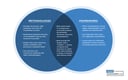
The predictive life cycle is the most traditional approach. Teams map out the full project scope upfront, then move through each phase sequentially: initiation, planning, execution, monitoring, and closure. One phase wraps up before the next begins.
This works well when requirements are clear and unlikely to change, like construction projects, compliance rollouts, or large infrastructure initiatives. The tradeoff is flexibility. If something shifts midway, going back is costly.
Iterative
Iterative projects repeat certain phases in cycles, refining the work a little more with each pass. Teams don’t aim for perfection in round one. Instead, they build, review, and improve until the deliverable meets expectations.
This approach suits projects where the end result is roughly known but needs shaping over time, such as software prototypes or marketing campaigns that require rounds of stakeholder feedback.
Incremental
Incremental delivery breaks a project into smaller pieces that are completed and handed off in stages. Each increment adds something usable to the whole, rather than waiting until everything is finished to deliver anything at all.
Product launches often use this model. Teams release a core version first, gather real-world input, then build out additional features in follow-on increments.
Agile
Agile combines iterative and incremental thinking into a team-driven framework. Work is organized into short cycles called sprints, usually two to four weeks long, and priorities can shift between cycles based on feedback or changing business needs.
It’s the go-to methodology in software development, but marketing, HR, and operations are adopting it as well. Agile thrives in fast-moving environments where requirements evolve and collaboration is continuous.
Hybrid
Hybrid methodology blends predictive and agile approaches, taking structure from one and flexibility from the other. A team might use waterfall-style planning for the overall project timeline while running agile sprints for specific workstreams.
This is increasingly common in organizations that need executive-level reporting and governance but want delivery teams to stay nimble. It’s a middle ground for complex projects that don’t fit neatly into one methodology.
Why are project phases important?
Breaking projects into phases gives your team structure, clarity, and better control over outcomes. It helps align resources and responsibilities while making progress easier to track at every stage.
- Improves focus and organization
Project management phases give your team a clear roadmap and prevent them from trying to tackle everything at once. Each phase has its own objectives, so the team can focus on what matters most in that phase before moving forward. This structured approach reduces overwhelm and creates a natural sense of progress. - Enhances stakeholder alignment
Phases provide checkpoints where you can share updates and confirm agreement with clients and stakeholders. This reduces misunderstandings since everyone sees how the project is evolving step by step. It also builds trust by showing that the project is being managed carefully with a repeatable process. - Ensures quality and accountability
Since each phase ends with defined deliverables, it’s easier to review outcomes and confirm that goals are met. This creates accountability within the team and ensures quality standards are upheld. If something isn’t working, adjustments can be made before moving on. - Supports better resource management
By planning and reviewing resources by phase, you can allocate time, budget, and staff more effectively. This prevents teams from running into bottlenecks or overspending too early in the project. It also allows you to make informed adjustments as new needs arise.
How project management software can help
Project management software is designed to make teamwork smoother and more effective. By organizing information, facilitating communication, and helping distribute resources, these tools ensure projects move forward efficiently. Here are reasons why you should use one on your next project:
Centralizes tasks, deadlines, and responsibilities
One of the key benefits of project management software is that it centralizes all project details in one place. This means teams can track deadlines, responsibilities, and project milestones within the same workspace, eliminating the need for scattered documents or lengthy email chains. monday.com, for example, offers different project views with custom fields so you can put the most important information front and center for easy monitoring.

Enhances collaboration through built-in communication tools
Strong and efficient collaboration is critical for project success, and most project management tools come with built-in communication tools to support this. These features reduce confusion by keeping files and updates tied directly to the project. ClickUp’s real-time messaging tool goes further by allowing you to create and manage tasks directly within conversations, with every chat automatically linked to the relevant tasks, documents, and discussions..

Improves resource and time management
Project management software also improves resource management by helping managers evenly distribute time, budget, and workloads. This prevents bottlenecks, particularly cost overruns, and ensures the project stays within scope. Wrike, for instance, offers time tracking, capacity planning, and budgeting tools that help teams manage resources more effectively.

Best practices in managing project life cycle phases
Effectively managing the phases of the project life cycle takes more than simply moving from initiation to closure. You also need to apply best practices that keep the process organized while remaining flexible to change.
- Establish clear objectives early on: Start by setting measurable goals so your team knows what success looks like. This prevents confusion later and ensures all activities align with the project’s purpose.
- Engage stakeholders throughout the process: Keep communication lines open with clients, sponsors, and team members. Regular updates and feedback sessions maintain alignment within the team and help you identify risks early.
- Use the right project management tools: Choose software that matches your team’s workflow to streamline collaboration and reporting, reduce manual work, and keep all documentation organized in one place.
- Prioritize risk management: Identify potential issues at each stage and develop contingency plans. Being proactive allows you to resolve problems quickly without straying from the agreed project timeline.
- Conduct a thorough project review: At closure, analyze what went well and what needs improvement. This reflection strengthens future projects by turning lessons learned into actionable strategies.
The five phases of project life cycle give you a clear roadmap for taking a project from idea to completion. By applying best practices at every stage, you reduce risks, improve collaboration, and keep the team focused on shared goals. In the end, strong project life cycle management not only delivers successful outcomes but also builds a foundation for future projects.
FAQs
What are the five main phases of the project life cycle?
The five main phases of the project life cycle are initiation, planning, execution, monitoring and controlling, and closure.
What is WBS in project management?
A work breakdown structure (WBS) in project management is a hierarchical chart that breaks the project into smaller, manageable tasks.
What is a project baseline?
A project baseline is the approved version of a project plan that includes scope, schedule, and cost, used to measure and track performance.