Hello project managers. I’m Mackenzie, and I’m finally going to talk about open-source project management software. Using open-source PM tools is the surest way to give your project teams as much customizability and flexibility as they need. With an open-source code that provides the foundation for this type of software, users can benefit from custom project, task, team, and resource management solutions. You know, after all the videos we made for this series so far, I’m honestly surprised we haven’t discussed this topic yet.
Guess that means this is one of those, “better late than never,” moments, so here are 5 options you can explore. From a user’s perspective, it’s hard to get simpler than WeKan if you’re looking for a software with Kanban features. The visual components of this tool are clean and easy to use, and much of the tool relies on drag-and-drop and one-click functionality. And despite its simplicity, WeKan still presents users with an effective UX design, strong security, competent administrative controls, and a transparent product roadmap.
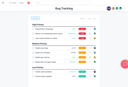
Additionally, it has been translated into more than 70 languages, and it’s available for a variety of operating systems and CPU platforms. Orangescrum Open Source is a simple project management and task management solution for teams that focus on bug and issue-tracking management. It enables users to organize all information in one place and clearly track progress. Along with that, it offers advanced security tools and it’s compatible with the other versions of Orangescrum, including Orangescrum CRM.
This makes it a highly scalable tool and a great option for teams that aren’t sure if they want to commit to an open source solution or not. Leantime is a project management system that can work for teams of all sizes but is best for small teams and startups. The simplistic and intentional design of Leantime has proven that it helps users focus on the tasks at hand. It’s also one of the only tools that caters its features to support accessibility for users with ADD, ADHD, and dyslexia.
Additionally, it has many creative elements, including design-thinking-driven elements, strong visualizations, and in-app video recording, that make it a great option for creative and design teams that want a customizable open-source option for project management. Taiga is a project management software that is designed primarily for Agile teams but can also be used for software development, telecommunication, education, and manufacturing. This solution is one of the easiest open source PM tools to use and customize, and that’s partially because it doesn’t go too far into the frills and focuses on the core requirements of Scrum and Kanban users.
It also has strong issue and bug-tracking capabilities, an effective wiki function, and a transparent approach to its releases and product developments. Plus, it’s available in over 20 languages. OpenProject provides its users with a project management tool that can be used for classic, agile, or hybrid open-source project management. Many comprehensive features are available across the board to customize OpenProject to specific teams’ needs, with email features for marketing and sales teams, Agile and Scrum features for developers, and OpenProject BIM for construction and architecture teams.
Some of its advanced features that differentiate it from other open source solutions include advanced task and dependency management capabilities, project portfolio management, and product roadmap and release planning support. Special rates are also available for educational institutions and NGOs. That concludes my open source list. If you want to try any of these software for yourself, then head to the description to find their sign up and download links.
Or, if you want to discover other options, then go read this article which recommends five others along with more info about all the solutions mentioned in this video. But before you do that, don’t forget to click the like icon, hit the subscribe button, and visit project-dash-management-dot-com for other PM solutions. Thanks for watching!